
 E-Paper





Follow the latest breaking news, major developments and agenda-setting stories from India and around the world with the newsdesk at Hindustan Times. Operating round the clock, the desk brings together experienced editors, reporters and correspondents to deliver fast, accurate and contextual reporting across subjects that influence public policy, governance, business, society and international affairs. The HT News Desk covers politics, elections, government policies, the economy, business and markets, science and technology, the environment, law and order, infrastructure, education, climate issues and geopolitics, while closely tracking developments across states, institutions and global capitals. The team also leads coverage of major breaking news events, policy announcements, court proceedings, natural disasters, public emergencies and significant international developments. Reports published by the newsdesk are based on information gathered from reporters on the ground, official statements, government agencies, court records, regulatory filings, recognised institutions and other authoritative sources. Stories undergo editorial scrutiny and verification processes to ensure accuracy, fairness and relevance, and are updated as events evolve and additional information becomes available. Whether covering a key political decision in New Delhi, an economic policy shift affecting millions, a landmark court ruling or a major global event, the HT News Desk aims to provide readers with reliable, fact-based journalism that delivers not only the latest developments but also the context and analysis needed to understand their wider implications.
Khap panchayats ruling against inter-caste marriage of adults illegal, says SC
The Supreme Court added that if the Centre does not step in to ban such khap panchayats then it would have to step in.


The Supreme Court said on Tuesday any attack against an adult man and woman opting for an inter-caste marriage by khap panchayats or associations is “absolutely illegal”.
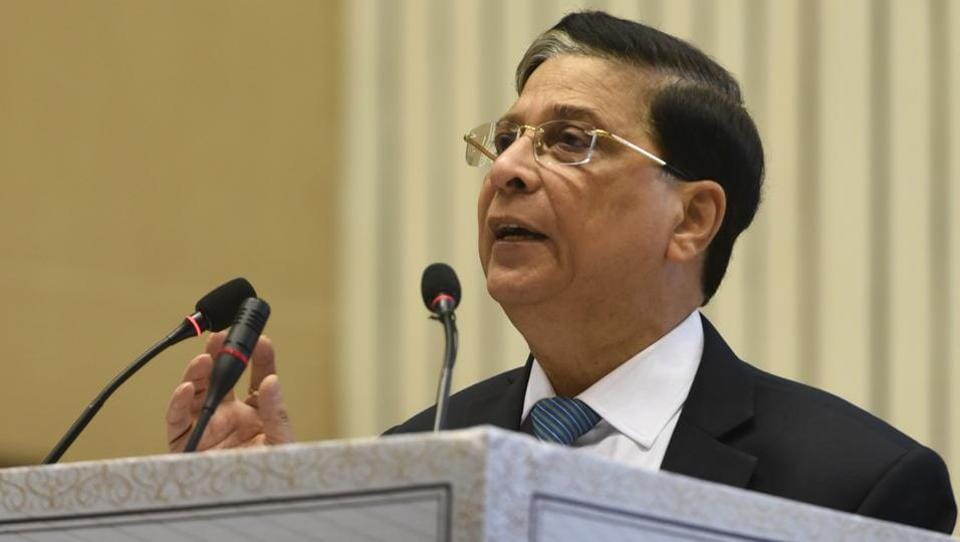
“If an adult man and woman marry, no khap, panchayat or society can question them,” a bench headed by Chief Justice Dipak Misra said.
The bench, also comprising justice AM Khanwilkar and justice DY Chandrachud, asked the Centre to respond on suggestions given by amicus curiae (friend of the court) Raju Ramachandran on ways to prevent harassment and killing of young couples in the name of family honour for marrying out of their caste or in the same clan (gotra).
SC asks Centre to act fast
The top court added that if the Centre does not do anything to ban such panchayats then it would have to step in.
The court was hearing a petition against khap panchayats filed by a non-government organisation Shakti Vahini in 2010 seeking directions to the Centre and state governments for preventing honour crimes.
Khaps, caste or community organisations representing a clan or a group of related clans, frequently make pronouncements on social issues and have often landed in controversies owing to their diktats. One such khap panchayat leader in Haryana blamed chowmein for the rise in rape cases in India.
“To my understanding, consumption of fast food contributes to such incidents. Chowmein leads to hormonal imbalance evoking an urge to indulge in such acts,” Jitender Chhatar, a resident of Jind’s Chhatar village and khap panchayat leader, was quoted as saying.
Another suggested that the age of marriage should be dropped from 18 to 16 because being married would make young women less susceptible to rapes.
The bench told the Centre that it will not give its recommendation on the suggestions given by the amicus curiae assisting the court in the matter and would contemplate passing an order based on his suggestion.
“Whenever there is any kind of collective attack on a boy or girl who is adult, it is absolutely illegal,” the bench said and listed the matter for February 5 for further hearing.
Past hearing
The top court had earlier sought suggestions from Shakti Vahini, the amicus curiae and khap panchayats on the issue. It invited khap panchayats to hear their views before issuing an order to stop them from harassing and killing couples and women in the name of honour.
The Centre had pleaded with the top court to put in place a mechanism to monitor crimes against women by khap panchayats, as the police were not able to protect women facing ordeal at their hands.
The top court also said that as a pilot project, it would examine the situation in three districts of Haryana and Uttar Pradesh where khap panchayats were active. It summoned the superintendents of police of Rohtak and Jind districts of Haryana and that of Baghpat in Uttar Pradesh to apprise the court of the situation there.
(With agency inputs)


