
 E-Paper



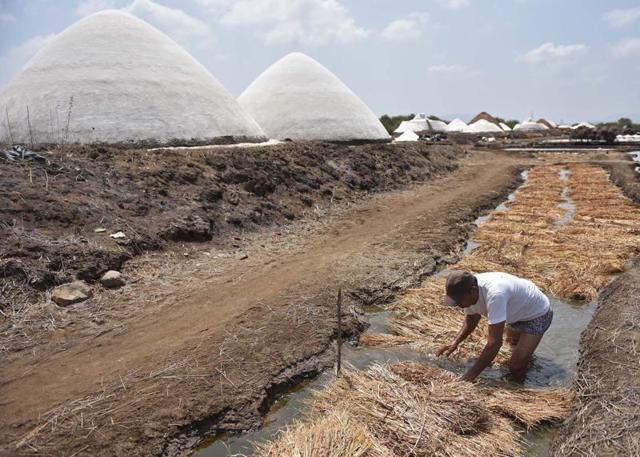
Making salt while the sun shines
Workers at Mumbai’s saltpans are scrambling to make as much salt as they can before the monsoon sets in. (Pratham Gokhale)
Published on: Jun 1, 2016 4:04 PM IST


Share via


Copy link

1/11

 View Photos in a new improved layout
Published on Jun 1, 2016 4:04 PM
Workers at Mumbai’s saltpans are scrambling to make as much salt as they can before the monsoon sets in. (Pratham Gokhale)
2/11
 View Photos in a new improved layout
Published on Jun 1, 2016 4:04 PM
The saltpans, which are spread across 5,378 acres in Mumbai’s eastern and western suburbs, are shut during the rains. So workers have just a few days more to make salt. (Pratham Gokhale)
3/11
 View Photos in a new improved layout
Published on Jun 1, 2016 4:04 PM
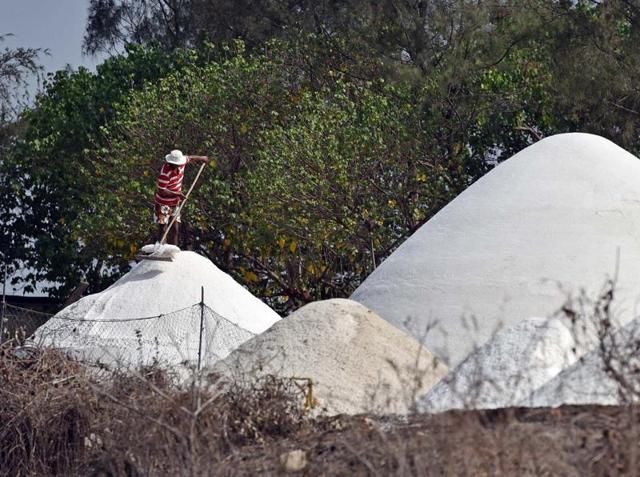
This saltpan is in Bhayander but you’ll find them in Vasai and Virar and the eastern suburbs of Ghatkopar, Chembur, Wadala, Kanjurmarg, Bhandup, Mandale, Turbhe, Nahur, and Mulund. (Pratham Gokhale)
4/11
 View Photos in a new improved layout
Published on Jun 1, 2016 4:04 PM
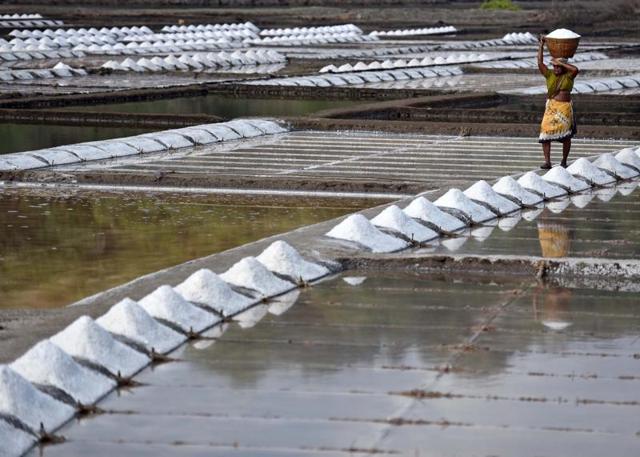
The saltpans play a crucial role in keeping Mumbai from flooding during the rains and when the tide is high. (Pratham Gokhale)
5/11
 View Photos in a new improved layout
Published on Jun 1, 2016 4:04 PM
The workers, both men and women, start their day early but take a break at noon as the heat rises. They resume work only after 3pm. (Pratham Gokhale)
6/11
 View Photos in a new improved layout
Published on Jun 1, 2016 4:04 PM
The work is back-breaking as there is no mechanisation. Everything is done as it has been for centuries. (Pratham Gokhale)
7/11
 View Photos in a new improved layout
Published on Jun 1, 2016 4:04 PM
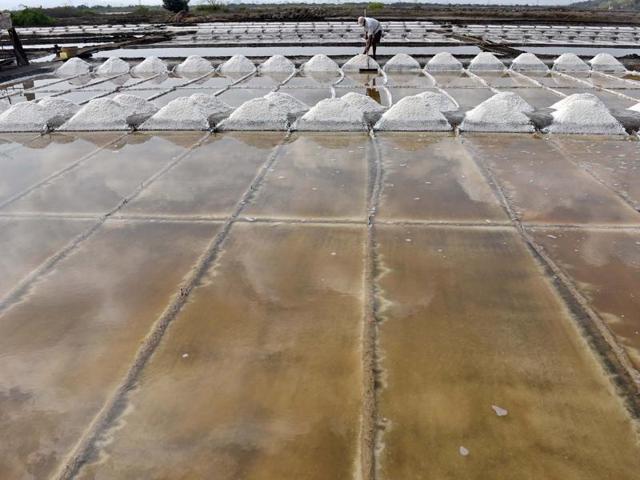
The pans are allowed to flood with seawater during high tide and salt forms over a period as the water evaporates. (Photo by Pratham Gokhale/ Hindustan Times) (Pratham Gokhale)
8/11
 View Photos in a new improved layout
Published on Jun 1, 2016 4:04 PM
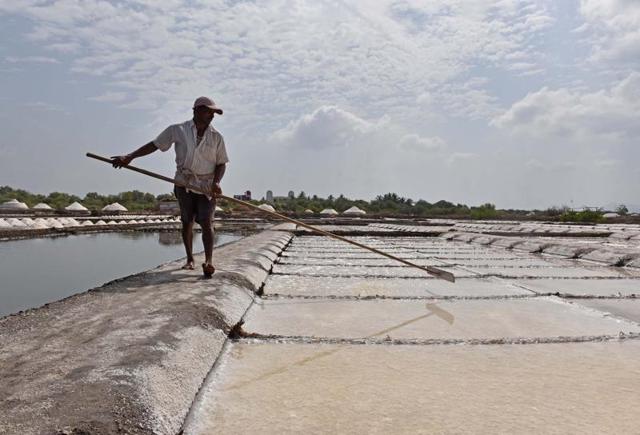
The workers have to spread the slush around in the rectangular beds to aid evaporation. (Pratham Gokhale)
9/11
 View Photos in a new improved layout
Published on Jun 1, 2016 4:04 PM
As the salt crystallises in these beds, it is heaped up, ready to be moved. Each batch takes about 15 days to make. (Pratham Gokhale)
10/11
 View Photos in a new improved layout
Published on Jun 1, 2016 4:04 PM
Women and men have to carry baskets of salt on their heads to the storage points. (Pratham Gokhale)
11/11
 View Photos in a new improved layout
Published on Jun 1, 2016 4:04 PM


