
 E-Paper



Ecostani| What does commissioner Arun Goyal’s resignation before the 2024 elections say about the Election Commission?
As the country heads for general elections, how the Election Commission keep parties in check will say a lot about the state of our democracy

 Prefer HTon Google


All is not well it seems, in the Election Commission. Unable to curb electoral malpractices such as the use of muscle and power, it supported opaque electoral bonds (recently struck down by the Supreme Court) at the cost of transparency for which the Constitutional body was once known. The Election Commission’s primary job to maintain the level playing field during polls appears to be in jeopardy, with its fairness questioned often.
Now, in another blow, election commissioner Arun Goyal announced his resignation days before the EC was supposed to announce the dates for the Lok Sabha elections. With his resignation, the EC is left with a single commissioner, Chief Election Commissioner Rajiv Kumar to run the 2024 general elections. The other commissioner, Anoop Chandra Pandey, retired last month after turning 65. Goyal was to retire in 2027 after becoming CEC in 2025.
This is the first time since 1993 that the poll panel has had a single commissioner. The EC became a three-member body on January 1, 1990, to check the then CEC TN Seshan, and to present collective leadership.
Goyal is the second commissioner to resign in the past five years. Ashok Lavasa, a retired IAS officer, who is said to have opposed the EC giving a clean chit to prime minister Narendra Modi and the then BJP national president Amit Shah, who were accused of repeated violations of the model code during 2019 Lok Sabha polls, put in his papers in August 2020. He was later appointed as the executive director of the International Monetary Fund (IMF). Before his resignation, the Income Tax department issued a notice to his banker wife, Novel Singhal Lavasa, regarding her personal finances in September 2019. On the direction of the IT department, the BJP-ruled Haryana government sought clarifications from Novel regarding the stamp duty paid for a transfer of property in Gurugram. Six months before his resignation, the Haryana government gave a clean chit to his wife.
As per media reports, Goyal resigned due to alleged differences with CEC Kumar over important electoral issues, even though the Centre claimed he resigned due to personal reasons. The Congress party has demanded that EC should come clear on why he had resigned. Neither Goyal, who took voluntary retirement from the administrative services in November 2022 and was appointed election commissioner, nor the Constitutional panel has issued any statement over his resignation.
The official notification of Goyal’s resignation days before the announcement of national polls indicates the tearing hurry of the government to settle the problems within the EC. His resignation, not made public, was apparently accepted within a day. The government may appoint two election commissioners soon.
In the last Parliament session, the government got the law on appointments of election commissioners amended by replacing the Chief Justice of India from the three-member panel headed by the PM with a minister. The third member is the leader of opposition or leader of the biggest opposition party in Lok Sabha. The change gives the government the power to appoint a person of its choice.
Whether the election announcement will be delayed so that the government can appoint commissioners or Kumar will helm the polls alone remains to be seen. Appointing ECs after the elections are announced would be a violation of the model code.
Another disturbing trend for democracy is that political parties are announcing candidates much before the announcement of the elections. The Bharatiya Janata Party (BJP) has declared candidates for 195 Lok Sabha constituencies and the Congress for 39 Lok Sabha seats. Several regional parties such as CPI(M), Trinamool Congress and Samajwadi Party have also announced candidates. The trend began when the BJP announced candidates for 37 seats for Madhya Pradesh assembly elections slated for November 2023 in August itself. On October 9, the BJP declared the first list for the Rajasthan assembly polls days before the EC could even announce dates for polls in the state alongside MP, Chhattisgarh and Telangana.
To be sure, declaring candidates before elections are announced does not violate any election conduct rules. However, it circumvents the Election Commission’s limit on poll expenditure. The rule regarding election expenditure comes into force only when elections are announced and for candidates when they file their nomination papers. Parties announcing candidates in advance means that the expenditure on polls including direct cash transfer to voters before nomination will not come under EC’s scrutiny, allowing money power to take on the fair electoral process. The EC will need to find a way to plug this loophole.
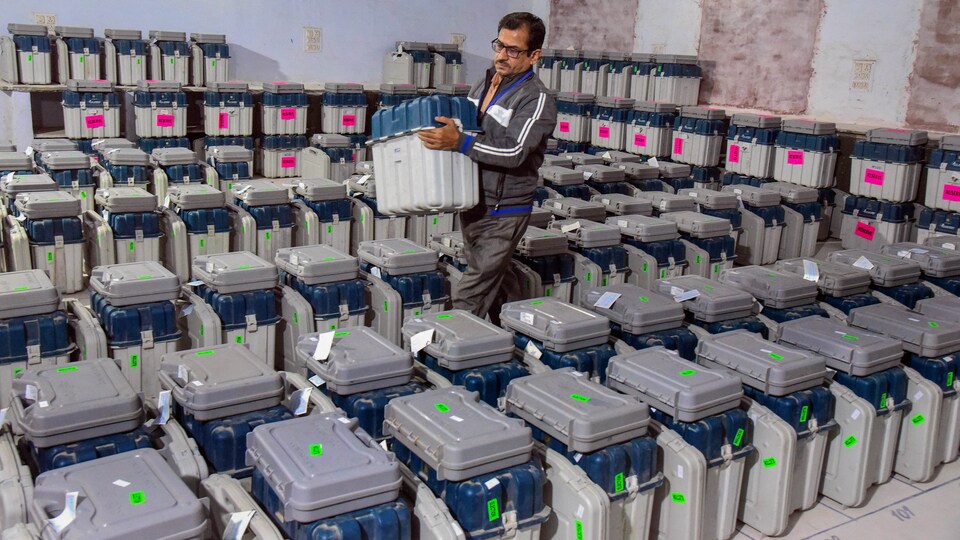
Then there is the concern over the efficacy of electronic voting machines that refuses to die down, as parties and independent experts claim that the EVMs can be hacked to provide advantage to a political party. The Congress has alleged the EC has not met its delegation raising questions over EVMs and seeking 50% counting of VVPAT votes for the last seven months. The demand to count at least 50% of VVPAT (Voter Verifiable Paper Audit Trail) votes, a slip which indicates to which party the voter has cast his or her vote, was rejected by the EC. At present, VVPAT votes of one polling booth in each assembly is counted and even if there is a discrepancy between VVPAT and EVM votes, it has no implications for overall result. It can be a ground for challenging the election result in a court. The EC should count VVPAT votes for at least 10 to 20% of the randomly selected polling station and the election results should not be announced until counting of VVPAT is completed and the EVM and VVPAT votes are matched. This would go some way in restoring the faith of voters in the EVM system.
Chetan Chauhan, national affairs editor, analyses the most important environment and political story in the country this week.


