E-Paper



In the US-Taliban peace deal, the mystery of the secret annexes
The US has never made any aspect of these annexes public, though members of US Congress were allowed to review them, while the Taliban have dismissed talk of any secret understandings as rumours

 Prefer HTon Google


Ever since the United States (US) and the Taliban signed a peace agreement last year, buzz has grown about secret annexes to the pact that reportedly laid out terms for interactions between the two sides and conditions for the American drawdown.
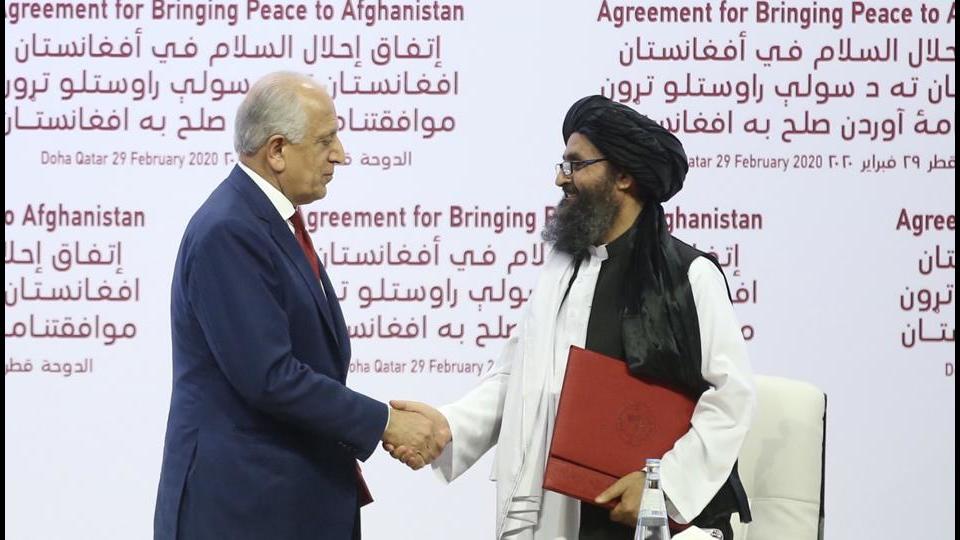
The US has never made any aspect of these annexes public, though members of US Congress were allowed to review them, while the Taliban have dismissed talk of any secret understandings as rumours.
The annexes were reportedly negotiated by Zalmay Khalilzad, the US special envoy for reconciliation in Afghanistan, currently getting a lot of flak for making too many concessions that emboldened the Taliban into abandoning all pretence of participating in intra-Afghan negotiations aimed at finalising a transitional administration.
In an interview with CBS News in March 2020, then secretary of state Mike Pompeo, who oversaw Khalilzad’s negotiations with the Taliban, gave some details of the secret annexes. His remarks appeared to suggest there were two annexes, and he described them as “military implementation documents” needed to protect US military personnel.
“There are two implementing elements that will be provided. They are secret...Every member of Congress will get a chance to see them,” Pompeo said, insisting the agreement with the Taliban was a “fully transparent arrangement” and there weren’t “any side deals”.
The New York Times reported a week after Pompeo made these remarks that then defense secretary Mark Esper “appeared unaware of – or seemed unwilling to discuss – the secret annexes” while providing testimony to Congress just days before the agreement was signed in Doha on February 29, 2020.
The Times cited people familiar with the contents of the two documents to report that they contained “a timeline for what should happen over the next 18 months, what kinds of attacks are prohibited by both sides and, most important, how the United States will share information about its troop locations with the Taliban”.
“Because the documents lay out the specific understandings between the United States and the Taliban – including what bases would remain open under Afghan control – the details are critical to judging whether the United States is making good on its promise to leave only if conditions allow, or whether it is just getting out,” the report said.
The Times also said another reason for the secrecy surrounding the annexes was that they “leave the markers for peace remarkably vague, making it far from certain that the Taliban must convert into a counterterrorism force...or that they are required to make complete peace with the elected government of President Ashraf Ghani”.
“In fact, as written, [the annexes] appear to give [then president Donald] Trump, or his successor, enormous latitude to simply declare that the war is over and leave,” the report further said.
According to a recent Indian assessment, made in the weeks before the Taliban carried out a lightning campaign to capture urban centres and most provincial capitals, there appeared to have been some sort of understanding between the US and the Taliban that American troops would not use air power and air support to back the Afghan security forces.
US lawmakers themselves have been critical of the secret annexes. Liz Cheney, a Republican member of Congress and one of the strongest critics of the agreement with the Taliban, has said the deal didn’t include mechanisms to verify that the Taliban was delivering on pledges that it had made.
Tom Malinowski, a former assistant secretary of state and a Democratic member of Congress, tweeted after reading the secret annexes in March last year: “Bottom line: the administration is telling a terrorist group the conditions (such as they are) of our withdrawal from Afghanistan, but not telling the American people. This is wrong. And it serves no national security purpose.”
Three days before the deal was signed, a group of 22 Republican members of Congress sent a letter to Pompeo and Esper that said: “Any deal between the U.S. and the Taliban will be public and not contain any secret annexes or side deals.”
Khalilzad reportedly came up with the idea of secret annexes to the agreement with the Taliban to contend with several messy issues that hadn’t been settled at the time of the signing of the pact. A prolific user of Twitter to discuss his travels around the globe for the negotiations on Afghanistan and his meetings with world leaders, Khalilzad has been completely silent on the social media platform ever since the Taliban marched into Kabul on August 15.
Perhaps Khalilzad could make a return to Twitter to throw more light on the secret annexes and how much of a role they played in the situation currently unfolding in Afghanistan.