
 E-Paper



Author Neil MacGregor talks faith, history, the importance of everyday objects

 Prefer HTon Google


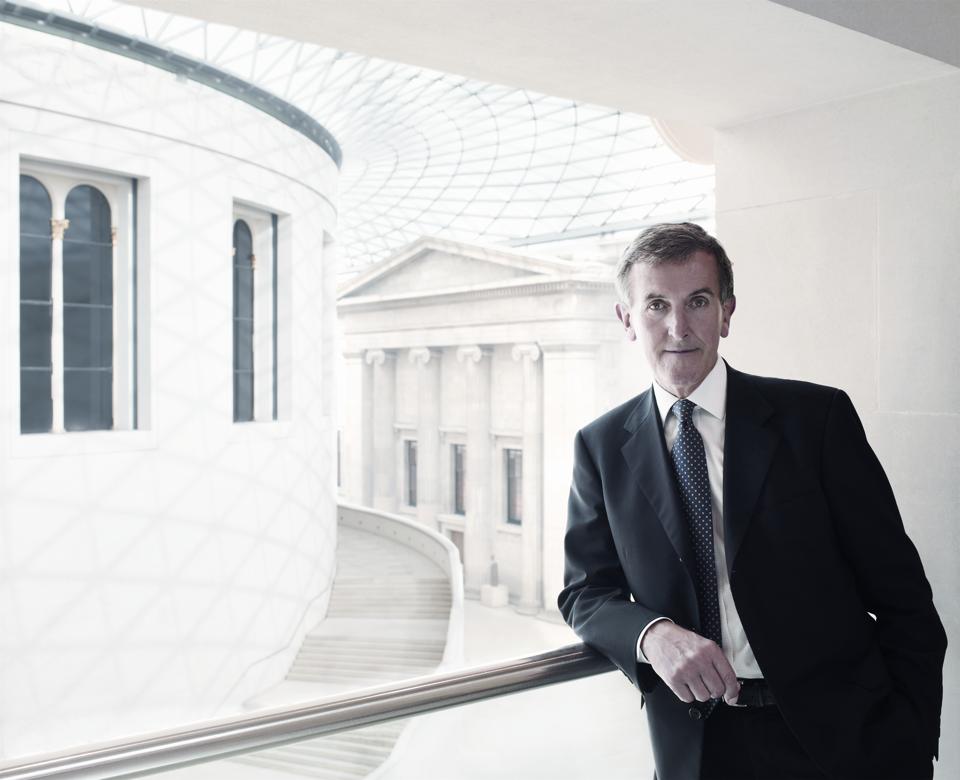
The former director of the British Museum has a new book out called Living with the Gods. Here he discusses, among other things, why he believes religion isn’t going anywhere.
‘I see no God up here’. A Soviet-era poster from the 1970s featuring Uri Gagarin, the first man in space, marks a time in history when the general consensus was that religion’s hold was loosening. Instead, the opposite has happened.
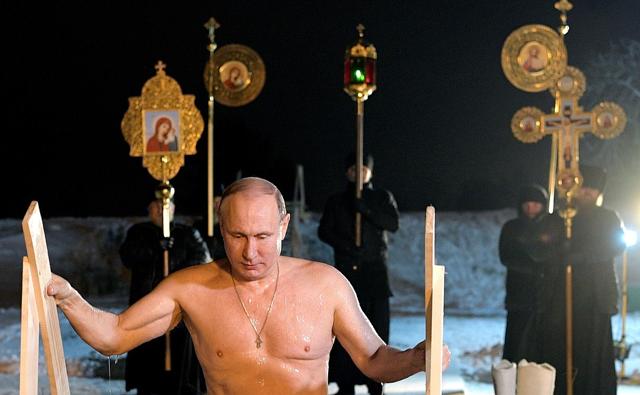
Vladimir Putin, the current president of Russia, wears his Orthodox Christian identity on his sleeve. In countries around the world, religious right-wing outfits have become more popular, and more powerful.
This will only intensify in the years to come, says Neil MacGregor, art historian, former director of the British Museum, and author of the bestselling History of the World in 100 Objects.
His new book, Living with the Gods, explores the history of shared religious belief, and its impact on communities, and sees him examine objects, places and human activity going back 40,000 years. MacGregor was in Mumbai last week, to discuss the ideas in this new book, at the Tata LitLive literature festival.
One thing he has found across most societies, he says, is that the state and religion are difficult to separate. “The European Age of Enlightenment in the 18th century tried to separate religion and politics. They failed to understand that religion and politics are actually asking the same questions. Who are we and how do we want to live together,” MacGregor says.
The secularism in Europe that followed the Enlightenment held on to the misreading and became hostile to religion. The extreme example of this hostility was seen in the Soviet Union, where atheism was imposed as state policy, and places of worship demolished.
Since the fall of Soviet Russia in 1991, cathedrals have been rebuilt to stand exactly where they did before.
The secular state in India, MacGregor adds, whether under Asoka, Akbar or the Indian Constitution, grasps the reality better. “The Indian secular tradition acknowledges the importance of religion in the life of a community, and keeps the state equidistant from all religion,” he says
Religion, MacGregor explains, is a story that helps humans survive. A narrative that makes them a part of a bigger story that goes on after they are dead and started before they were born; one that helps them belong.
“Even the earliest hunter-gatherer communities had stories that were larger than them and bound them together and gave them strength to tide through difficulties,” MacGregor says.

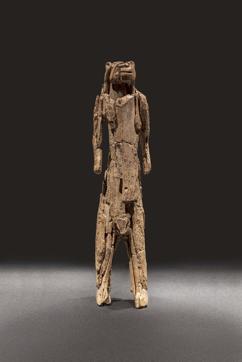
He explains this through, among other objects, The Lion Man of Ulm, a figurine with a lion’s head made from mammoth tusk ivory that was found in a German cave and is estimated to date back 40,000 years. He calls this sculpture “the earliest known representation of something beyond human experience”.
The relationship between the need for creativity and religion is something he also explores through the Durga Puja celebrations of West Bengal. “Every year people create a tableau that reflects stories from the community, only to dispose of it in the river. Then next year, a new set of images is created and again the whole community comes together symbolically,” he says.
Religion, he adds, has taken diverse political shapes. In the case of India, the freedom fighter Bal Gangadhar Tilak engineered public Ganesh festivities in the streets of Bombay as an assertion of the identity of the community, a gesture of defiance against colonial Britain, and as a means of circumventing laws against public gatherings.

In Mexico, meanwhile, the religion of the coloniser became the story that the local population carried with them while fighting colonial forces. Here, people marched with statues of the local interpretations of Mary, whom they called Our Lady of Guadalupe. She is dressed like a local woman, is spoken to in the local language and became the symbol of a Mexican identity free from Spain, in the early 19th century.
Today, from Europe to India to Latin America, MacGregor says he sees the rise in religious politics as a result of the kind of economic policy that has prevailed in the last 50 years. “Economically, there has been an approach that focusses on the individual over community responsibility. Whereas individual freedoms are tremendously important, it does not ensure the basic dignity of the large numbers of marginalised, and that is what draws the oppressed and those left out towards nationalism and retellings of religion — sometimes both together.”
As economics complicates issues, the rationality of the Age of Enlightenment and the progressive movements of the 20th century have a significant role to play, McGregor says.
“In a world where communities, despite their differences, live closer, the key question will be, how can they co-exist with their different stories.”


