
 E-Paper



Discovering Old Delhi through a woman’s lens

 Prefer HTon Google


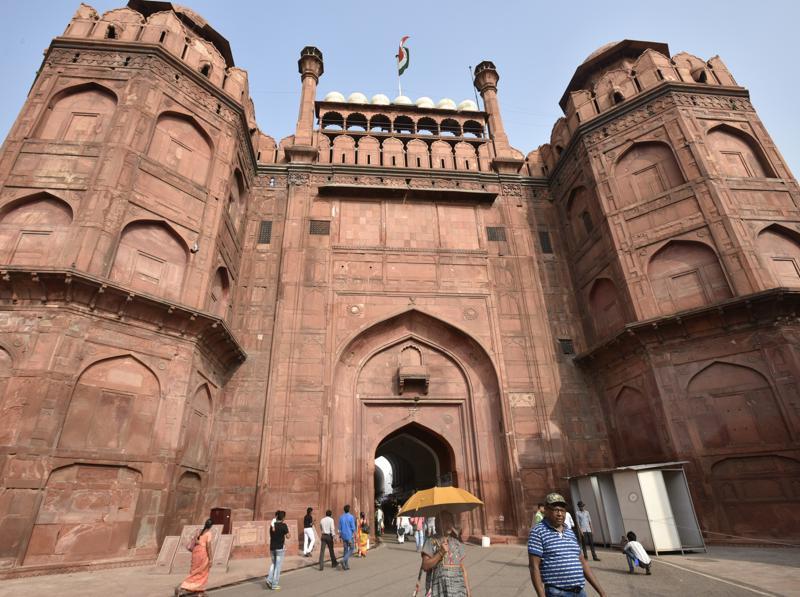
At 2.30 pm on a Thursday afternoon, I am standing outside the Red Fort in Old Delhi. Today’s agenda: exploring Shahjahanabad (Old Delhi), the 17th century Mughal
At 2.30 pm on a Thursday afternoon, I am standing outside the Red Fort in Old Delhi. Today’s agenda: exploring Shahjahanabad (Old Delhi), the 17th century Mughal capital, through the history of its women. The hour-long walk starts at the rusty Red Fort, once home to Mughal Emperors, and ends in a crumbling mansion, chronicling plenty of politics and intrigue enroute.
My guides, Aakriti Suresh and Anna Menon, are history graduates and volunteers with GoUnesco, an initiative backed by UNESCO to make “heritage fun.” The walk is scheduled for September 25 at 10 am but, luckily, I got a preview (You can register on their Facebook page).

We begin inside the sprawling palace-cum-fort built by Shah Jahan between 1638 and 1648. Our first stop, through the Lahori Gate, is the domed Meena Bazar. Inspired by indoor markets in Persia, this was a women-only luxury market for handicrafts and perfumes. All the vendors were women. Then we walk to the Diwan-i-Aam or commoner’s court. The throne is on a marble pedestal inside a glass enclosure, which was added recently.
Drawing my attention away from the reflection in the glass, Menon points to latticed screens on either side of the throne. Beyond those screens, she says, women from the royal family sat and watched the emperor preside over his court.
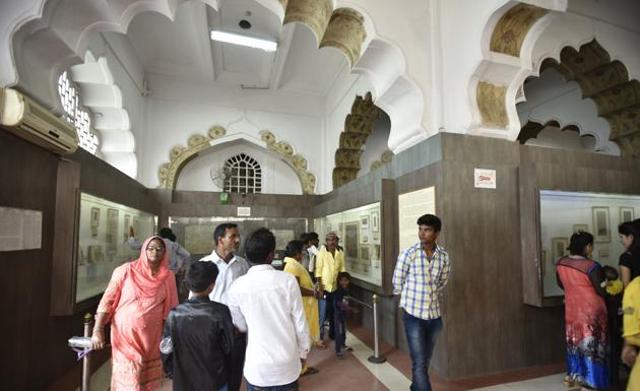
This wasn’t unusual since Mughal queens and princesses influenced the court , and patronised artists, poets and musicians. Emperors even brought tutors from half-way across the world to teach royal women Arabic or Persian among other things. “This image of women, that they’re there to give birth and carry forward the generation — wasn’t true for the Mughals,” says Menon.
Mughal queens and princesses were closely involved in politics. Emperor Jehangir’s wife Nur Jehan, for instance, was credited with virtually running the Mughal empire. Jahanara Begum, Shah Jahan’s favorite daughter, was banished to Agra along with her father because she supported Aurangzeb’s rival and brother, Dara Shikoh. She was powerful enough to intimidate the newly crowned Aurangzeb. Jahanara’s influence on Shah Jahan, Menon says, “baffled” foreign travellers so much that they often hinted at an incestuous relationship between father and daughter, a theory that has been discredited.

Beyond the Diwan-i-Aam lay Char Bagh, now called the Mughal gardens, which Menon tells me, hosted lavish parties where alcohol and opium flowed. Men and women attended. The pavilions here, described in splendid detail in accounts and miniature paintings, were built to overlook the Yamuna river, but now offer a view of Delhi’s clogged roads.
Past Char Bagh were the emperor’s private apartments and the zenana (women’s quarter). Here, in Jahanara’s quarter, Shah Jahan murdered at least one of her lovers and had him other boiled to death. A separate story suggests that he poisoned another one of her lovers with an after dinner paan. Was it rage or a reluctance to get his daughter married? I was told that Mughal emperors preferred not to because they would then be inferior to their sons-in-law. So, they would ask the eunuchs — the only other gender allowed in the zenana — to inform on their love lives.
Our last stop is outside the fort. We walk through Chandni Chowk, once the main avenue of Shahjahanabad. It was built by Jahanara who chose each of the 1,500 plus shops in the market. We turn right into the electronics market - we are looking for the home of Farzana Zeb un-Nissa, a nautch (dancing) girl.
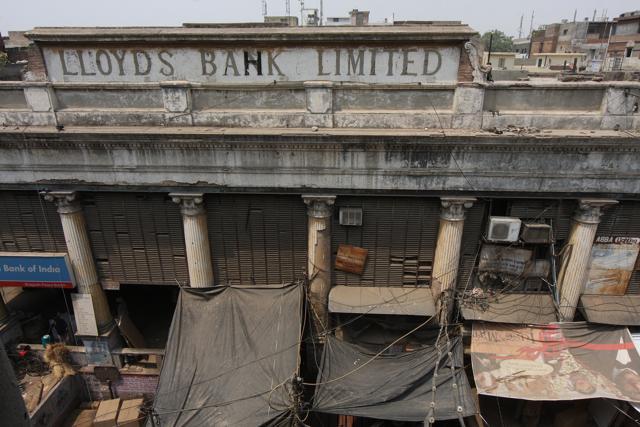
She was 14 years old when she married a mercenary in India, Walter Reinhardt Sombre. She took on his moniker and became Begum “Samru.” After Reinhardt's death, she headed his mercenary army and ran a small principality near Meerut. She died a wealthy woman. Her formerly lavish home now houses a branch of Central Bank. What used to be lush gardens are now a cluster of shops selling electronics. Unlike the zenana inside the Red Fort, which has been turned into a museum, Begum Smaru’s house has lost all signs of its enchanting past.
Except for a grubby board with a curious sign: Begum Samru’s Palace, Central Bank.


