
 E-Paper



Spoken word poetry: Slamming social biases, evils, inequality


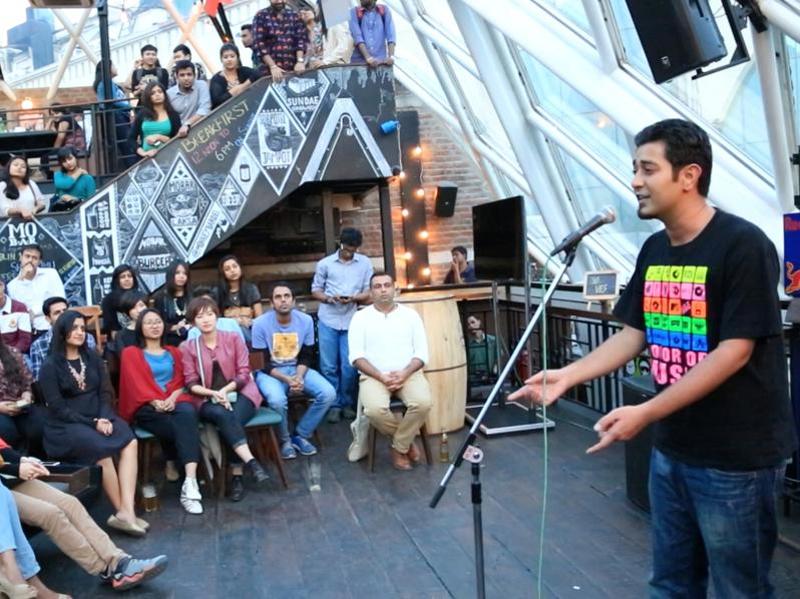
Slam poetry movement is on the rise in the Capital and there are many organisations and individuals, who are spreading this revolution across masses.
Spoken word poetry has taken new wings and is changing the way poetry is being composed and recited in the country. Often regarded as hard-hitting and in-your-face, this kind of performance poetry is much more than teenage rebellion.
With themes as varied as sex education, gender identity and women objectification, these poems raise many important questions about the society. Slam poetry movement is on the rise in the Capital and there are many organisations and individuals, who are spreading this revolution across masses.
Read: From pubs to art galleries: How poetry is getting cool again
Saumya Choudhury, one of the founding members of Delhi Poetry Slam, feels that during its inception, Delhi was just about ready to accept this platform. “Delhi has a rich history and culture. We knew we had to start our journey here. Audiences are uninhibited and much more passionate here,” she says.
The way the verses are conveyed in this kind of poetry is what that sets it apart from other perfromances. Shivani Gupta, a spoken word poet, says, “The poet recites the poem with his expressions, intonations and gestures. Though the mood is set by the poet, he changes his presentation according to the vibe of the audience.”
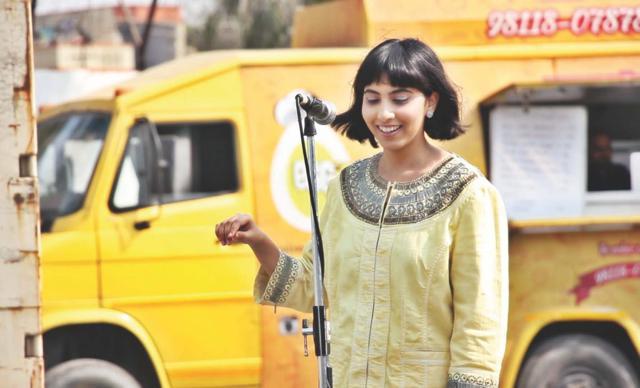
At Performers’ Consortium, an independent performance artists’ collective, spoken word poetry is a medium for bringing about cultural democracy. Divya Dureja, founder of the organisation, says, “Storytelling and poetry, as part of our culture, are in our veins. We are trying to increase the scope of social narrative among different art forms.”
Read: I’m not ‘ambaran di queen’ or ‘kudi namkin’: The spoken word
Aina Singh, who performs with Performers’ Consortium, brings to light a core problem area that she has faced while performing in the city. “Spoken word poetry is seen as a form of rebellion and the audiences try to adapt it in a way that suits their conservative sentiments,” she says.
With the city’s ever-evolving cultural map, it is becoming easier for budding poets to have their voices heard. Madhu Raghavendra, founder of Poetry Couture, says, “We have created free art spaces in Delhi where poets across classes and masses can interact. Our focus is to bring back the culture of spoken word poetry.”
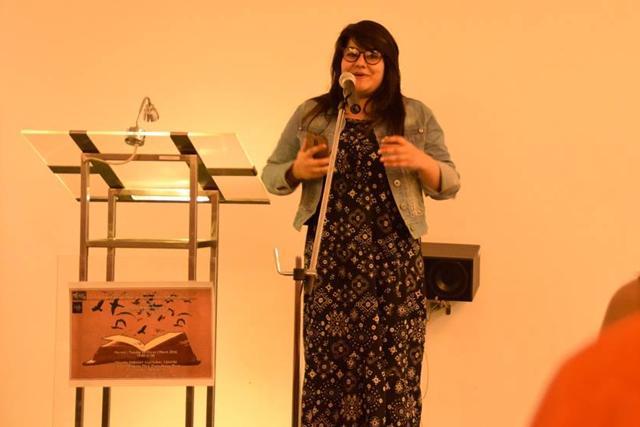
The theme of the poems and audience reception changes from zone to zone. Aditi Angiras, an alumna of Kirori Mal College and founder of Bring Back The Poets (BBTP), says, “If we are performing at a South Delhi café, then the poets will decide on relatively mild themes. But if it is an event in Delhi University, then we go ahead with themes like queer and student activism.”
Read: Poetry is all around us, says poet Sudeep Sen
Abhimanyu Verma, a slam poet and member of BBTP, who writes and recites in Urdu feels that poetry should be able to help us evolve as a society. “Poets need to use their power of the spoken word to highlight current issues, instead of being fixated on personal problems,” he says.
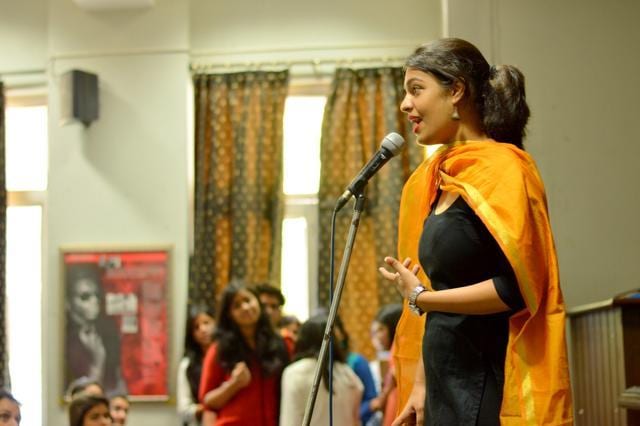
One of the challenges with spoken word poetry is to keep the audience engaged and gauge their reaction. For this, innovations are a must. Diksha Bijlani, an alumna of Gargi College and co-founder of Slip Of Tongue, says, “We do experimentations by mixing slam poetry with other art forms such as music and theatrics. The coming together of different art forms gives slam poetry a unique edge.”
More Poetry Clubs:
Bazm
Pach (Poetry and Cheap Humour)
Poet’s Collective
Poets and Pints
More Places to Catch Live Poetry at:
Potbelly Rooftop Café
Lodi, The Garden Restaurant
The Piano Man
Kunzum Cafe
Follow @htlifeandstyle for more.


