Political parties pulled all stops on Saturday fielding their top leaders and star campaigners to woo voters as the campaigning for Maharashtra and Haryana assembly elections came to an end. The two states go to polls on October 21 and votes are to be counted on October 24.
Voting for by-polls will be held across 66 Assembly seats and two Lok Sabha constituencies on October 21 alongside the assembly elections.
Among the leaders who canvassed on the last day of campaigning were PM Modi, Amit Shah, Devendra Fadnavis, Nitin Gadkari, Manohar Khattar for the BJP. Uddhav Thackeray of Shiv Sena, Sharad Pawar of Nationalist Congress Party and Raj Thackeray of the MNS were also out in the field.
The Bharatiya Janata Party (BJP) is seen to having it easy in both Haryana and Maharashtra as the opposition has either been absent or tackling dissent within.
In Maharashtra, the ruling BJP is contesting on 150 seats and its ally Shiv Sena on 124 constituencies in the 288-member assembly in Maharashtra. The BJP’s alliance partners have fielded 14 candidates on the party’s lotus symbol.
{{/usCountry}}In Maharashtra, the ruling BJP is contesting on 150 seats and its ally Shiv Sena on 124 constituencies in the 288-member assembly in Maharashtra. The BJP’s alliance partners have fielded 14 candidates on the party’s lotus symbol.
{{/usCountry}}The Congress is in alliance with the Nationalist Congress Party (NCP) in the Maharashtra assembly polls. Both the parties are contesting 125 seats each leaving 40 for smaller parties, including the Samajwadi Party, Swabhimani Shetkari Sanghatana of Raju Shetti and the Communist Party of India (CPI).
The BJP will be contesting the 90 assembly constituencies in Haryana alone with the party banking on the clean image of chief minister Manohar Khattar and the development works done by his government.
It had won 47 assembly seats in Haryana and for the first time formed the government on its own since the state was carved out of Punjab on November 1, 1966.
The faction-ridden Haryana Congress, on the other hand, saw knives drawn out between senior leaders as the party grappled with internal squabbles over the state leadership after the BJP dethroned it in the 2014 polls.
Former Haryana Congress chief Ashok Tanwar quit the party accusing the leadership of not doing enough to promote ground workers and instead extended support to Dushyant Chautala led Jannayak Janata Party (JJP).
BJP vs Congress
The assembly polls in both the states are crucial for Congress and in the absence of big faces, the BJP is seen to have an edge over the grand old party.
The BJP campaigned aggressively with many big faces like Prime Minister Narendra Modi and Union home minister Amit Shah addressing back-to-back rallies in both the states. The campaign for assembly elections hardly saw any push by Congress party’s top leadership.
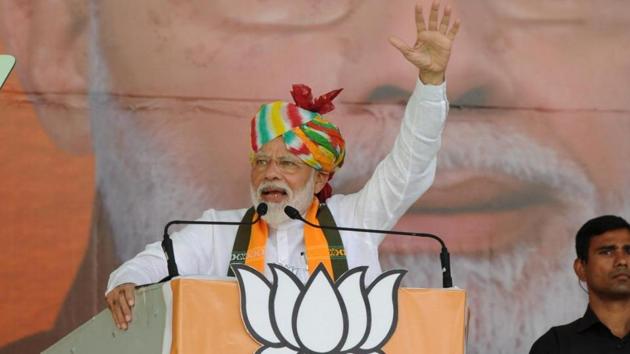
Prime Minister Modi held more than 25 election rallies in both Haryana and Maharashtra where the ruling BJP is trying to make history by returning to power.
Rahul Gandhi addressed seven rallies in both the states, including the one in Haryana’s Mahendragarh, which was scheduled to be addressed by Sonia Gandhi who pulled out over ill health.
Interestingly, Congress general secretary Priyanka Gandhi Vadra, who had campaigned extensively in Lok Sabha polls, was also missing from the campaign for the assembly polls in Haryana and Maharashtra.
NCP chief Sharad Pawar addressed four rallies in Bhor, Karjat Jamkhed, Indapur and final rally at his hometown Baramati in Maharashtra.
Issues highlighted
Devendra Fadnavis and Manohar Lal Khattar have been the BJP’s public faces in the two states in the elections that also promise to be a test of resilience for the Congress after its electoral rout in the Lok Sabha polls.
Both national-level factors and specific state-level configurations and issues were highlighted by the parties during the campaigning in these states.
Modi’s continued popularity, support for the Centre’s moves in Kashmir, Fadnavis’s emergence as a strong state leader, and both central and state-level welfare schemes were raised by BJP leaders in their rallies and public addresses in Maharashtra.
The NCP and Congress alliance has focused on agrarian distress, drought in pockets of the state, rising unemployment and a perceived divide between the BJP and Sena cadres on the ground to go against the ruling coalition.
The BJP has projected Khattar’s administrative hold, his image of being clean and honest and focus on welfare delivery in Haryana. National issues like scrapping of Article 370 in Kashmir, water wars with Pakistan and sports and armed forces personnel have also figured in the speeches of the BJP’s leaders’, mostly the Prime Minister.
Congress leaders, especially Rahul Gandhi, have spoken about rising unemployment, the slowdown in growth, and bank fraud to hit out at the central and state governments during the campaign. He has also picked on the Rafale deal, where he reiterated the allegations of corruption against the government.
Whether the speeches and rhetorics of the leaders from these parties will hold water will be clear on October 24, when votes will be counted.