A new chapter in the history of Jharkhand will begin now and all promises made to the people will be fulfilled, Jharkhand Mukti Morcha (JMM) leader Hemant Soren said on Monday as the Opposition alliance led by his party headed for a comfortable victory in the eastern state.
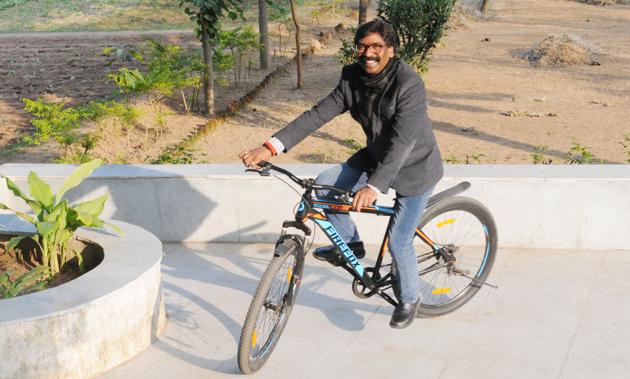
The 44-year-old Soren, who led the charge from the front in the JMM-Congress-Rashtriya Janata Dal (RJD) alliance, is set to become the state's chief minister for the second time. He addressed 182 rallies, public meetings and road shows in a span of 40 days, adding firepower to the Opposition’s campaign in polling spread over five phases and about three weeks.
He had to compete with the Bharatiya Janata Party’s (BJP) star campaigners, including Prime Minister Narendra Modi and Union home minister Amit Shah. The PM campaigned in both the seats Soren contested, Dumka and Barhait; the JMM leader won both.
Though Shibu Soren, 75, is still the JMM chief, Soren has gradually emerged out of his father’s shadow. In 2013, he pulled down the BJP-led Arjun Munda government when he was the state’s deputy CM. Soren became the chief minister with the support of the RJD and the Congress, and the government lasted till the 2014 assembly elections.
While the JMM lost, Soren was the lone prominent tribal leader who emerged victorious, winning one of the two seats he contested. Other tribal leaders such as Arjun Munda of the BJP, Babulal Marandi of the Jharkhand Vikas Morcha (Prajatantrik) and Independent candidate Madhu Koda, all former CMs, were defeated in the elections. .
{{/usCountry}}While the JMM lost, Soren was the lone prominent tribal leader who emerged victorious, winning one of the two seats he contested. Other tribal leaders such as Arjun Munda of the BJP, Babulal Marandi of the Jharkhand Vikas Morcha (Prajatantrik) and Independent candidate Madhu Koda, all former CMs, were defeated in the elections. .
{{/usCountry}}“Hemant became the heir apparent in the JMM after the death of his elder brother Durga Soren in 2009. His tenure as the CM cemented his place, both within and outside the party. Though his tenure lasted just 14 months, it put him in the driver’s seat. Whatever resistance he faced in the party — from a section of senior leaders of his father’s generation — it was completely laid to rest due to his tenure as CM,” a senior JMM leader said, asking not to be named.
But Soren did not get a smooth start into politics. His father’s decision to field him from Dumka in the 2005 assembly polls triggered a rebellion. Shibu Soren’s long-term associate, Stephen Marandi, left the JMM, contested from Dumka as an independent, and won. The tables, however, were turned in the 2009 assembly elections, when Soren won, defeating Marandi.
“He is a different person than his father. He knows that his father was basically leading separate Jharkhand tribal movement while he is leading a political party. He has also transformed himself over the past five years. Hemant has shown that he is in command. Barring a few hiccups during seat-sharing — natural in the campaign period — there never appeared to be any chinks in the alliance,” said LK Kundan, who teaches political science at Ranchi University.