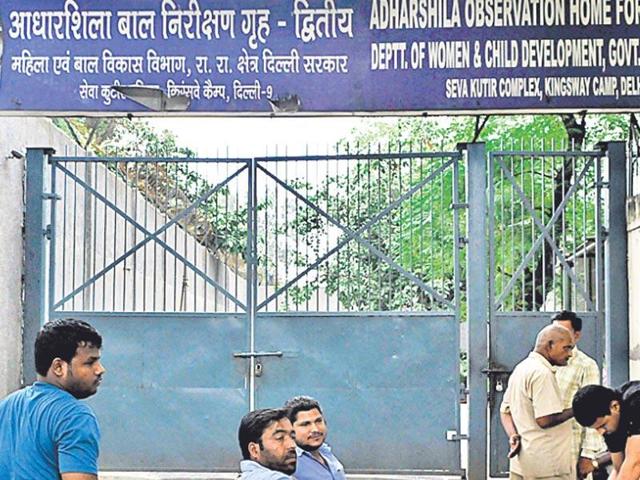
In a first, 3 minor murder accused could be tried as adults
The new provisions of the law provide a mechanism to treat juveniles — in the 16-18 years age group — on par with adult criminals for crimes with punishment of more than seven years, such as murder and rape.
In a first, three minors accused of murder of their classmate would be examined to decide if they should be tried as adults or juveniles under the revamped Juvenile Justice Act.

The new provisions of the law provide a mechanism to treat juveniles — in the 16-18 years age group — on par with adult criminals for crimes with punishment of more than seven years, such as murder and rape.
Under this provision, the Juvenile Justice Board will have to conduct a “preliminary assessment” of the mental and physical capacity of the accused to commit the crime and understand its consequences.
Following the examination, the juveniles may be tried as adults.
Read: New juvenile justice bill hailed but doubts persist
The amended law came into effect from January 15, the day 16-year-old Nasir was allegedly killed by the three minors and his body dumped in a forest in Sagar district of Madhya Pradesh.
The accused were arrested on Tuesday and produced before a local court. The board will pronounce its decision in accordance with the amendments after about a fortnight.
On the night of January 15, the three minors — two 17-year-olds and a 16-year-old — allegedly killed their classmate Nasir.
Child activists and others are keeping a close eye on the progress of the case due to its future bearing on serious cases against minors.
Read: New juvenile justice law: Well begun but only half done
ABOUT THE AUTHORShruti TomarI have spent over a decade chronicling Madhya Pradesh’s political and social landscape, covering politics, investigative journalism, crime, human interest, and government policy, blending sharp insight with ground‑level depth. I have closely tracked three assembly elections, three Lok Sabha elections, leadership transitions in MP while exposing governance lapses, tender irregularities, and flawed policy rollouts. My reports have revealed gaps in the Cheetah project, irregularities in medical education, rigging in recruitment exams, and loopholes in policy implementation. In crime reporting, I have moved beyond FIRs to map systemic patterns — from organised crime networks and gender‑based violence to custodial accountability — balancing urgency with sensitivity. My journalism is defined by a commitment to human interest. I have profiled the marginalised Bancchda community, documented atrocities against tribal groups, and highlighted efforts to preserve their culture through heritage liquor and revival of spiritual practices. I have reported on farmers struggling with failed MSP promises, giving voice to those often reduced to statistics in policy files. Passionate about field reporting, I have reported on rampant sand mining in Chambal and Narmada, pharmaceutical companies supplying medicines under altered names, the dire condition of schools and colleges, the plight of commercial sex workers, and skewed sex ratios in specific districts. Beyond deadlines, and as HT’s state correspondent and assistant editor in Madhya Pradesh, I engage with ministers, farmers, students, and activists, believing the best policy stories begin with a single human voice. A postgraduate in Journalism and Mass Communication, I also hold a diploma in sports journalism.Read More

E-Paper