E-Paper



MP CM inaugurates ‘selfie point’ near Bhopal’s Upper lake, Opposition Congress sees red
The 32-feet tall statue of Raja Bhoj was installed in Upper Lake on a ‘burj’ (bastion) of Fatehgarh Fort. The statue weighing seven tonne was built at a cost of Rs 27 lakh by sculptor Prabhat Rai using gunmetal and bell metal.

 Prefer HTon Google


Madhya Pradesh chief minister Shivraj Singh Chouhan on Sunday inaugurated a selfie point near the statue of Raja Bhoj situated in Upper lake of Bhopal. Upper Lake is the only Ramsar site in central India and wetland of international importance. Chouhan also took a selfie at the site.
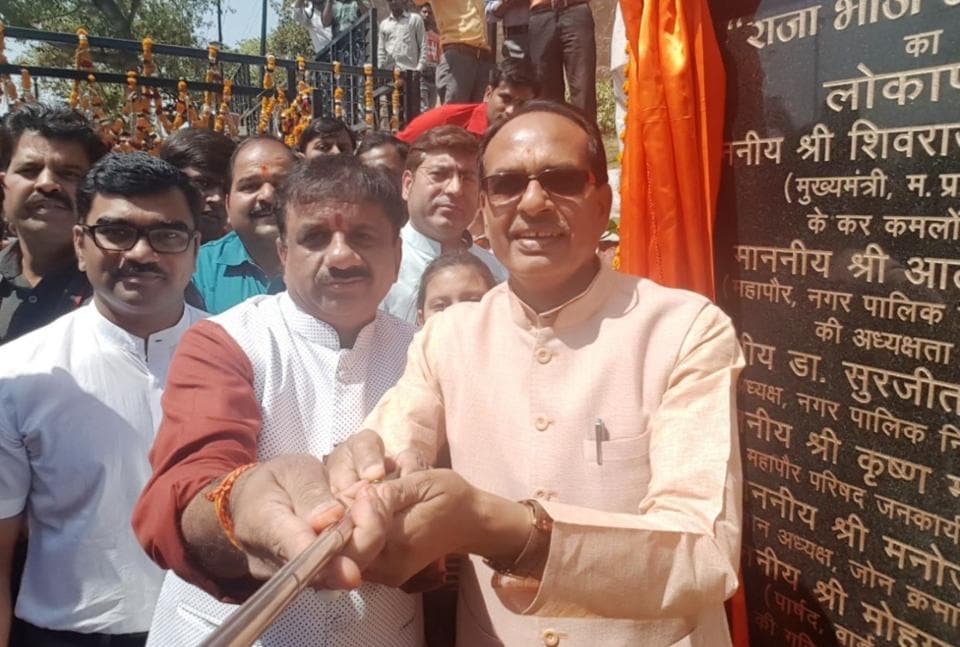
However, within hours of his inaugurating the selfie point Chouhan came under attack from the Opposition which raised a question against the propriety behind the selfie-point saying when youths were struggling for jobs and farmers were committing suicide in the state the CM chose to inaugurate the selfie point to divert the attention of people from the real issues they are confronted with.
In his tweet later in the day, Chouhan said,“ The statue of Raja Bhoj recounts the rich legacy of Bhopal. I am glad to inaugurate the #RajaBhojSelfiePoint at VIP Road, which will not only give people a designated spot to get themselves clicked with the statue of the great king but also ensure their safety.”
Bhopal mayor Alok Sharma said the selfie-point was constructed by Bhopal Municipal Corporation (BMC) at a cost of Rs 84 lakh and will help in attracting more visitors and tourists to the city of lakes.
“This is the first selfie point inaugurated by the government in the state. These days people are crazy about selfies. So I thought why not create one near Upper lake which will help people to experience the beauty of this lake and appreciate its millennium-old legacy”, he said.
State Congress spokesperson KK Mishra said it was ironic that while thousands of contractual employees were agitating for decent wages and regularisation of their jobs, a girl committed suicide after Chouhan cabinet’s minister’s son refused to acknowledge his marriage with her and was about to marry another girl soon, when farmers were struggling for two square meals and committing suicide, unemployed youth were agitating looking for jobs, the chief minister was inaugurating a selfie point and taking selfies.
Responding to this, mayor Alok Sharma said Congress had no issue left, which was why it was raking up the matter.
“Why should CM not be happy about efforts to beautify Bhopal and highlight its legacy? Why Congress has a problem if we are trying to promote the city’s main attractions? They just want to play politics”, he said.
The 32-feet tall statue of Raja Bhoj was installed in Upper Lake on a ‘burj’ (bastion) of Fatehgarh Fort. The statue weighing seven tonne was built at a cost of Rs 27 lakh by sculptor Prabhat Rai using gunmetal and bell metal.
Almost on a daily basis people and visitors throng VIP Road that snakes its way along the Upper Lake for few kilometres. People take selfies along this route with a magnificent view of the vast Upper Lake in the background. Especially in the evenings, a large number of people visit VIP road to spend time on the breezy periphery of the Upper Lake.
Considered one of the largest man-made lakes in India, Upper Lake, spread over around 35 sq kms, is a major source of drinking water for Bhopal and is often referred to as its lifeline. According to the historians, the lake was created by constructing an earthen dam across the Kolans River by Raja Bhoj during his tenure as a king of Malwa (1005–1055 AD) to secure the eastern frontier of his kingdom.