
 E-Paper



There was no governance in Bihar before 2005: Sanjay Jha
In an interview to Hindustan Times, Jha said the issue of migrant workers and the state’s Covid-19 response will work to the NDA’s advantage, contrary to what the perception is or the narrative that the Opposition is building


The National Democratic Alliance (NDA) will ride back to power in Bihar on the basis of the development work carried out by Prime Minister Narendra Modi at the Centre and chief minister Nitish Kumar in the state, Sanjay Jha, minister for water resources department, and national general secretary of the ruling Janata Dal (United) (JDU) said.
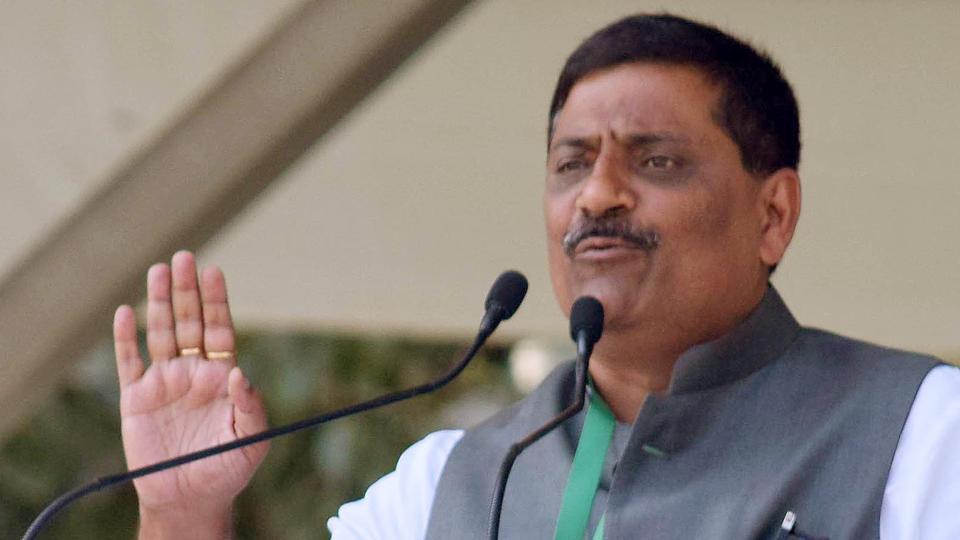
In an interview to Hindustan Times, Jha said the issue of migrant workers and the state’s Covid-19 response will work to the NDA’s advantage, contrary to what the perception is or the narrative that the Opposition is building.
Edited Excerpts
There is anti-incumbency against the Nitish Kumar government. There are issues such as employment, law and order and health care which the government will be questioned about. How well prepared is the NDA?
There was no governance in Bihar before 2005. The 15 years of Rashtriya Janata Dal (RJD)’s misrule affected every aspect of the state and we were left with the legacy of that ‘jungle raj’. But the NDA will come back to power with a majority and there are three reasons why. The first, the decisive and charismatic leadership of Prime Minister Narendra Modi at the Centre and Nitish Kumar in the state; the second being the development work carried out by the NDA nationally as well as across the state, and the third is that NDA has given representation to all social segments—it is, today, a strong social coalition.
By removing Lalu Prasad Yadav’s picture from the posters, the RJD cannot erase the 15 years of his misrule that left Bihar with the stigma of ‘jungle raj’.
Also Read: Bihar Assembly Election 2020: BJP plans digital outreach for PM’s campaign from October 23
The opposition and the NDA’s former ally, the Lok Janshakti Party, has accused the government of failing the workers. The images of migrant workers making their way home on foot, the job losses and the suffering are expected to impact the election outcome.
The issue of migrant workers will actually work to the NDA’s advantage, because the workers now know firsthand how well they were looked after by the Bihar government as compared to how they were treated by other governments such as the Aam Aadmi Party in Delhi. A large section of workers who provide services in Delhi were literally pushed out of the state when the lockdown was imposed in March and left to fend for themselves.
Bihar paid for their travel; we set up quarantine centres so that we could break the chain of infection spreading to the rural areas. Everyone kept saying that Bihar will collapse and there will be widespread casualties, but compare the deaths in Bihar and Maharashtra; we have less than 1,000 deaths while in Maharashtra the number is over 40,000. Our recovery rate is among the best; there is something that the Nitish Kumar government did right.
Even in the quarantine centres, where 1.5-2 million people stayed, we ensured that they were looked after and treated with dignity. We spent Rs 5,300 per person in those centres.
What about employment avenues for workers who are back home and don’t want to migrate to earn their livelihood?
We were the first state to carry out skill mapping of the workers. We are providing assistance to those who want to start work in Bihar. In Champaran, for instance, people who were engaged in textile manufacturing have already begun production and they are taking orders from clients in Rajasthan and Gujarat. Handmade masks with Madhubani art is a popular buy on platforms sites such as Amazon. In Sapaul, workers have received orders for leather jackets from Ladakh… the transformation has begun.
Also Read: Tejashwi Yadav makes a U-turn, shows ‘sympathy’ for Chirag Paswan
Your party is among the few who have fielded more women candidates than the last election. Was this a conscious decision, given how women tend to be underrepresented in the assembly?
It was the Nitish Kumar government that actually paid attention to women and carved them out as a constituency. While others were focused on religion and caste, we saw the importance of women as a constituency. In the last 15 years, our government has been committed to women’s empowerment; and you see the results on the ground. We were the first government to announce 50% reservation for women in local bodies in 2006. Since then there have been over 50% women being elected to these local bodies. Prohibition; schemes such as cycles for girls,etc. are all efforts reforms that took place in Bihar with women in mind.
How do you perceive the LJP’s persistent attacks against the JD(U) and the simultaneous assertion that it will form government with the BJP after November 10?
The voters in Bihar are intelligent and they vote decisively. The voters in Bihar are not taken in by vote-cutters, nor do they waste their votes. The BJP leadership, including home minister Amit Shah, has said unequivocally that the NDA will form the government with Nitish Kumar as the chief minister.
Your ally, the BJP, thinks that the RJD has ceded space to extremist ideology by associating with parties such as the CPI-MLL and Left-wing extremism could return if the Grand Alliance is voted to power.
During the RJD’s rule we had a series of massacres, land-grabbing incidents and widespread violence. When the Nitish Kumar government came to power, we started a scheme in January 2006 called ‘Aapki Sarkar Aapke Dwar’ (your government at your doorstep) aimed at the holistic development of the naxal-affected areas in Jahanbad. Dalits and EBCs, whose shoulders the Naxals would fire from and use as cannon fodder, were given reservation in Panchayats; this help them join mainstream politics. Gradually, with the development of the naxal-affected areas, the problems faced by people were addressed. But we know that the RJD believes in the politics of bloodbath and it is possible that it wants to revive that.


