
 E-Paper



Bollywood in court: Shahid Kapoor, Taapsee Pannu, Yami Gautam, Richa Chadha turn lawyers on-screen
With a string of courtroom dramas being churned out in 2018-2019, and many actors playing the role of lawyers, seems this has become a genre in its own right, after hits like Pink and the Jolly LLB series.


Remember those thundering arguments made by lawyers in older Hindi movies, and the more recent edge-of-the-seat courtroom scenes in the Jolly LLB series (2013 and 2017), Pink (2016), and Oh My God (2012)? The legal drama, as a genre, appears to have come into its own in Bollywood — a string of films are planned for this year and the next, and stars like Shahid Kapoor, Taapsee Pannu, and Yami Gautam are putting on the lawyer’s coat.

It can be a source of inspiration
What makes the courtroom drama a popular genre? Shree Narayan Singh, who is directing Batti Gul Meter Chaalu, says, “Lawyers, with all due respect, are often viewed with doubt and suspicion, especially since they have to represent all sorts of clients. To see a lawyer use the tools of their trade to overcome greater enemies is, therefore, a source of inspiration.” (For instance, Amitabh Bachchan’s lawyer character in Pink ensured justice for his client, a young woman played by Taapsee Pannu, by ripping apart a commonly peddled notion: when a woman says ‘no’ to sex, she actually means ‘yes’. Amitabh establishes that ‘no’ simply means ‘no’.)
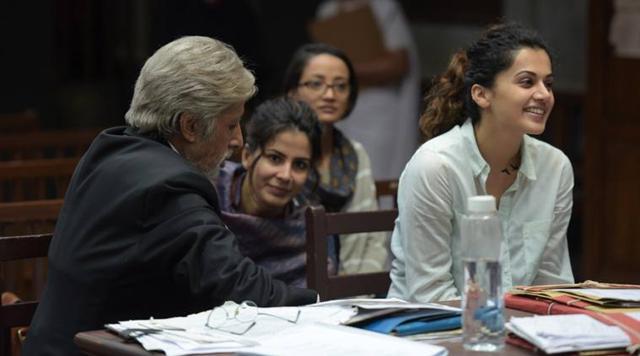
Anubhav Sinha, director of Mulk, feels that the courtroom drama has been a sub-genre across the world. “Even in India — no matter how unrecognised — this space has always been flourishing. Also, it needs more research than a regular fiction drama, because you’re dealing with the law and also the norms of a courtroom, so you want to be technically correct,” he says.
Actor Kunal Kemmu, who is co-producing a biopic based on the famous defence lawyer Ram Jethmalani, believes that “it’s the suspense of whether justice will be served or not, and two sides battling it out — right and wrong — that makes such films an interesting watch.”
More research on actors’ part
Actors, too, need to put in that extra effort to play a lawyer. And most of them agree that it requires way more research than for most other characters. “The body language and the mannerisms [of a lawyer] are a challenge. Also, the environment in an actual courtroom is quite different from what we see in films; hence, witnessing a real courtroom always helps,” says Yami Gautam.
Taapsee says that it’s quite different standing on the other side of the box. “I realised that the responsibility and intimidation is much more when you’re the one driving the argument. We had a practising lawyer on the sets all the time to help us with the exact terminology and body language,” she says.
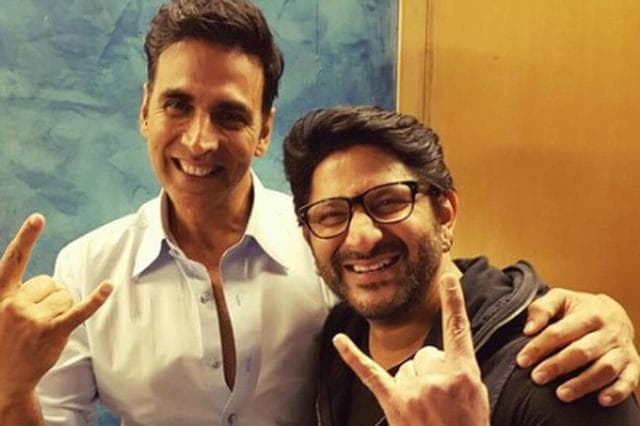
To play her part of a public prosecutor right, Richa Chadha is watching a lot of documentaries. “I’m trying to understand how female lawyers have crusaded against issues close to them across continents. This film will show the Indian courts proceedings pretty much as they are, without the sort of over-dramatised versions of the past,” she says.
The challenge that comes along
Although a legal drama isn’t a new concept, with cinema’s reach increasing, filmmakers and actors do have a responsibility to inform as well as entertain. “The only way to deal with serious subjects is to look at the situations with a bit of humour; it not only entertains but also eases the load of a heavy subject,” says Shree Narayan. He adds that actors in legal dramas have to draw upon nuance more than movement, as their physical space is limited.
Taapsee sums up: “Being a part of a courtroom drama is extremely challenging, as the movie revolves around the same set of actors, between the same walls for a long time, and it’s a challenge to hold the audience’s attention.”
Interact with Monika Rawal Kukreja at Twitter/@monikarawal


