
 E-Paper



Newsmaker: As YRF turns 50, Aditya Chopra looks to further a unique legacy
Yash Raj Films has acted as an informal school for filmmakers, set templates for the Hindi blockbuster, been among the first to take Bollywood corporate, and of course created DDLJ.

 Prefer HTon Google


As theatres reopened in Mumbai last week, a film with a staggering 1,274-week run began playing again at Maratha Mandir. It seems fitting that Yash Raj Films’ Dilwale Dulhania Le Jayenge (DDLJ), originally released in 1995, should have resumed its historic run as YRF celebrates its 50th anniversary.
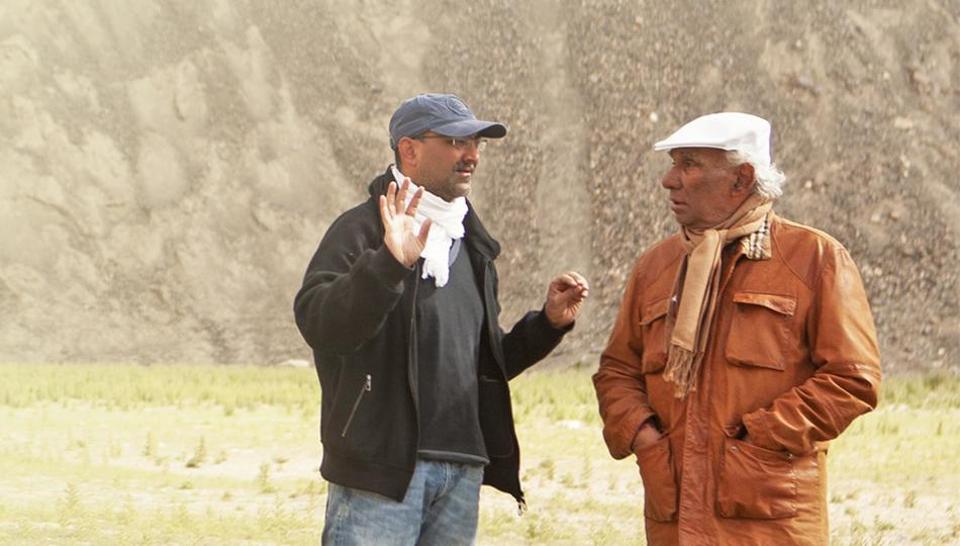
In another sense, DDLJ looms like a sort of untrappable genie over the YRF banner. Neither Aditya Chopra, 49, nor the studio he heads has been able to replicate that kind of success. To be fair, no one else has either. What YRF has done over the years is set templates that much of mainstream Bollywood follows.
It all began in the 1947, when BR Chopra crossed over from the newly divided Punjab, set up shop in Bombay and began making films. About five years later, Yash Chopra, the brother 18 years his junior whom he had mentored and been a father figure to, joined him. Together, they began to tell stories to a young nation just starting to fall in love with the moving pictures.
BR Chopra made films that revolved around social issues. Yash, then in his late-20s, attempted a couple in that genre (Dhool ka Phool in 1959, Dharmputra in 1961), but soon switched to the kind of movie he would be identified with for the rest of his life.
His first colour film Waqt (1965) tapped into the breezy mood of the ’60s, which broke from the austerity of the decade before. For one thing, it was a first-of-its-kind multi-starrer, with Raaj Kumar, Shashi Kapoor, Sunil Dutt, Sadhana, Balraj Sahni and Sharmila Tagore, among others. It was a hit, and Yash Chopra knew he was onto something.
In 1970, the two brothers parted ways. In a break neither would ever talk about publicly, Yash Chopra left to start his own banner, Yash Raj Films.
Here, he gave free rein to a free-spirited flamboyance that wasn’t just new to the screen, but to India. Into a palette of subtle monochromes, Yash Chopra added the chiffon sari, the Swiss Alps, and alluring glimpses of a world of wealthy Indians with carpeted halls, pianos and indoor fountains.
In what became a sort of informal school of filmmaking, he offered generations of filmmakers a formula that worked — melodious music, foreign locales, glamorous visuals, beautiful heroines and a certain modern outlook. His storylines were often quite daring (his characters could fall in love with more than one person, and he did not hesitate to place a woman at the centre of his stories).
Some of his trademark elements would percolate all the way down to Karan Johar in the ’90s.
As the years went by, Yash Chopra adapted to stay current — in 1997, he made Dil To Pagal Hai. This time, his hero, Shah Rukh Khan, lived in an apartment that would have fitted right into Manhattan and the heroines wore clinging Lycra sportswear.
Amid all this, his son Aditya Chopra grew up in a household so steeped in the world of cinema that as a child he thought everyone made movies. By his late teens, he too lived and breathed cinema. Aditya would watch every Hindi release at its first showing, write his own reviews, make box office predictions and later match his predictions with how the movies had fared (he could reportedly predict hits with an accuracy rate of 80%).
He began writing his first script at 23, and it was a tale that tugged at the heartstrings of a young post-liberalisation audience torn between the allure of the West and the pull of their desi roots. In DDLJ, one formula for balance presented itself. Here were Westernised youngsters, roaming the world by themselves, but so Indian at heart that they could not conceive of a marriage that their parents wouldn’t approve of.
There was one pathbreaking difference too. Where his father had used foreign locations as backdrops for songs, Aditya turned his lead characters into NRIs. DDLJ opened the floodgates to films set in the Indian diaspora and did much to expand Hindi film audiences in these markets.
By this time, father and son were also transforming the company into a massive corporate entity — one of the first of its kind in Bollywood. In addition to a state-of-the-art studio and interests in music, distribution and talent management, they were changing how the movies were made. Professional casting directors made an appearance; talent began to be sought out in new places.
When Yash Chopra died in 2012, aged 80, the baton passed to Aditya. And while the latter’s oeuvre remains romance — he has made three films since DDLJ, all love stories: Mohabbatein (2000), Rab Ne Bana Di Jodi (2008) and Befikre (2016) — YRF’s offerings could now be plotted across a far wider canvas, from large commercial franchises such as Dhoom and Salman Khan’s Tiger to offbeat movies such as Rocket Singh (2009) and the sleeper hit that felt so much like an indie release, Sui Dhaaga (2018).
Hits and flops are part of the game, and recent flops have included the mega-budget Aamir Khan-starrer Thugs of Hindostan (2018). There have been fallow years when nothing seemed to work.
But through it all, YRF has continued to help shape the mainstream Bollywood agenda — in its cookie-cutter stories and its embrace of new, usually debutant directors.
So what does Aditya Chopra envision for YRF next? In a statement released in September to mark this 50th anniversary, the famously reclusive filmmaker said, “I wanted us to achieve a certain scale… My father… bravely indulged all my bold initiatives. And… we went from a film production house to India’s first fully integrated independent film studio.”
There is now talk of a YRF museum, a rare step in an industry with little respect for the material components of legacy.
But Aditya himself — except for one occasion after the release of DDLJ — still won’t meet the press. He has only very rarely been photographed. There will be no archival interviews for future researchers to draw from. Which is a pity, but at least we’ll know what he’s been thinking from what we see on our screens.


