
 E-Paper



Anup Gupta, Managing Editor, Integrations, picks his favourite read of 2021
Winner of the Indira Gandhi Prize for Popularization of Science 2020, Hari Pulakkat’s book has captured and narrated momentous developments in India’s journey in science and technology through stories of the people who made it happen against all odds

 Prefer HTon Google


In the middle of 2021 when Hari Pulakkat, the author of Space. Life. Matter., a former colleague and the winner of the Indira Gandhi Prize for Popularization of Science 2020, told me about his book, I was not quite excited. But my loyalty to my ex-colleague triggered, first, an order of a hard copy, which, when it did not arrive, had me purchasing the Kindle version. However, I did not begin reading it immediately and only after Hari messaged asking for my views did I start.
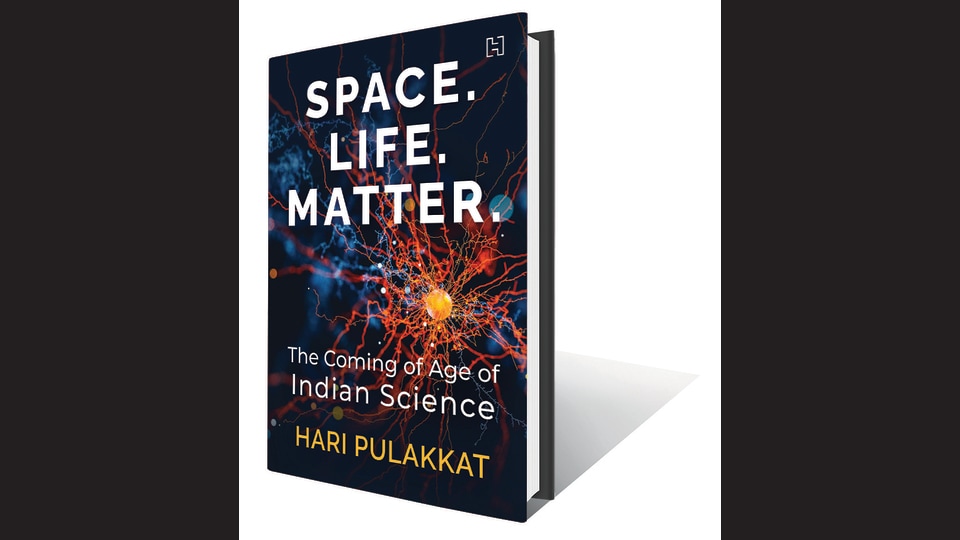
I’m not exaggerating when I say it was unputdownable.
With a title like Space. Life. Matter. the book promised to be a bit of a laborious read. However, it was anything but that. Hari has been able to capture and narrate momentous developments in our nation’s journey in science and technology through the stories of the people who made it happen against all odds. It was the 1940s; India had gained its independence and the nation was just about finding its feet in the world. Money was in short supply but, as illustrated in these stories, the abundance in enterprise, determination, commitment, leadership and human spirit, more than made up for it.

There is no doubt Homi J Bhabha or Vikram Sarabhai were stalwarts in the field of science and technology, and most of us have read about them. But in this book, the reader is kept engaged with fascinating stories of the achievements of Govind Swaroop, CNR Rao and Man Mohan Sharma, to mention a few. It is educative to learn how these amazing talents were spurred on by Homi J Bhabha to contribute to nation building. They often stepped out of their comfort zones to ensure that the job was done, and done well. In today’s materialistic age, it may seem odd to note that these great minds were not bothered with their personal financial gains but were driven by and focused on challenging themselves.
The only negative is the tendency for stories to ramble. Some tightening could have made them crisper.
I would strongly recommend this book to all, and especially to younger readers, to learn what an inspired and determined human mind can achieve against what seem like insurmountable odds.
I leave you with this quote from Govind Swaroop, pioneer of radio astronomy in India - “People ask me this question - why are you building radio telescopes in a poor country? I ask them - why are you building temples? If temples are relevant, searching for the mysteries of the universe is also relevant”. Quite an amazing thought process, i would think.


