
 E-Paper



Benjamin Moser: “As a Jew, it is important for me to speak out against Zionism”
The Pulitzer Prize-winning author on his book on Jews against Zionism and his works on Susan Sontag and Clarice Lispector

 Prefer HTon Google


How did you end up writing The Upside-Down World: Meeting with the Dutch Masters?
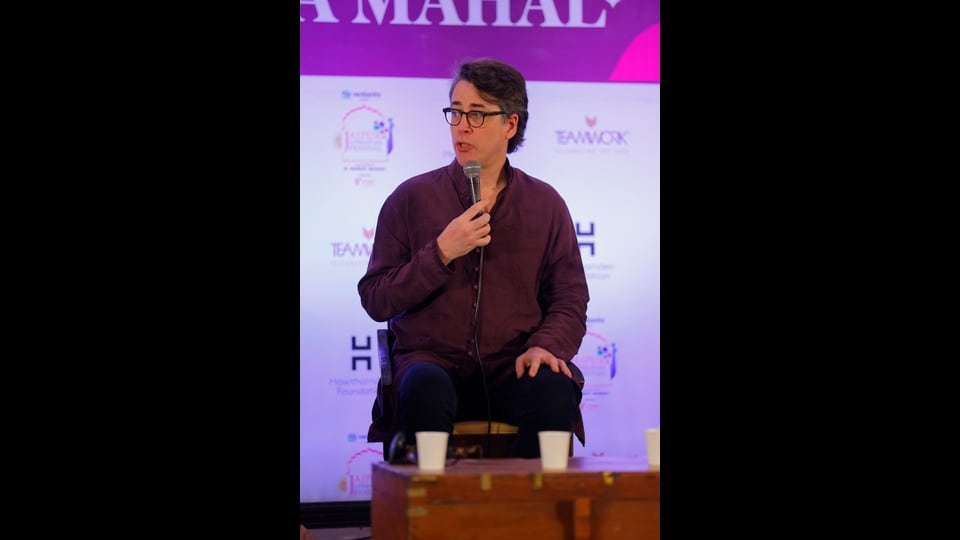
Well, I grew up in Houston, Texas in the United States and now I live in Utrecht in the Netherlands. I moved at the age of 25 to be with my Dutch partner. It is a nice place to live but it turned out to be much more foreign than I had imagined. I began to think about questions like: Why am I here? What am I doing? Who am I? I immersed myself in the art, going to every Dutch museum that I could possibly visit. I didn’t care about their horrible television or their bad movies. I didn’t even pretend to be interested in football. This is perhaps a bit like living in Delhi, and being interested in the miniature paintings of the Mughals but not in the lives of politicians or Bollywood movies. The Dutch art that I discovered had a calming effect on me. I really wanted to share that with others, and I guess that’s how the idea of the book was born. I chose to live in a world of my imagination, which is the world of art. And, actually, I want people to know that the world of art is just as real as, you know, some corrupt minister. People tend to think that reality can only be ugly and boring. No, I don’t buy that. The language that artists speak in, the language of symbols and motifs is also real. And I chose that reality.

Your words remind me of Amitav Ghosh’s novel The Shadow Lines, where he writes, “...a place does not merely exist…it has to be invented in one’s imagination.” Do you agree?
Yes, of course! When you stay in a place long enough, it can become a little boring because you get used to it. What transforms it for you is your imagination. It is about the choices that you make. Living in Delhi, you may not want to think only about crime, sewers, poverty, and traffic. You may want to define your experience through places of beauty that inspire you, like Humayun’s Tomb, for instance. That’s how it was for me when I moved to a new country. The artists helped me find my footing. The chapters in my book are about Rembrandt, Johannes Vermeer, Jan Lievens, Frans Hals, Carel Fabritius, Ferdinand Bol, Govert Flinck, Gerard Ter Borch, Pieter de Hooch, Jan Steen, Hendrick Avercamp, Gabriël Metsu, Pieter Saenredam, Paulus Potter, Jacob Van Ruisdael, Albert Eckhout, Rachel Ruysch, and Adriaen Coorte. I chose to write about the great painters of the Dutch Golden Age from the 16th and 17th century.
How have Dutch people responded to your book?
They love it! Well, they know that Dutch art is famous across the world but some of them are a bit surprised by how much it can mean to people like me who were raised outside of the Netherlands. A lot of Americans grew up with physical reproductions of Dutch paintings on T-shirts and mugs. Some people have them as posters. Dutch art is also part of American popular culture. My grandmother, who died 30 years ago, had fake Rembrandts on her walls. They were part of my early visual literacy but I didn’t really associate them with Dutch culture back then.
Having lived in the Netherlands for more than two decades, do you think of yourself as a Dutch person now or as an American living among Dutch people? Does it matter to you?
Oh yes, it matters! Americans are brought up to think that they are really unique and interesting. That bubble breaks when you live outside. You realise how so much of what you thought of as your unique self was just your culture, and your economic and political systems. As an Indian, you might not realise how Indian you are until you leave India and live elsewhere.
It took me a while to learn that nobody cares about foreigners. They are totally superfluous to any country. If all the foreigners vanished from Rajasthan tomorrow, Rajasthan would not notice. Life would go on. Similarly, my being there or not doesn’t really matter to the Netherlands. My loved ones and my friends would but, beyond that, it would not matter. Thinking along these lines really forced me to think about things like: Who am I? What do I want out of my life?

You have asked probing questions about other people’s lives too. What was it like to work on Sontag: Her Life and Work, which won the Pulitzer in 2020, and Why This World: A Biography of Clarice Lispector, a finalist for the National Book Critics’ Circle Award?
I was asked to work on Susan Sontag’s biography because they needed somebody who could handle the life of a complex female writer in an international context. She was really radical and countercultural in some ways, and very conservative in other respects. I was lucky to get access to some rare archival material, which helped me tell her complicated story in a nuanced way.
I wrote about Clarice Lispector because I fell in love with her work. She is a complete genius. She writes all the things that you feel but could never actually say, using the most beautiful language. I am obsessive, so I also translated her books and short stories from Portuguese into English.

Susan Sontag and Clarice Lispector have a lot in common, including the fact that both were born to Jewish parents. Tell us about your new book on Jews against Zionism.
Yes, I am really excited about it. It is called Anti-Zionism: A Jewish History. As a Jew, it is important for me to speak out against Zionism, an ideology that claims to speak for all Jewish people. Anti-Zionism is not anti-Semitism, even though Israel would like us to believe otherwise. I want to tell the story of Jewish anti-Zionism from the 19th century to the present day but not as a sequence of events that happened one after the other. I want to focus on what resistance means to people, so it is going to be a collection of portraits of Jewish people from the United States, Europe, Latin America, Africa, and the Middle East who have fought against Zionism. I have travelled a lot for this book to interview people, and it has been a privilege to learn from them.

Gay people from anywhere in the world who express their solidarity with Palestinians are often snubbed, and reminded that their own existence would be under threat in Palestine. As someone who is not only Jewish but also gay, how do you respond to this?
Yes, I have heard that one. I am proud to stand with the Palestinian people. In fact, I have a gay poet and novelist in my book — Jacob Israël de Haan — who was Jewish and anti-Zionist. He was a Dutch Jew who emigrated to Jerusalem, and he was murdered by Jews in Palestine. They didn’t care that he was gay. What bothered them was that he spoke and wrote in English. He was an outspoken man, who gave interviews to the English press and spoke out against Zionism.
As a gay American, what are your thoughts on anti-LGBT+= laws in various states and book bans by school districts after President Donald Trump began his second term?
I think that LGBTQ+ people in the US have had a few good years. We have advanced in all sorts of ways, and that is amazing, but it really doesn’t mean that we can afford to get complacent about what we have achieved. It is good, in a way, to get a negative reaction because it forces all of us to rethink who we are and what we owe other people. We assumed that things were just going to get better. That was naive. The backlash that we are seeing right now will make us fight harder and remind us not to take rights, freedoms and protections for granted.
Chintan Girish Modi is a journalist, educator and literary critic. He can be reached @chintanwriting on Instagram and X.


