
 E-Paper



Book Box: A Republic on rails — Finding India in its trains
How Indian trains became our accidental democracy

 Prefer HTon Google


Dear Reader,
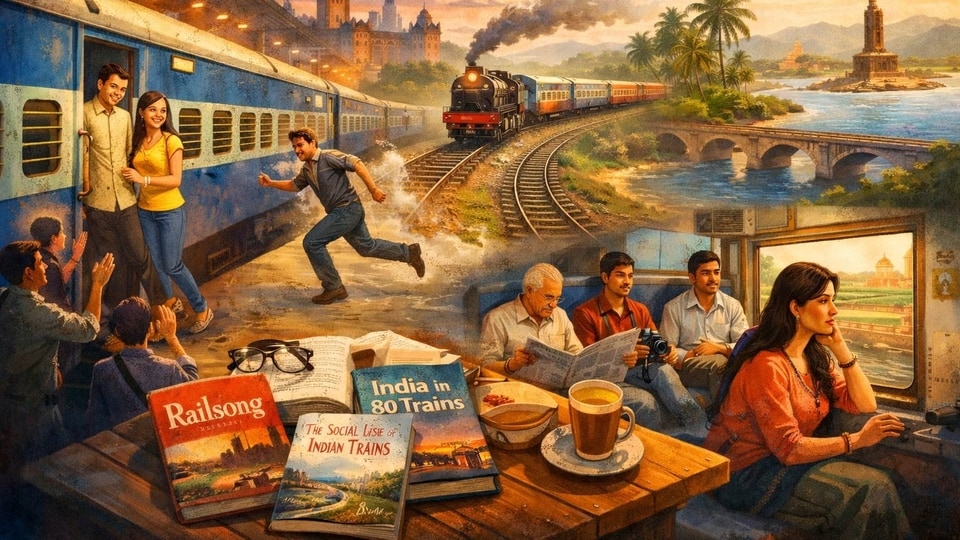
We almost missed our own wedding.
Being young and not paranoid enough, we’d booked late. The Gitanjali Express, which was to carry us from our jobs in Bombay to our wedding in Jamshedpur, was fully sold out. Our seats weren’t even RAC, short for Reservation Against Cancellation, which would have allowed us onto the train in hope of a seat. Instead, we were WL—waitlisted. We couldn’t afford air tickets; we tried dodgy train touts who promised our seats, but nothing materialized.
Finally, a unique Indian Railways invention came to our rescue.
Monisha Rajesh writes of this invention in India in 80 Trains: “Fortunately, Indian Railways has a useful system in place for latecomers, emergencies and the disorganised… Two days before a train departs, a handful of remaining tatkal tickets is released at 8 am on a first-come, first-served basis.” We were latecomers, we were disorganised, and our attendance at our wedding, you might argue, constituted an emergency of sorts; and so, in a last-minute scramble, we lucked out.
At 9 pm on a balmy December evening, we pushed through the crowds at Bombay VT to catch our train. Our friends came to see us off; they were sad they couldn’t come to our wedding. Like us, they too hadn’t planned properly. “Jump on!” we cajoled as the train drew in. And one of them did—sprinting alongside the moving carriage and hauling himself aboard with a whoop, becoming an impromptu wedding guest for the first leg of our journey.
Thirty years later, that journey feels like a fever dream of youth—the risk, the improvisation, the friend whooping as he swung aboard. Yet that peculiar feeling returns every time I open a book about Indian Railways: that mix of chaos and connection, of being thrown together with strangers who might become your wedding guests.
I grew up reading Paul Theroux’s The Great Railway Bazaar, but returning to it now, I’m dismayed by the colonial gaze in his descriptions. It’s a relief to read Indian voices on Indian railways—writers who see the system from the inside, not as exotic spectacle.
Now I begin my literary rail yatra with Railsong, the beautifully written historical novel by Rahul Bhattacharya. It follows motherless Charu from a railway colony in Bengal to the chaotic promise of Bombay, the train her escape route and companion. Trains run through the heart of this book—a network of lines that criss-cross the country, a lived ecosystem where waiting is its own form of life.
Amitava Kumar’s The Social Life of Indian Trains captures how the railways bind the landscape into a whole, giving India its sense of nationhood. “I found the idea of talking to people across the country both curious and alluring, and also seductive. It seemed possible, even easy, to hop on a train, talk to people, and take notes,” Kumar writes at the start. He travels the length of the country, from Jammu in the north to Kanyakumari in the south on the Himsagar Express. Kumar’s descriptions of fellow travelers, like the video-watching Mrs. Modi, are vivid vignettes. He discusses Indian Railways stories in literature and in film, all of which make this book a treat to read — a peek into the accidental democracy of trains.
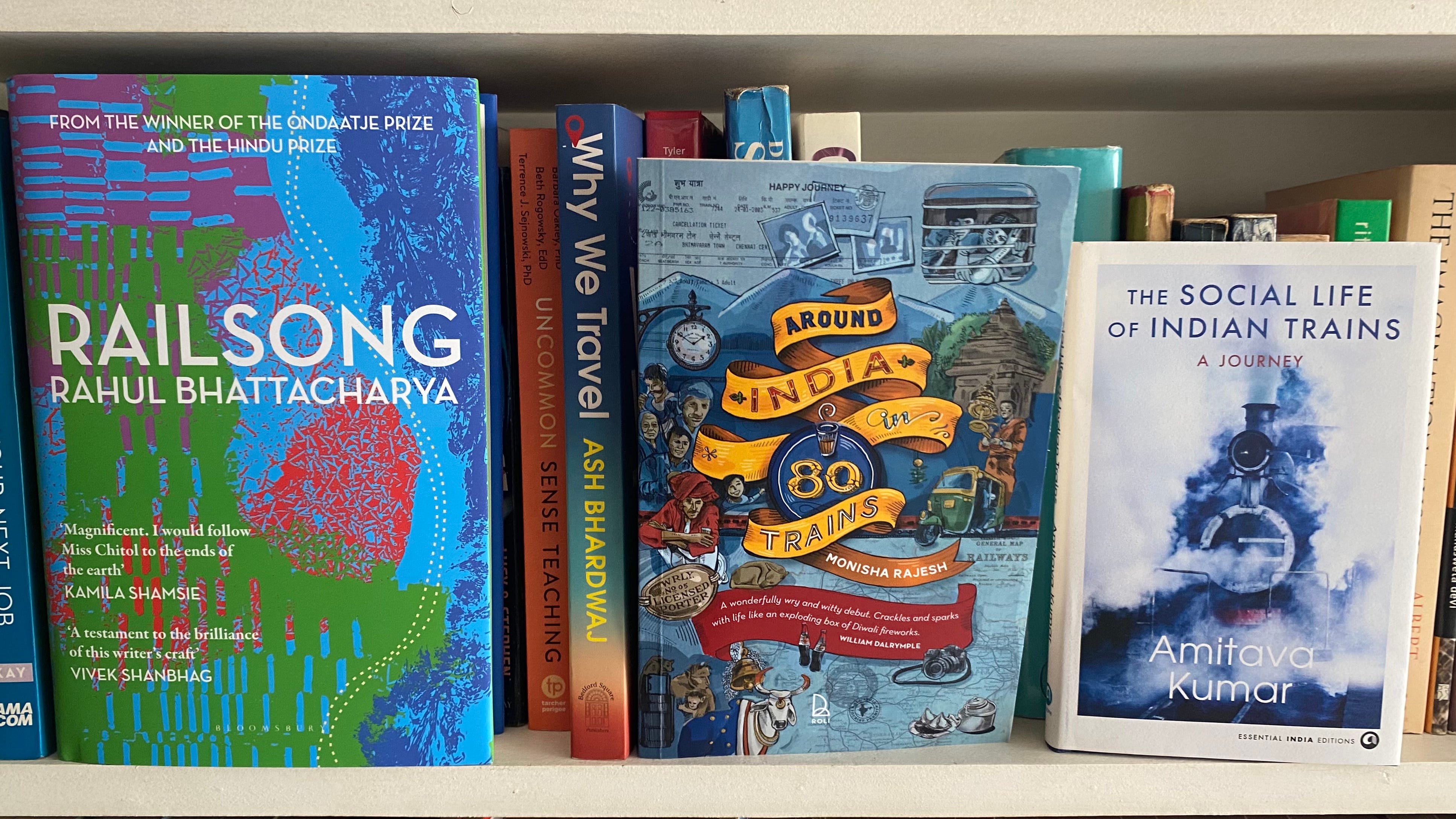
Monisha Rajesh’s India in 80 Trains gets at something every woman who’s traveled by train knows: that queasy dread when you check the reservation chart and see you’re bunked with three strange men for 28 hours. Rajesh captures both the peril and the possibility of railway travel — the gender calculations, the safety concerns, the moments when strangers become like family — all while journeying to the Ellora caves, Osho’s ashram, and a Vipassana retreat.
In an age of speed and algorithms, Indian Railways may have mastered online booking, but it remains analog at heart. It forces proximity, patience, and conversation.
Reading these books reminded me that trains are one of the last places where the country still has time to encounter itself — unhurried, uncomfortable, and alive. Long after the wedding tickets are acquired and the journey completed, the accidental democracy of Indian Railways continues to move us, one train at a time.
What about you, dear reader? Is there a train journey that changed the track of your life, and what does this accidental democracy on wheels mean to you?


