
 E-Paper



Book Box: Letter from the Andaman Islands
If you enjoy the sea and scuba diving, these five books will draw you to these rugged and remote islands.

 Prefer HTon Google


Dear Reader,
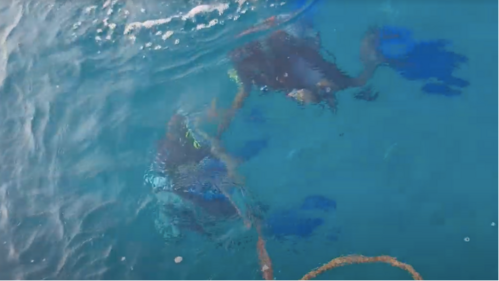
I am 15 metres underwater, in the turquoise blue Arabian Sea. Up ahead is a shoal of yellow snappers, and on my right, clownfish swim through the coral. All is tranquil on the reef. Or so it seems.
I am reaching for my pressure gauge to check my air supply, when suddenly the scene around me changes. Tiny reef fish dart in and out of the coral, in an agitated fashion. There is a flash of blue and silver -the trevallys are here, and they’re hunting.
It’s a thrilling moment. The day before, we saw this predatory fish on the page in Reef Fish Identification.
‘Look at its streamlined torso and forked fin, this gives it the speed to hunt’, our dive instructor pointed out.
Predators like trevallys and barracudas look different from butterflyfish, angelfish, surgeon fish, stingrays and Napolean wrasse, all of whom we hope to see on our dives here, in these warm waters off Neil Island.
Seeing these creatures, fully revealed and in action, in their natural habitat, is a powerful moment for me. I feel akin to marine biologist Alex Rogers, whose The Deep I have been reading all week. Rogers weaves in stories of childhood fishing trips, on the County Sligo coast in Ireland, with diving off Bermuda, the Isle of Man, the Arctic, the Antarctic and elsewhere. The book has enthralling descriptions of sea life, from plankton to whales. Through it all is a disturbing undercurrent – the ocean is dying from human depredations, and we need to get together to save what sustains us.
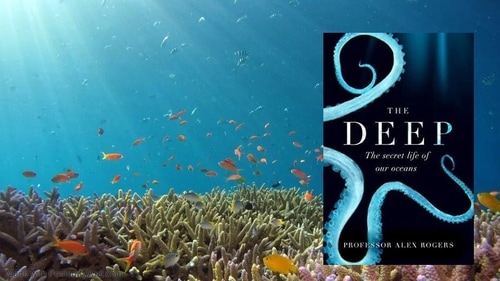
The Deep
After we surface, we unclasp our weight belts and buoyancy-control devices, peel off our fins and clamber back into the dive boat. The gear is stowed away, bananas and biscuits are handed around, and the talk begins.
Later, at lunch at Andhra Restaurant on the beach, someone orders a local speciality – jackfish, the collective family name for the trevallys we saw this morning. It feels surreal – the food chain playing out before my eyes.
I remember lines from a recent favourite - Superpowers on the Shore by Sejal Mehta .
‘At this coast where you escape to introspect about the discomfort of your lives, a daily ritual of death plays out. Not once, not twice, but numerous times. And yet, while assassins prowl here, and there is venom and weaponry, a fight to the death has never been more well intentioned as it is nature. In most cases, animals take what they need , no more or less than that.’
I’m sated, no second helpings for me.
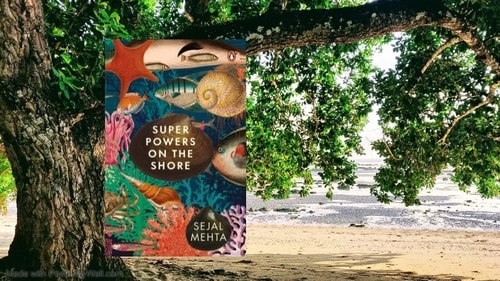
Superpowers on the Shore
We spend the day studying our underwater diving manuals, in preparation for the theory exam we must pass to be certified scuba divers.
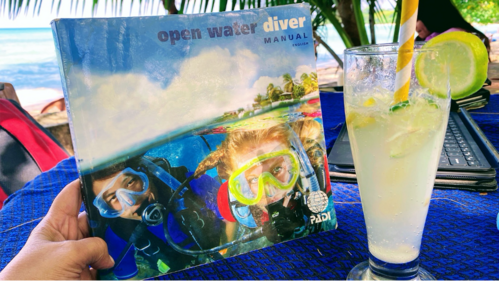
Open Water Diving Manual
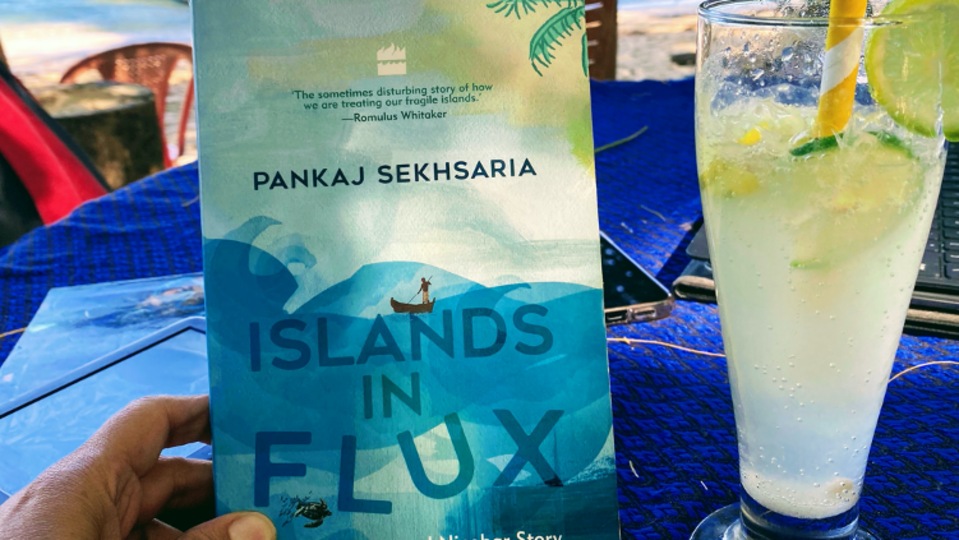
I take a break from studying currents and buoyancy control to dip into my Andamans book – the fascinating Islands in Flux by Pankaj Sekhsaria. Expertly written, it packs in history, geography and ecology, Government legislation and Supreme court judgements on development and creating special zones for the Jarawa tribes.
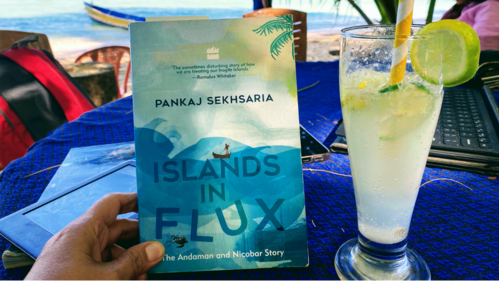
Islands in Flux
The Jarawa, the hunter-forager tribes of the Andamans, share the tragic history of many indigenous communities – they’ve been pushed out of their homes and into small reserve areas.
The closest I get to these tribes is through a novel. Glorious Boy by Aimee Liu is set in 1942, when the Andaman Islands, under British rule, were overrun by the Japanese. The novel brings these endangered islands to life – with powerful scenes of earthquakes and tsunamis threatening this fragile ecosystem and the human power politics. The characters include a British doctor, his anthropologist wife, their Mowgli-like son Ty, tribals and freedom fighters from the infamous Andamans Kalapani prison.
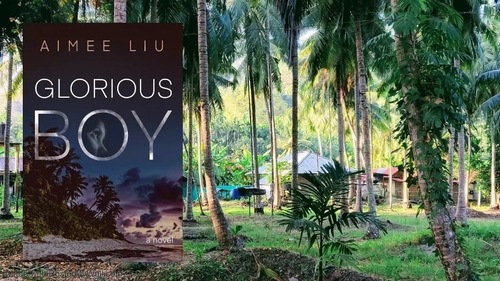
Glorious Boy
Returning to Port Blair, we visit this prison. With its airy corridors and sea view, you might be pardoned for finding this jail a picturesque place. But step into the prison museum gallery, and the black and white sketches of convicts tell a different story. Read My Transportation for Life, Veer Savarkar’s prison diaries, to hear the heartbreaking details. This paragraph describes the forced labour all political prisoners were subject to -
“We were to be yoked like animals to the handle that turned the wheel. Hardly out of bed, we were ordered to wear a strip of cloth, were shut up in our cells and made to turn the wheel of the oil-mill. Coconut pieces were put in, the empty and hollow space to be crushed by the wheel passing over them, and its turning became heavier as the space was fuller. Twenty turns of the wheel were enough to drain away the strength of the strongest cooly and the worst, brawny badmash’ says Savarkar.
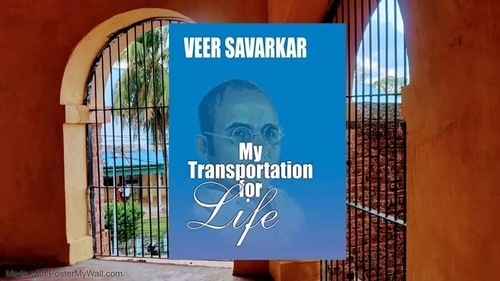
My Transportation for Life
After the prison visit, I abandon the colonial murder mystery on my Kindle. Death in the Andamans is by an old favourite author, M M Kaye. I loved her Raj romances - The Far Pavilions and The Shadow of the Moon. But now I cannot bring myself to read her frothy stories of English overloads set against ‘exotic’ backdrops. Death in the Andamans goes into my DNF (did not finish) pile.
As we bid goodbye to the islands, I resolve to read more about marine life and the oceans.
What are your favourite sea books? Do write in with recommendations.
Next week, as 2023 begins, I willbring you reading plans for the year. Should you make a plan at all? And if you do decide to make reading resolutions, I offer you some fun ways to read more deeply and diversely.
Until then, Happy New Year and Happy Reading!
Sonya Dutta Choudhury is a Mumbai-based journalist and the founder of Sonya’s Book Box, a bespoke book service. Each week, she brings you specially curated books to give you an immersive understanding of people and places. If you have any reading recommendations or suggestions, write to her at sonyasbookbox@gmail.com
The views expressed are personal


