
 E-Paper



Essay: The writer without readers
Saikat Majumdar wonders what the image of the reader, an increasingly rare sight in public life, signifies to the ordinary citizen not professionally connected to the worlds of reading and writing

 Prefer HTon Google


Sometime in the autumn of 2021, when the pandemic still had a rein around our lives, one late afternoon I went up to the terrace of our house in south Delhi. Passionate about gardening, our landlady had turned the terrace into a manicured garden, with small shrubberies and shaded nurseries, potted plants everywhere, greening the view of the city skyline. I chose a carefully combed grassy patch and sat down to read the book I’d carried with me, the Book of Indian Essays, compiled by Arvind Krishna Mehrotra. Our landlady’s gardener, who was working in the terrace garden, smiled and nodded at me. I perched my coffee cup and got into the book. I think I was reading Nissim Ezekiel’s essay on VS Naipaul when the question struck me from the back, asked with gentle curiosity and yet with all the force of the unexpected.
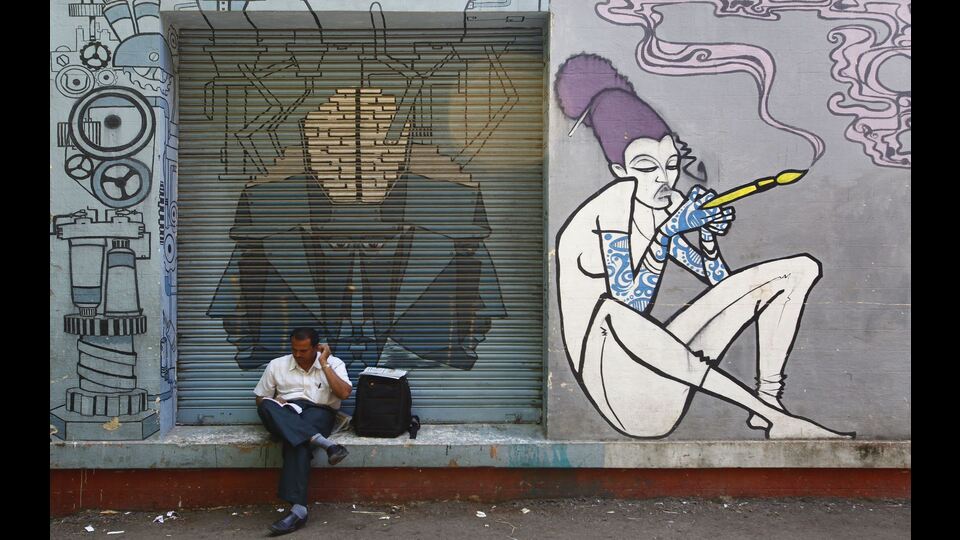
“Sir, are you a writer?” The gardener asked me in Hindi.
An awkward but warm conversation followed. The hold the figure of the writer had in his imagination was touching, and yet in a strange way, also slightly alienating. Somehow his interest came across as natural, and yet it was strange because it was clear that his relation with books and reading hardly existed beyond his education. It naturally prompted me to ask him what made him think that I was a writer.
“Sir, because you are sitting and reading a book.”
Reading a book? But that made me a reader, not a writer. I did have a pen with me, to make brief notes on the margins (I was due to be in conversation with Mehrotra for an event around the book) by I had no notepad, no laptop to write on, and clearly, I was reading, not writing. It struck me that the friendly gardener was one of the vast majority of people today for whom a person reading a book – particularly a physical book – was such a specialized activity that it could only exist to define a particular vocation, or even a profession. There was no such figure as a “reader” – but yes, the “writer” existed, half-real and half-myth, even in the imagination of those who read little or nothing at all. One only has to think of several recent mainstream Hindi movies and OTT shows featuring writers, their lives and anxieties – but in how many of them did we see reading as a significant activity, unlike perhaps films from an earlier generation? Neither does the screen space given to screen activities – be it the phone, social media activity or sundry messaging – keep any of itself for reading books on devices. Reading has disappeared from the contemporary cinematic imagination, but the figure of the writer still returns. But it is a world of writers without readers – or even the writer as a figure who once in a while, reads a book.
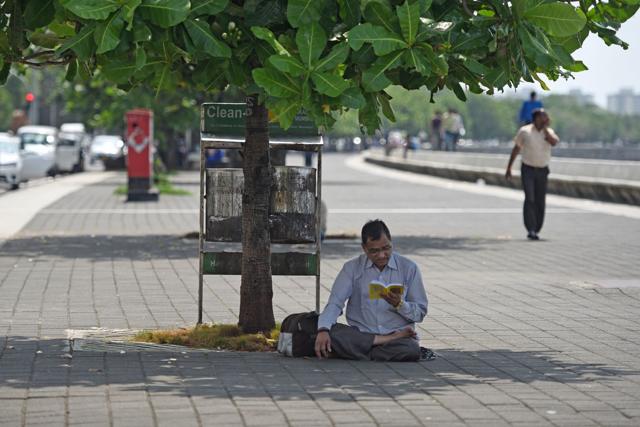
Doubtless the media representation of reading has declined worldwide, but the act of reader – even the figure of the committed reader – still comes up in Western films. The Stephen Daldry film, The Reader, now a few years old but streaming on Netflix India, entwines the horrors of Nazi crime with the struggling yet obsessive figure of a reader. And while I was disappointed very recently, by the new cinematic rendering of Lady Chatterley’s Lover, possibly because the novel is a great favourite of mine, I noticed that the film had stayed true to the reading habits of gamekeeper Mellors, lingering on his slim yet intriguing book collection in his log cabin. Does reading brew stronger in books than films? Both these films, including Daldry’s film based on Bernhard Schlink‘s popular novel, trace their origin to novels.
It is hard to deny that the figure of the reader, the activity of reading, and books and libraries as objects and spaces show a far greater hold on the Western imagination than what can be found in India, either traditional or contemporary. The range of paintings that depict readerly realities are legion, including iconic ones by Jacob Lawrence, Salvador Dalí, Norman Rockwell, Pablo Picasso, Henri Matisse, and Vincent Van Gogh. There are famous paintings about books and reading by the Japanese painters Ryūryūkyo Shinsai and Utagawa Kuniyoshi, but on the whole, Western representations of reading seem to significantly outweigh non-Western images of related practices and objects, particularly secular ones.
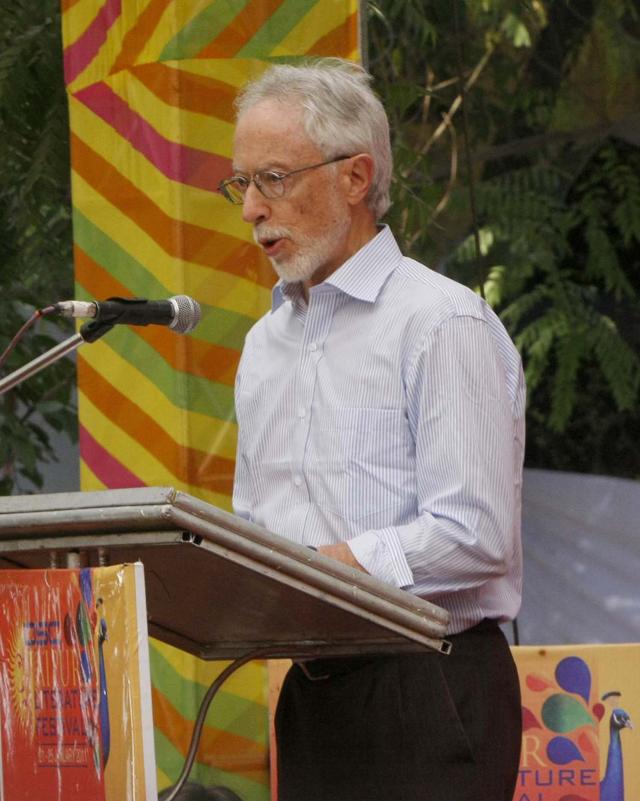
Experiences and arguments, both literary and anecdotal, come to mind – including a friend saying that he rarely saw people reading books in the public spaces of Chinese cities the way you would see across Western Europe. And in JM Coetzee’s quasi-fictional sketch, The Novel in Africa, the Nigerian novelist, rather former novelist and current speaker-performer Emmanual Egudu makes the startling claim that novel-reading is an alien activity in Africa (yes, all of “Africa”) as Africa is an oral and performative culture not inclined to the quite solipsism of reading. His claim faces suspicion, even hostility, from other characters in the text, and neither do we have any reason to take him as the authentic native informant he wishes to play. Still, the claim has reasons to give us pause.
The modern public sphere, according to the German social scientist Jürgen Habermas, came into existence in late-18th century Western Europe as a space primarily outlined by emergent literary and media markers – the press, cafes, publishing houses, art galleries. It coincided with the shaping of the modern cityscape and was an important corrective to the excesses of state power. This literary and media public sphere was unevenly imposed on the non-western world, largely through British and French colonialism. Ominously symbolic is the reading habits of Thomas Babington Macaulay, the controversial colonial administrator of British India, who read a mind-boggling range of Greek and Latin classics in the morning and in the evening, after the day’s work, reading works in English, French, Italian, and a little in Spanish and Portuguese. The academic structure and curricula that continues to this day in India’s public universities primarily derive their scaffolding from that unfolded by Macaulay, a firm believer in the superiority of Western over non-Western knowledge.
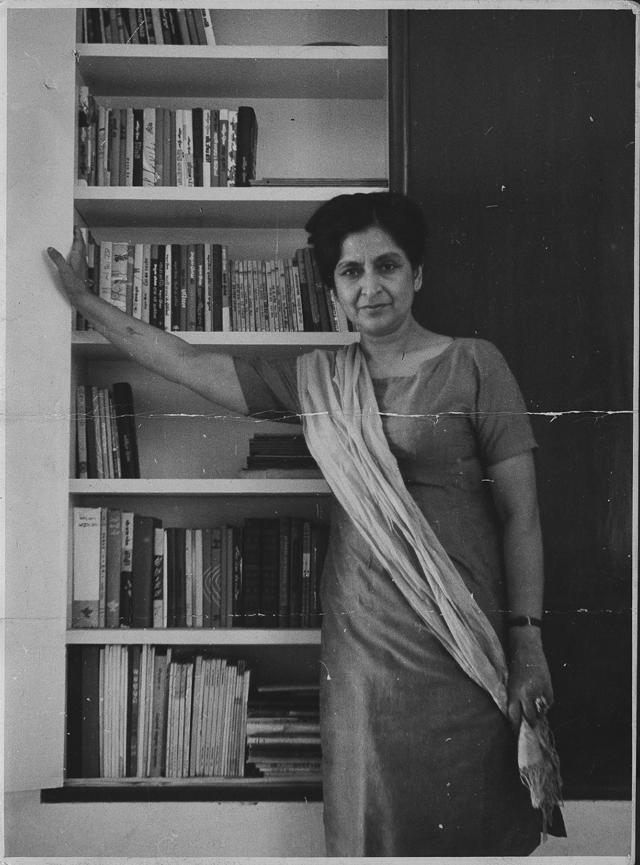
Is reading for pleasure primarily the mark of an urban bourgeoise in India? Is ours a culture that privileges performance over text? My moment with my landlady’s gardener reminded me of Amrita Pritam’s explosive story, The Weed, where a rural househelp observes an educated woman read and says that reading is not the sin for city women that it is for rural women. The gardener linked me to the only plausible figure who in his mind, would spend a chunk of their afternoon reading – the writer. What is ironic is the symbolic, even ornamental significance the figure of the writer has even in a space without a culture of reading.
Saikat Majumdar’s most recent book is The Middle Finger, a college campus novel about poetry, performance, and mentorship. @_saikatmajumdar
The views expressed are personal


