
 E-Paper



Excerpt: The Story Keepers by April Fonti
This extract from a book that brings alive the stories of people in Zanskar looks at the region’s first allopathic nurse, Dolma Lhamo.

 Prefer HTon Google


Excerpt: The Story Keepers by April Fonti
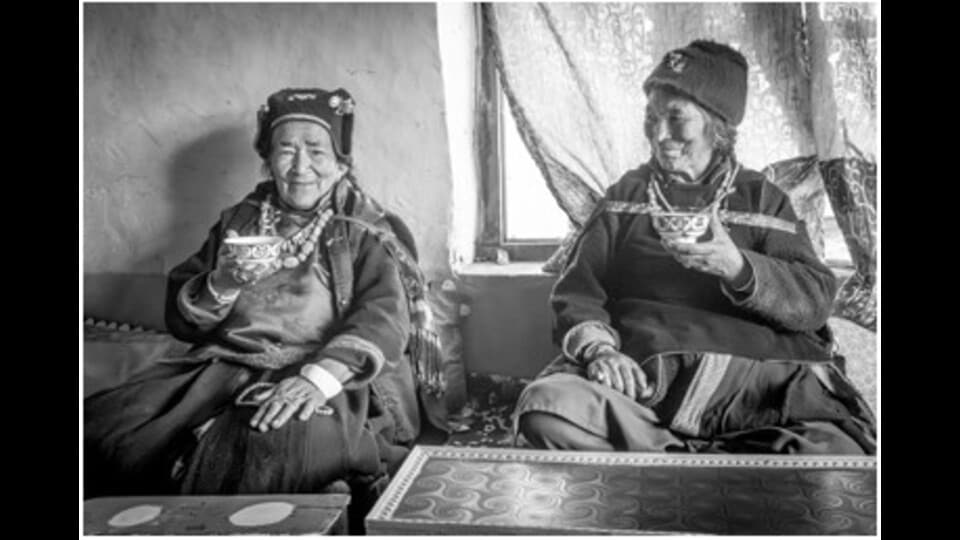
This extract from a book that brings alive the stories of people in Zanskar looks at the region’s first allopathic nurse, Dolma Lhamo, who often endured extreme conditions to help women in need
One winter in the late 1960s, when ghosts and malignant spirits were blamed for premature deaths, a woman from Zanskar’s remote Lungnak Valley struggled to deliver her first child. Enduring labour without painkillers in a cold, dark room, she managed to deliver a healthy baby boy. As the newborn lay naked on the cold earthen floor, the mother began to bleed heavily. An amchi listened to her pulse and dispensed herbal treatments. An astrologer threw dice to determine her fate. Her condition continued to decline. When death was predicted, a relative took the unusual step of consulting a newly qualified nurse.

The nurse was Dolma Lhamo, and she lived some three days’ walk from the Lungnak Valley. When the relative arrived at her home in Pipiting, Dolma invited him in. Over the customary cup of hot butter tea, they discussed the woman’s symptoms. Dolma suspected that the placenta had been retained. Without medical intervention, the woman was likely to suffer a long, painful death. Zanskar had no doctors or clinics and the nearest hospital with just four beds was in Kargil, a town over 200 kilometres away. The mountains were impassable in winter and Zanskar had no roads, so the hospital was virtually useless. To complicate matters, Dolma had no pony. But she was a large, strong woman with a quiet determination. Draping herself in two thick woollen gonchas, she tucked tsampa and hard cheese into the folds of her dress then collected her small medical kit. Her home, perched on a hilltop, overlooked a descending series of vast white snow fields. Stepping outside, she took in the view and considered the long journey ahead. The woman would not last another three days. Dolma decided she would walk without stopping, continuing from morning to evening and right through the cold dark night. Climbing a small hillock, she performed a ritual circumambulation of the village stupa and set off.
****
Zanskaris generally enjoyed robust health aside from the hazards of early childhood. The main healthcare providers were amchis who practised Sowa Rigpa, the ancient medical system of Tibet and the Himalayas. Highly respected, with an intimate understanding of family histories, amchis possessed a deep knowledge of medicinal plants. They used juniper leaves, sea buckthorn, rhubarb and rhododendron alongside other hardy aromatic shrubs, wildflowers and rare herbs. The local diet was healthy but limited and mostly composed of roasted barley flour, soup, vegetables and dried cheese. People also enjoyed strong communal bonds and a stress-free lifestyle. Researchers visiting the Valley in the 1980s were astounded to find many people living well into their 90s.
Yet, maternal care was woeful and respiratory illnesses were common. The mortality rates of newborns were particularly dire. The origins of infection were largely unknown. Extremely cold temperatures coupled with the lack of running water meant that washing was arduous. Painkillers, antiseptics, antibiotics and vaccinations were largely unavailable. Goat dung diapers were the norm because they absorbed waste and kept babies warm. Birth attendants were known to perform multiple internal examinations without washing their hands. Mispositioned or premature babies almost certainly died. Newborns who survived childbirth often fell ill with deadly fevers. In 1980, a visiting team of researchers found that 30 per cent of children died before reaching three years of age. One woman reported losing five babies, each of them within hours of giving birth.
‘My parents had 13 children, and we were lucky that seven babies survived,’ Tashi the postmaster tells me. ‘People would often have at least ten children, but only five would live. Most children died in November, December, March, April – when the weather changed. Just one feed wouldn’t go down properly, a baby would begin coughing, have chest pain and fever, and die.’ …
***
Dolma moved quickly, preoccupied by thoughts of the woman’s suffering as she walked. The deep, wide snowy tracks of previous travellers were easy to follow, and she soon entered the vast web of paths linking Zanskar’s central villages. Within an hour or so, she reached the whitewashed mud homes cascading down the hillside at Karsha. …
Ordinarily, Dolma would rest and exchange pleasantries with her fellow travellers, but there was no time to waste. When people approached, she briefly explained her mission and kept moving. By late afternoon, the tracks merged into a slushy river of footprints. Powdered snow blanketed the path ahead. Walking became tough. The snow was so deep that every step sent her sinking up to her waist. Snow leopards, bears and wolves become a danger once night falls. Tibetan wolves have no fear of lone travellers. They can grow as large as donkeys and will attack sheep, horses and humans alike. Still, she kept going, swinging her body wearily from side to side in the rolling gait of the old people, lifting her feet high, slowly moving one foot after another under the light of the moon.
Dolma responded with great passion when I asked how she managed to continue all night. ‘I kept going because of my father. He went through so much difficulty to send me to school when I was young, so I decided to never give up.’
****
…Parents might have taught children how to read Sanskrit, but the daughters of ordinary farmers did not normally go to school. As most Buddhists were ignorant of Urdu, this left them vulnerable to exploitation...
Dolma’s father had endured one of these long-forgotten injustices. The experience unsettled him so badly that he decided to send all his children to school. Dolma became Zanskar’s first schoolgirl…
For pleading with people to send their daughters to school, Dolma’s father was ostracised. ‘People said a man without an education should not send his daughter to school. He was called a man without sense,’ Dolma tells me. Seeing her father’s suffering sparked her determination to succeed. She persisted with her studies long after most children dropped out. After passing her ninth-grade exams, the government offered her a scholarship and the opportunity to study teaching or nursing. Since every family in her village had lost a child, she knew exactly what path to pursue: ‘I wanted to help my community and women in particular, so I decided to become a nurse.’
Ladakh had no colleges, and science was only taught at two high schools. At just 16 years of age, she left the Zanskar Valley on foot, crossed several mountain passes and made her way to Srinagar, a city some 500 kilometres away. After four years of study, she returned home in 1967 and became Zanskar’s first nurse.
****

After two days and one night of arduous walking, Dolma arrived in Testa. ‘My hands and whole body were frozen,’ she remembers. ‘My clothes were wet through.’ The woman’s heart was still beating. Dolma’s wet cloaks were removed and spread before the fire…
Dolma drank the customary scalding butter tea, caught her breath and went to work, gently pulling the umbilical cord and removing the placenta from the woman’s body. She swaddled the newborn in warm clothing. The woman was fortunate to have given birth in winter, allowing her time to recover before the intensely physical work of spring planting. Both mother and child survived.
***
That winter, villagers across Zanskar exchanged stories about the nurse from Pipiting who spent two days walking without pause to save a dying woman. Pregnant women and concerned family members began arriving in Dolma’s village to seek her help. Over the following decades, she assisted women in labour in villages scattered across thousands of square kilometres of mountainous terrain, crossing 5,000-metre-high passes, venturing over rope bridges, steep mountainous paths and following tracks that sometimes disappear under avalanches and landslides.
Using only the light of kerosene lamps and torches, she delivered tetanus shots and administered folic acid, checked if babies were in the right position and sent family members wielding ice axes to collect clean river water. When she became a mother herself, she continued venturing out to remote villages for two- or three-day stretches. Most often, she walked right through the dry summers and long winters… The mortality rate of babies improved. Women avoided slow, painful deaths. Word continued to spread. People arrived at her home at all times, day and night. They began treating her with great regard. Her father was finally proven right.
‘People have a huge amount of respect for her,’ says Tashi the postmaster. ‘Dolma was all we had in winter. She completely changed our lives. It was amazing.’ An old folk song praising the heroic figure of Dolma Lhamo can still be heard at gatherings…


