
 E-Paper



HT Picks; New Reads
On the reading list this week is a novel about the various ways humans try to leave a mark on the world, another that powerfully evokes contemporary Pakistan, and a volume on Malabar Islam as a blend of indigenous cultural expressions within broader Islamic heritage

 Prefer HTon Google


On the road to Lhasa
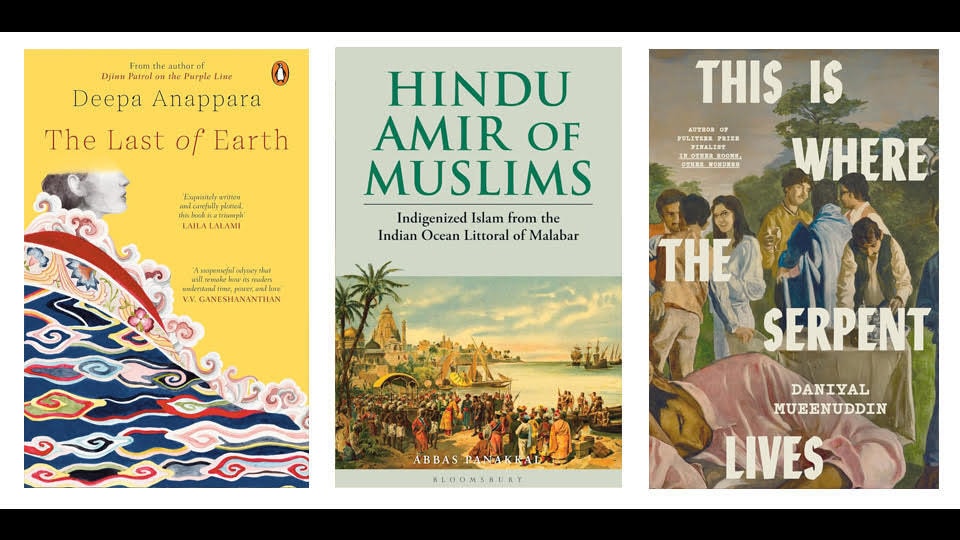

1869. Tibet is closed to Europeans, an infuriating obstruction for the rapidly expanding British Empire. In response, Britain begins training Indians ― permitted to cross borders that white men may not ― to undertake illicit, dangerous surveying expeditions into Tibet.
Balram is one such surveyor-spy, an Indian schoolteacher who, for several years, has worked for the British, often alongside his dearest friend, Gyan. But Gyan went missing on his last expedition and is rumored to be imprisoned within Tibet. Desperate to rescue his friend, Balram agrees to guide an English captain on a foolhardy mission: after years of paying others to do the exploring, the captain, disguised as a monk, wants to personally chart a river that runs through southern Tibet. Their path will cross fatefully with that of another Westerner in disguise, fifty-year-old Katherine. Denied a fellowship in the all-male Royal Geographical Society in London, she intends to be the first European woman to reach Lhasa.
As Balram and Katherine make their way into Tibet, they will face storms and bandits, snow leopards and soldiers, fevers and frostbite. What’s more, they will have to battle their own doubts, ambitions, grief, and pasts in order to survive the treacherous landscape.
A polyphonic novel about the various ways humans try to leave a mark on the world ― from the enduring nature of family and friendship to the egomania and obsessions of the colonial enterprise ― The Last of Earth confirms Deepa Anappara as one of our greatest and most ambitious storytellers.*
The unique blend of Malabar Islam

An exploration of the pivotal role of integration in shaping indigenized Islam in 16th-century Malabar, Hindu Amir of Muslims includes a detailed examination of popular traditions, primary texts, and archaeological and architectural artifacts. Among the diverse Muslim ethnic groups of Malabar, indigenous customs and traditions were intricately woven into their religious identity, contributing to a distinctive, inclusive character. This study highlights phenomena such as the recognition of the Hindu king, the Zamorin of Calicut as the Amir of the Muslims and the advocacy by Muslim scholars and leaders for military Jihad to protect his sovereignty. Central to this localized practice was the veneration of indigenous shrines and the organization of ceremonial processions to Sufi enclaves, marking a departure from conventional Arab Cultural Islam. These practices illustrate the dynamic interplay between local elements and the evolving Islamic framework. The introduction of Islam to the Indian subcontinent was significantly shaped by natural rhythms and commercial dynamics, resulting in a unique trajectory within Islamic history. Muslim communities in the Indian Ocean’s bustling port cities embraced this trajectory, disseminating core tenets of faith and transforming distinct confessional entities into integrated collectives.
This volume navigates the various pathways through which Malabar Islam emerged as a unique blend of indigenous cultural expressions within the broader Islamic heritage. It enhances our understanding of historical interactions, cultural fusion, and religious dynamics, offering a nuanced portrayal of the transformative forces shaping Islamic practices and identities.*
Matters of power, money and the heart

Moving from Pakistan’s dazzling chaotic cities to its lawless feudal countryside, This Is Where the Serpent Lives powerfully evokes contemporary feudal Pakistan, following the destinies of a dozen unforgettable characters whose lives are linked through violence and tragedy, triumph, and love. Orphaned as a little boy and fending for himself in the city streets, Yazid rises to a place of responsibility and respect in the Lahore household of Colonel Atar, a powerful industrialist and politician, only to find that position threatened by conflicting loyalties and misplaced trust. Born on Colonel Atar’s country estate to a poor gardener, Saqib is entrusted with the management of a pioneering business, but he overreaches and finds himself an outlaw, confronting the violence of the corrupt Punjab Police. The colonel’s son competes with his cherished brother for the love of a woman and discovers that her choice colours his life with unexpected darkness as well as light.
In matters of power and money and the heart, Mueenuddin’s characters struggle to choose between paths that are moral and just and more worldly choices that allow them to survive in the systems of caste, capital, and social power that so tightly grip their culture. Intimate and epic, elegiac and profoundly moving, This Is Where the Serpent Lives is a tour de force destined to become a classic of contemporary literature.*
*All copy from book flap.


