
 E-Paper



HT Picks; New Reads
This week’s pick of interesting reads includes a book on how an everyday digital reflex has deepened inequality and normalised suspicion, a detailed account of how India came to be, and a novel on displacement

 Prefer HTon Google


A powerful engine of distortion
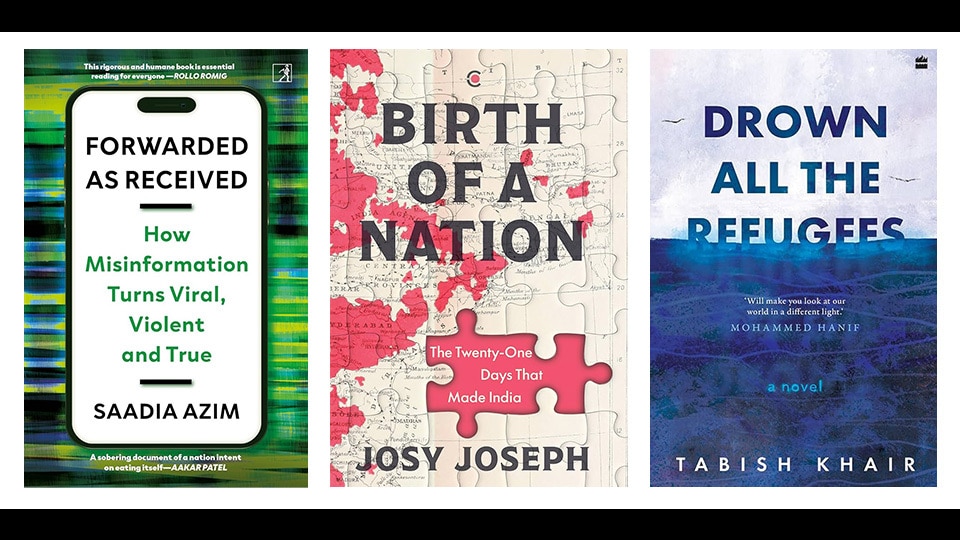
Misinformation has never felt truer than it does today. Claims that once invited examination and debate now float freely and settle into everyday conversation as facts. Repetition lends them authority; familiarity gives them legitimacy. In this quiet transformation, falsehood does not announce itself. It embeds, circulates, and endures.
This book examines how the seemingly harmless habit of forwarding messages has evolved into a powerful engine of distortion. What begins as an everyday digital reflex accumulates into an ecosystem where half-truths and manipulated narratives thrive, reshaping perception, deepening inequality, and normalising suspicion.
Deeply original, rigorously researched, and profoundly grounded in the realities of the Global South, Forwarded as Received is a compelling examination of our evolving information order — and of the life-altering choices we make, often unknowingly, with every forward.*
A fragile and precious idea
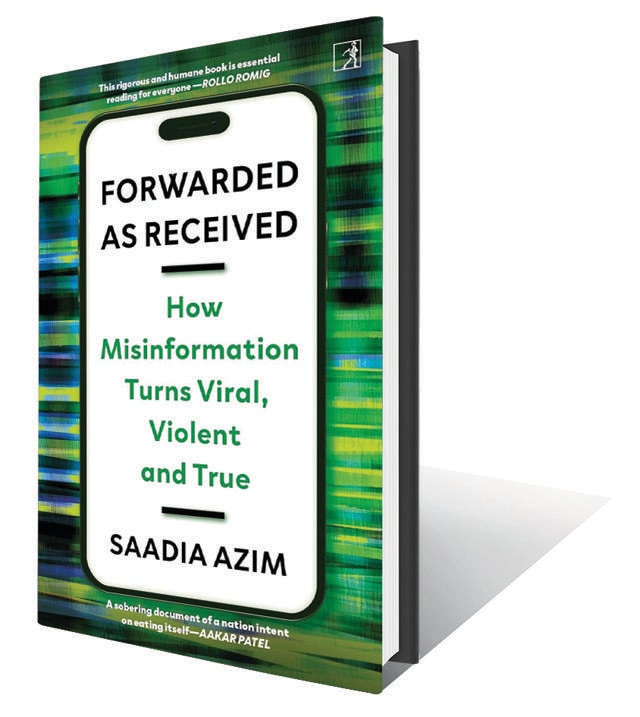
25 July-14 August 1947: These were the 21 days that made India.
When journalist Josy Joseph stumbles across dusty, neglected archival files in the course of his research, he is astounded by the material it holds. Bringing his investigative nous to historical research, he stitches together a richly detailed account of how India came to be – and how very close it came to being splintered into several independent princely states and a small republic.
The Birth of a Nation follows the work of the newly set-up States Department led by Sardar Patel, and its group of determined officials. They were pitted against a coterie of ruling families and their wily advisors who had declared their independence. The fiercest Hindu kingdom was in alliance with orthodox Muslim rulers. These states were building diplomatic relations with foreign nations; lying to Mountbatten, Nehru and Patel; preparing to print their own currencies; building relations with Jinnah and making strategic moves to defend themselves against military action by the Nehru government. They had significant support from different sections.
This is the Indian history citizens need, to appreciate just how hard-won the sovereign, socialist, secular, democratic republic of India is, and how fragile and precious that idea is.*
Asking to reorder a world in disarray

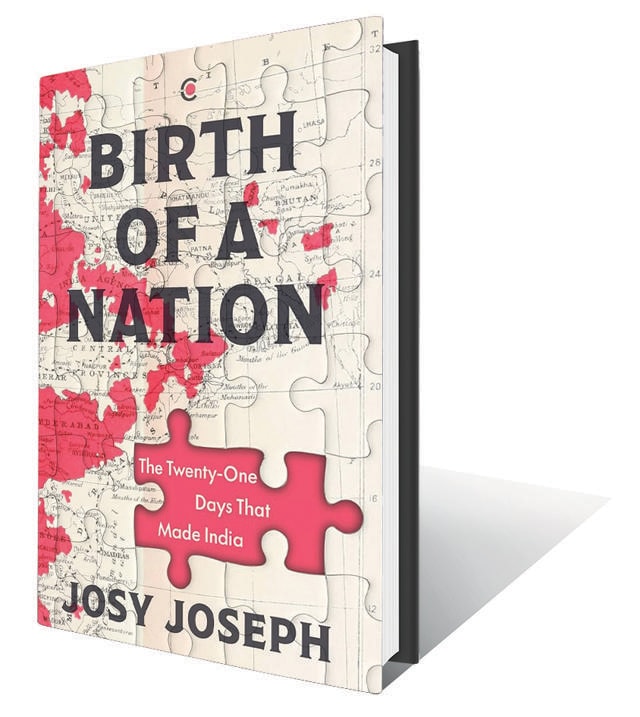
At a literary event, when the narrator screams, ‘Drown all the refugees,’ he means every word. After all, he is all too familiar with displacement – his boyfriend Abdul was Palestinian; and his childhood best friend Pedro crossed India’s borders illegally in search of a better life.
Neither Abdul nor Pedro can return – for Abdul is dead and Pedro’s whereabouts are now a mystery. That is, until Maria, the narrator’s childhood nurse and Pedro’s mother, turns to the occult to bring back her son. The person she recovers is not her exuberant young boy, but someone who is a husk of himself. What happened to Pedro during his journey to a distant land, or his passage back?
As the narrator tries to answer this question, he sees that every revelation holds both violence and terror. A work of Gothic horror, with exquisite illustrations by Vikram Nayak, Drown All the Refugees is Khair at his finest – assured and outraged. He rejects the reader’s pity, the onlooker’s distress, and asks instead for something more substantial, perhaps a reordering of a world in disarray.*
*All copy from book flap.


