
 E-Paper



International Translation Day: Enriching language and culture, one text at a time
Three award winning translators speak about their approach to translation, and how the art of translation enriches culture.

 Prefer HTon Google


New Delhi At a time when people around the world are isolated by the pandemic, the art of translation can bridge the gap and bring readers of different tongues together. On International Translation Day today, three translators tell us about the pivotal role they play in facilitating cultural exchange.
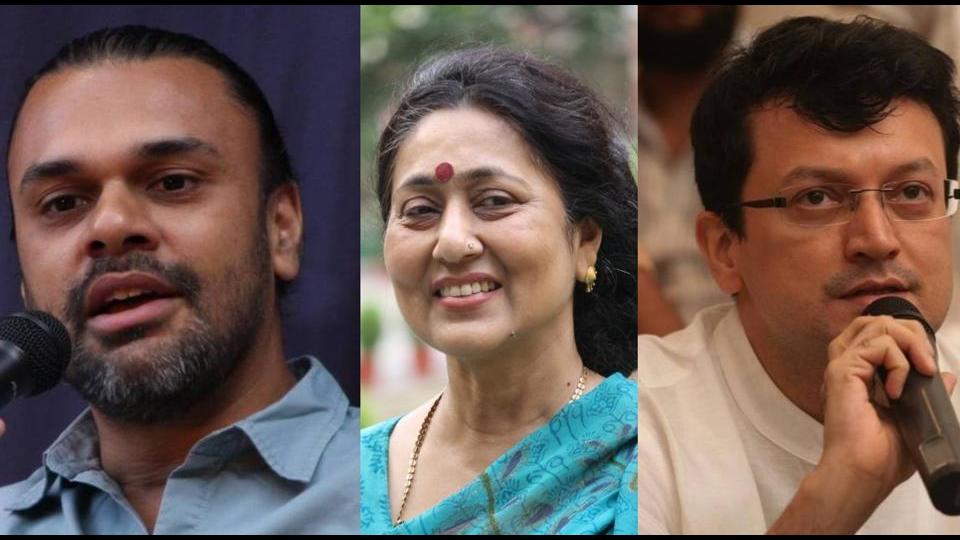
For Delhi-based poet and translator Anamika, translating “is the most intimate act of befriending a culture”. The Delhi University professor recalls reading out her Hindi translations of poets from the world over in her classroom. “My joy knew no bounds when I noticed students responding to the lesser-known poets from the Middle East, the Sub-Sahara region, South East Asia, and Latin America. It dawned upon me that mother tongue is a great blotting paper that helps us absorb nuances of literature and the tones of lives in regions unknown,” she shares.
Anamika thinks of the role of translators as that of elderly women called ‘lokanies’, who accompany young brides to their new homes in palanquins, to settle them down in an alien environment.
Joining the league of Sahitya Akademi awarded translators this year, is Srinath Perur, who received the honour for his translation of Vivek Shanbag’s Ghachar Ghochar. Detailing his approach, he says, “I did the first few pages over and over until I thought I had a voice that would carry me through the book”, adding that he had to find a part of himself that resonated with the narrator. “That was an unexpected and intriguing experience, perhaps something similar to what actors go through.”
Ask him about the challenges he faced, and Perur recounts: “Kannada sentences tend to have verbs at the end and English sentences in the middle. Reconciling this, especially for long and complex sentences, and producing something that flows is a challenge. Also, since I work on the move, I miss a good, comprehensive online dictionary.”
Calling literary works “living organisms”, translator and writer Ranjit Hoskote, says a translator must “let the text breathe in that new language”, while finding equivalents. “Too many translators yield to the temptation of weighing the text down with explanatory expansion. They should instead use the rest of the apparatus such as a glossary, annotations,” he opines.
On the new-age practice of artificial intelligence (AI) being used to translate, the translators are quick to express scepticism on the lack of a human touch. Perur says it takes sensibility to produce a literary work, the ability to know how someone else might feel when they read something. “I don’t think our algorithms are there yet, or will be any time soon,” he adds.
Author tweets @siddhijainn


