
 E-Paper



Joan Didion, the cool customer
On the American author’s fourth death anniversary, a look at what her work means for a writer struggling to make sense of life and loss

 Prefer HTon Google


“Yet California has remained in some way impenetrable to me, a wearying enigma, as it has to many of us who were from there. We worry it, correct it and revise it, try and fail to define our relationship to it and its relationship to the rest of the country,” wrote Joan Didion in one of the chapters of Where I Was From (2003).
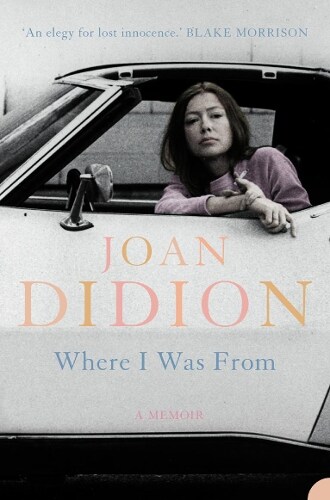
Born on December 5, 1934, in Sacramento, California, the writer, who was an early flag bearer of the era of New Journalism in the United States, wrote this memoir, a reflection of the factual history of her birthplace, juxtaposed with its oral tradition. Deeply suspicious of every story she was ever told, she treated her subjects the same way she believed a snake must be treated: kept in the eyeline to ensure it doesn’t bite. She famously noted this fact in the Netflix documentary by her nephew Griffin Dunne, Joan Didion: The Center Will Not Hold (2017).
Joan Didion died, aged 87, on December 23, 2021.
What survives are her words, what she observed from a distance and what she remembered and put down on the page. And much like the relationship she shared with Sacramento, California, readers often share an indefinable relationship with Didion’s works – both, those that were published in her lifetime and afterwards.
Earlier this year, fans were surprised to see Notes to John, a “previously unpublished work” compiled from the pages of a journal in which the author reported on sessions with a psychiatrist around 2000. Didion’s devoted readers were somewhat unsettled by the work mostly addressed to her husband, John Gregory Dunne.
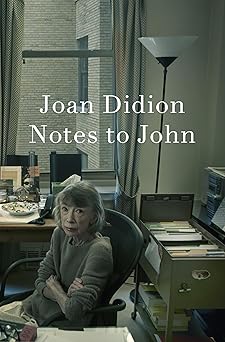
What does one make of these reflections that are not divorced from the dichotomy that can be sensed in her enigma, her image?
A powerful writer, Didion was mostly seen as a petite woman. Her sentences wielded power, but her frail exterior attracted the word “birdlike”. It’s this image one often returns to. Or is forced to. In almost all her photographs, she seems vulnerable, though she is also brandishing a cigarette and projects the air of a hung-over rockstar. Sample Julian Wasser’s famous 1968 portrait of Didion against a Corvette Stingray. “Somehow, we have come to think of Didion as a writer whose photographic image incarnates certain features of her prose, oversensitive but unsentimental, held together in the face of personal or cultural catastrophe — above all, cool,” writes Brian Dillon in The Afterimage of Joan Didion.
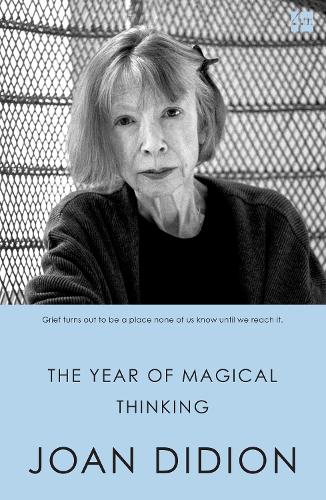
The word ‘cool’ reminds you of an anecdote from Didion’s most famous memoir, The Year of Magical Thinking (2005), in which she writes of a social worker calling her a “cool customer”. “I wondered what an uncool customer would be allowed to do. Break down? Require sedation? Scream?” Didion writes.
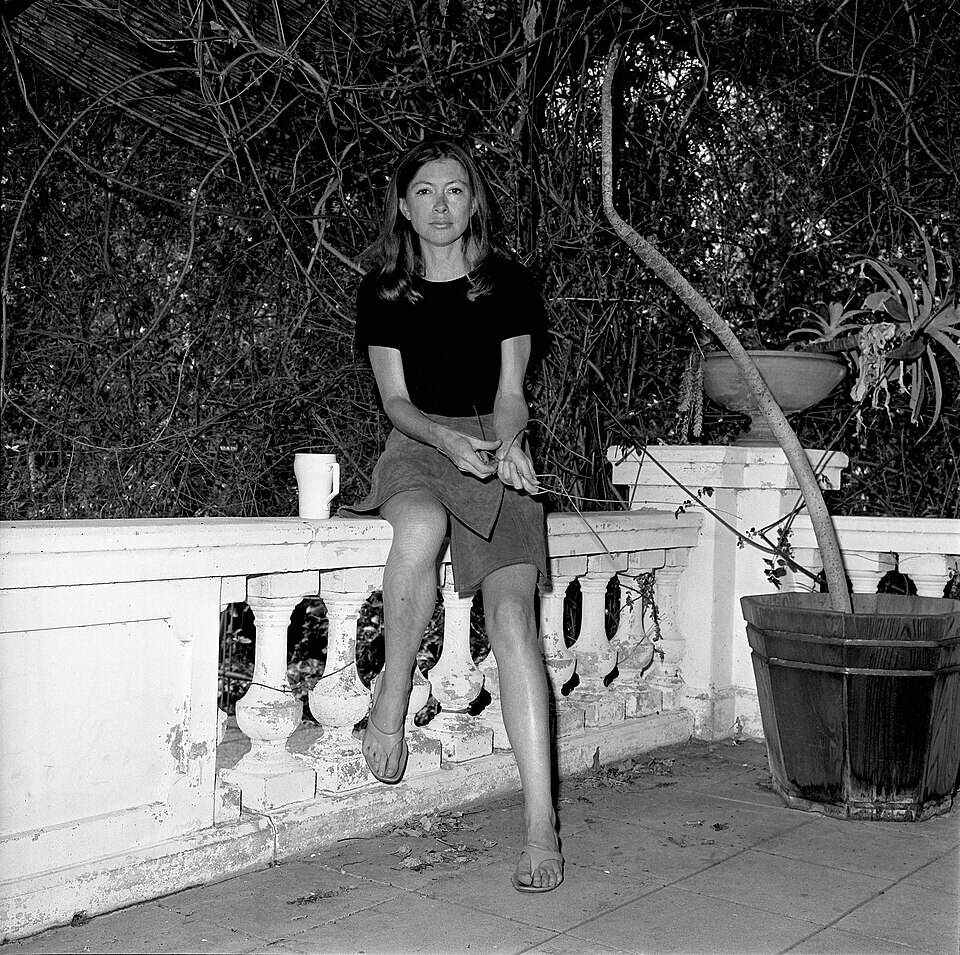
Others may have believed the author was “cool” but her self-image was very different. She was constantly — as she did in the case of her birthplace — revisiting, revising herself, and offering up the fresh version to others, not as a gift, but as a matter of practice. She was uneasy, uncool to herself. Which is why Notes to John doesn’t appear to be a gift, but a betrayal of what Didion stood for.
Had she been alive, would she have allowed the publication of her uncorrected journals? Didion made notes for herself; to make sense of who she was before telling others; to not present anything she hadn’t run by her own writerly brain, or that of her husband. Didn’t John Gregory Dunne edit the famous piece that contains this powerful sentence — “We are here in this island in the middle of the Pacific in lieu of filing for divorce”? Perhaps that’s a clue that she was okay with letting the inner and the private be out there for others to consume, to be a part of the culture.
But nowhere does she seem to succumb to anyone else’s demands but her own. She was ‘cool’ that way.
In the Netflix documentary, Didion’s editor, Shelley Wanger, notes that when Didion was stuck, she put her manuscript in the freezer and thought backwards to it. After her death, there was no one to put Notes to John in the freezer on her behalf. Instead, the publishing industry pulled something out from her remains.
Exciting stuff, they must have thought. Readers pounced on the volume much like I did when I first heard Let Me Tell You What I Mean was available in bookstores during the pandemic. A friend drove me to Jor Bagh from Shahdara. I wanted Didion so bad that I went regardless of the risk and the panic.
Is it important to buy books? my mother asked. It was a legitimate question in an uncertain time. But I did not possess the vocabulary to tell her that Didion had helped me write Listening to the Heartbeat of a Transformer: Making Sense of Loss, an essay for clavmag about my father’s death in a car accident in 2008. It took me 13 years to pen it down. My mother will probably never read it, not even in a Hindi translation. And she will probably never know what Didion means to me.
It was on reading The Year of Magical Thinking in 2020 that the author became central to my life. Her sentences made sense of what seemed inexplicable.
When I return to Notes to John, which I haven’t been able to finish because of the tiresome things I find in the
entries, I wonder how this “previously unpublished work” could possibly help me or others. Should Didion be remembered this way: “Started talking about never being good enough to satisfy”? As opposed to “I remember thinking that I need to discuss this with John. There was nothing I did not discuss with John”, as in The Year of Magical Thinking? As it happens, she did not run The Year of Magical Thinking by John. The publishers of Notes to John didn’t have Didion to edit her own journals before they were sent out to the world.
Helplessly, I go back to a time before Didion, a time she writes about in Where I Was From: “To read these crossing accounts and diaries is to be struck by the regularity with which a certain apprehension of darkness enters the quest, a shadow of moral ambiguity that becomes steadily more pervasive until that moment when the traveller realises that the worst of the Sierra is behind him.”
Notes to John, in a way, came after Didion. “It is easy to see the beginnings of things, and harder to see the ends,” she wrote.
She has crossed the frontier of life. What’s left are merely ‘crossing accounts’ that rarely reveal Didion like her beginnings do. That’s where she told us who she was.
Saurabh Sharma is a Delhi-based writer and freelance journalist. They can be found on Instagram/X: @writerly_life.


