
 E-Paper



Rethinking human-wildlife conflict
This article is authored by Seema Lokhandwala, wildlife biologist and conservation scientist, and Prajakta Hushangabadkar, wildlife biologist.

 Prefer HTon Google


A leopard slips out of a sugarcane field at dusk and a village panics. A tiger is glimpsed near a highway, and news channels declare it "on the prowl." An elephant herd pauses at the edge of a tea estate in Assam, and within the hour a video of trumpeting and torch lit crowds is doing the rounds on WhatsApp. By the time these stories reach us, the animal has already been cast as ‘intruder’, ‘aggressor’, ‘threat’.
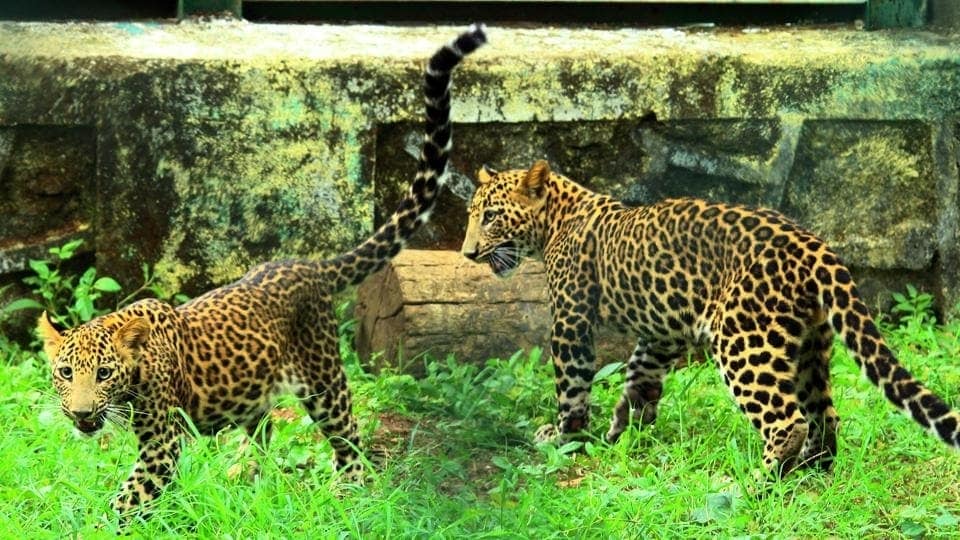
This is the version of human-wildlife conflict most Indians know: A series of dramatic, disconnected incidents. The danger is real. People lose crops, livestock, homes and, at times, their lives. But what rarely makes the news is the quieter, older truth, that people and wildlife have shared these landscapes for generations, and most of that sharing is not conflict at all. It is a negotiation-continuous, imperfect and largely invisible. That is coexistence.
Take the familiar image of an elephant herd entering a paddy field. Research on Asian elephants shows that such incursions are rarely an act of aggression. Crops like paddy and sugarcane are simply richer, more concentrated food sources than what the forest offers, and herds often reach them by following memory, water and older migratory routes that predate the settlements now sitting across them. The same is true, in different registers, for tigers padding along old drainage lines that are now agricultural bunds, or leopards moving through the scrub between one forest patch and the next. The animal has not trespassed. The shared space has simply narrowed from both ends, squeezed by fragmented habitat, expanding settlements and changing land use.
But coexistence doesn’t mean the absence of conflict. Crop damage, livestock loss and occasional dangerous encounters are real costs, borne disproportionately by the poorest households living closest to forests. But treating every such incident as proof of a conflict landscape mistakes the exception for the rule. A study of more than 1,150 recorded incidents across the Chandrapur landscape in Maharashtra between 2010 and 2022 found that despite widespread livestock loss, only a small fraction of surveyed households wanted tigers removed from the landscape altogether. Most saw the animal not as an enemy but as an unavoidable, even necessary, neighbour. Similar sentiments are common in elephant-affected communities in Assam. People do not ask for the herds to disappear. They ask for quicker alerts, better fencing, faster compensation and some acknowledgment that they are sharing the cost of conserving a species the rest of the country takes pride in.
Another misconception is that fear and coexistence cannot sit together. They do, constantly. In villages around central India, shrines to Waghoba, the tiger deity, stand at the edge of forests where people pause before entering to collect tendu leaves or mahua flowers. Further south, elephants occupy a similarly layered place in memory and belief, feared for the damage a single night's raid can cause, and still spoken of with something close to reverence. That is not a contradiction. It is a working relationship with risk, built over generations, often absent from conventional policy and civil society discourse.
And finally, perhaps the most ubiquitous belief is that conflict is a problem with a fixed solution. The truth is that coexistence is an ongoing symphony of efforts across actors. The forest department remains the frontline institution, and faster response teams, real time alert systems, solar fencing, and above all timely compensation matter enormously. Civil society groups fill a different gap by strengthening early warning systems, supporting local monitoring and helping communities reduce the risks of living alongside wildlife. Storytellers, too, do work that no policy document can. Long before human-wildlife conflict became a technical term, Gond art, folk performance and oral traditions had already captured the nuances of sharing landscapes with powerful animals. A single viral video can reshape public perception overnight. A well-told story, rooted in the local idiom, can remind us that conflict is only one part of a much longer story of coexistence.
None of this argues for lowering our guard about the real costs’ communities bear, or for romanticising risk. It argues for a different starting point: that most encounters between people and wildlife end without incident, and that the instinct to frame every sighting as a crisis is itself part of the problem. The language for coexistence does not need to be reinvented. It already exists--in shrines under banyan trees, in a rider who waits for a leopard to cross the road, and in a farmer who lets a herd pass through before returning to the field.
(The views expressed are personal)
This article is authored by Seema Lokhandwala, wildlife biologist and conservation scientist, and Prajakta Hushangabadkar, wildlife biologist.


