
 E-Paper



Jodhpur RIFF: Music to soothe a savage breast
From Bade Ghazi Khan Manganiyar to Vikku Vinayakram, Suonna d’Ajere and Smita Bellur; great music and interesting conversations with performers made this year’s JodhpurRIFF a superb experience

 Prefer HTon Google


Attending the annual Jodhpur RIFF (26-30 October) for the first time is a bit of an overwhelming experience – there’s so much to do, so many excellent performances to attend and so many conversations with musicians from across the country and the world to absorb. It becomes even more overwhelming when you’ve ridden 622kms on your trusty Bullet, also lovingly known as Rasputin, because you are given to periodic fits of road-longing and can’t be bothered with other forms of transport. Aching limbs and a sore posterior are barely registered during a cruise through the golden Aravallis (past a stall that proclaims it serves “Pahadi Maggie), past vast fields of swaying kans grass, and shrubland from which arise flocks of cormorants flying in fine formation. And then into Jodhpur with its touch of Marwari art deco. To the visitor long accustomed to towns with a colonial history, Rajasthan’s second largest city offers a vision of a pre-British Indian urban settlement with tree-lined roads, a clock tower looming over a crowded bazaar with great street food options, and blue painted houses in the shadow of the magnificent Mehrangarh fort.
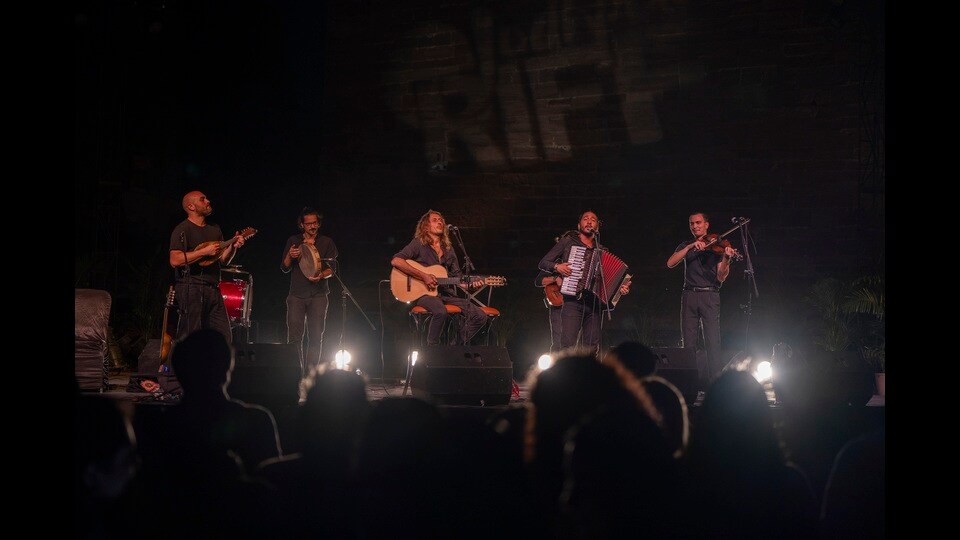
At the hotel where the press contingent is encamped, fellow culture vulture journalists, veterans of the many literary, art and music festivals held across the country, all adept at stuffing the maws of the insatiable content monster with elegant prose, are poring over the programme, promising themselves and each other that they will stay right until the last guitar and dhol has fallen silent at 2 a.m. and somehow also catch the dawn concerts that start at 5.30 a.m. the “following” morning. The not-so-brave decide to pick carefully from the embarrassment of riches on offer. It would never do to fall asleep with your mouth open in the front row while some master of the kamaicha is presenting the finest performance of his life.
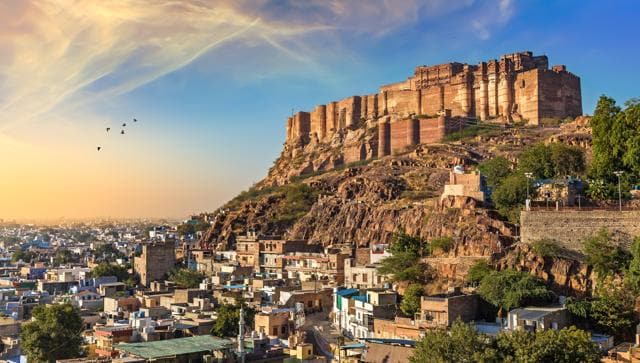
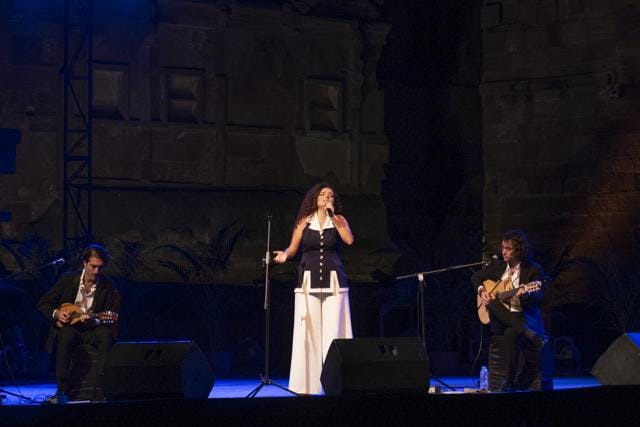
The Mehrangarh fort is the perfect venue. Beautifully maintained with a welcoming Ganpati, what look like hero stones and the remnants of delicate medieval wall art at the entrance, the visitor is transported right into the heart of Rajputana. In the Zenana courtyard, a troupe of Manganiyar musicians who are belting out authentic desert folk tunes are followed by Suonna d’Ajere, a Neapolitan trio fronted by the striking Irene Scarpato. The singer launches into a series of lively Italian numbers. You can’t understand a word but your feet are tap dancing quite joyfuly. In the row behind, some member of Jodhpur’s high society drawls, “Yaar, iski baal bahut sundar hai” to which his wife brays “Kiski baal”. “Singer ki” he says. You suddenly feel very superior and “culchaared” indeed. It’s a feeling that stays right through Jasser Haj Youssef’s violin playing too as the worthies keep up their incessant chatter. Perhaps the festival should consider awarding 50 lashes to socialites who attend only to be seen. It will ensure they don’t babble in the background.
That corporal punishment fantasy makes you think of feudalism and maharajas and royals running riot. And indeed, Rajasthan is still a feudal place with much bowing and scraping before even minor princelings. This is magnified when it comes to royals of stature like the Maharaja of Jodhpur, Gaj Singh, who is the patron of the festival. Affectionately called Bapji, local musicians never fail to pay obeisance to him. In an aggressively democratic age, all that would have been offensive if the man wasn’t actually successfully pulling off this remarkable event and thereby ensuring livelihoods, fresh connections and renewed relevance to performers who are often the last practitioners of their particular arts.
JodhpurRIFF - Chonta DJ; riding the third wave in Latin American music
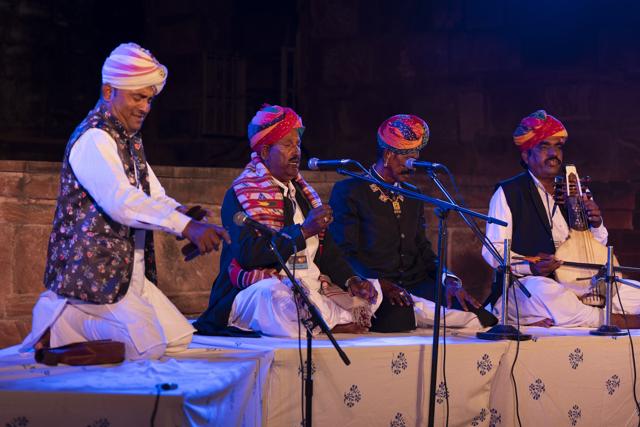
The thought of that slow death and unexpected revival stays uppermost while listening to Bade Ghazi Khan Manganiyar’s powerful version of Nimbuda, the song that Bollywood credited to Ismail Darbar. “He signed away his rights to the song in his innocence,” says RIFF director Divya Bhatia, who adds that the grand old man – an inspiration to emerging folk musicians – is a repository of hundreds of songs in the Manganiyar tradition. Resplendent in traditional jewellery, Khan has presence despite his advanced age – he is accompanied by the younger Multan Khan Manganiyar – and his voice moves listeners as it wafts through the walled garden of Chokalao Bagh.
Livelihoods are often unpredictable for those possessed by the arts and this is true of skilled bhapang player Yusuf Khan and the assorted band of musicians he has brought together from Mewat. Among them is the jovial Ramswarup Yogi who plays the mashak, a Rajasthani bagpipe made from goatskin. “Why isn’t it more popular,” you ask during an interactive session. “Because you need a lot of lung power,” he responds, adding “There aren’t many people who like playing it. I got hooked onto it and that was that.”
“What about the others who play it?”
“It took too much out of them and they all died,” he pronounces with a toothless laugh that has the audience in splits.
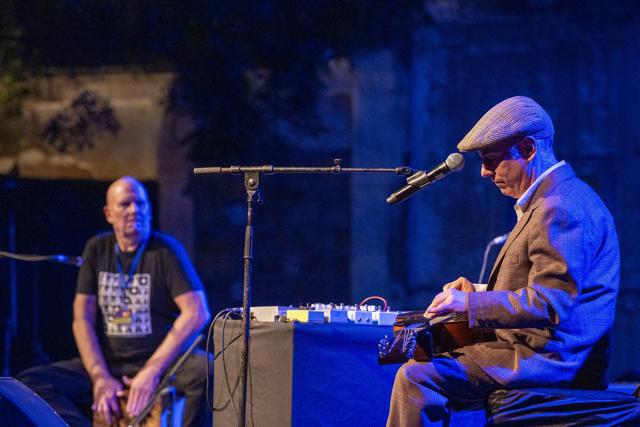
Death by performance isn’t something guitarists generally need worry about but one of Australian John Lang’s songs about a child witnessing his mother’s infidelity was a definite heart breaker. Next, Smita Bellur accompanied by Dilshad Khan, Sadiq Khan and Zakir Khan sang qawwalis including that perennial favourite Kab Tak Mere Maula with gusto. Asha Sapera and her aunts Mohini Devi and Sugna Devi launched into the songs of the Kalbelias, a snake charming community more famous for their dancing.
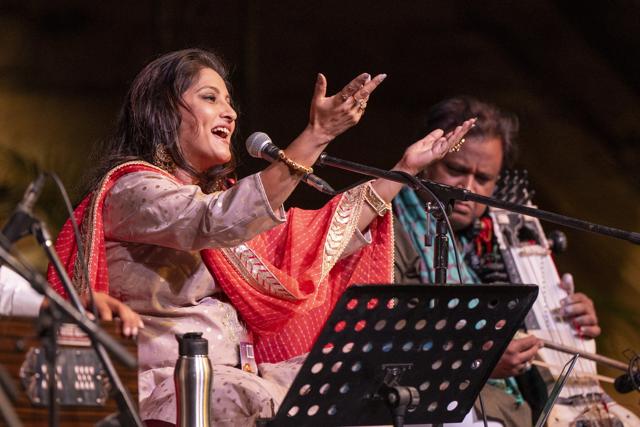
Unable to hold themselves back any longer, the audience finally leapt to its collective feet when Ars Nova Napoli brought, in the words of the schedule, “Napoli’s street music to the Jodhpur RIFF stage”.
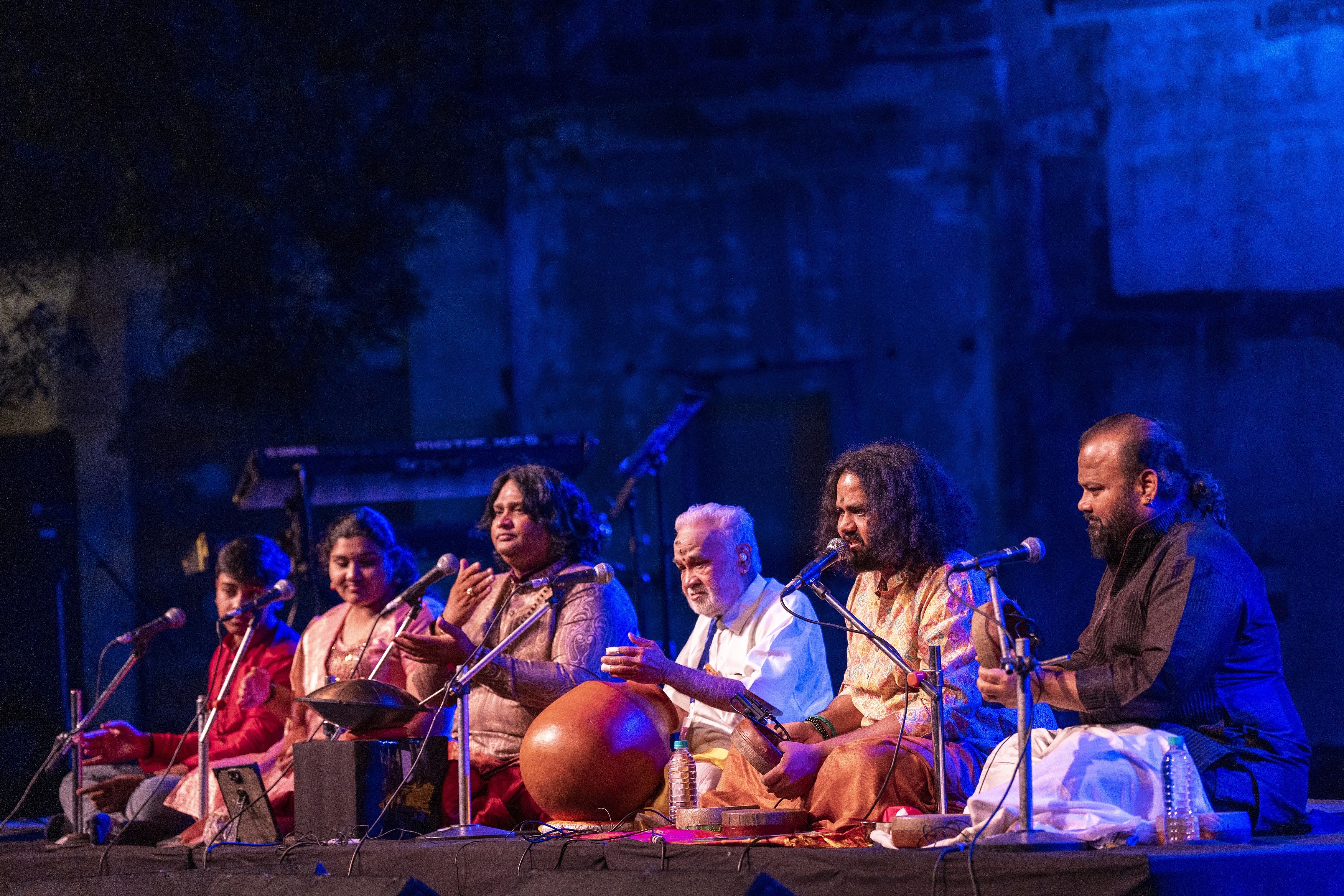
And so it was that Jodhpur RIFF left attendees drunk on music for four consecutive days. Riding back home to Gurgaon past Ajmer and Jaipur and Neemrana where the traffic turns manic and even the GPS starts to panic, repeatedly sending out staccato instructions to “keep left” on a road that’s dead straight, you rewind to the Carnatic percussion performance by ghatam maestro Vikku Vinayakram, his sons Selvaganesh and Mahesh Vinayakram, and his grandchildren Swaminathan Selvaganesh, Guruprasad and Gurupriya. That show had everyone in the packed venue clapping in time to the beat – it was like something out of a video of a Queen concert circa 1985. As you persevere through the mess of two wheelers, autorickshaws, tourist buses, SUVs and trucks heading towards the National Capital Region, the memory of the sound of the kanjira, the ghatam, of course, the mellifluous young voice of Gurupriya, and Guruprasad’s rather superb morsing keeps you on course, helping you dodge the murderous Fortuners and the deranged tempos until you’re finally home, the beat still pulsing through your adrenaline-filled veins.
Music and motorcycling. Who could ever want more?


