
 E-Paper



Essay: A letter from Manipur
Two months of life in a town besieged by strife is a constant reminder of the brevity and precariousness of life

 Prefer HTon Google


It has been two months since the ethnic civil war started in Manipur between the majority Meitei community and the Kuki/Zo tribes, who comprise roughly 16 percent of the population.
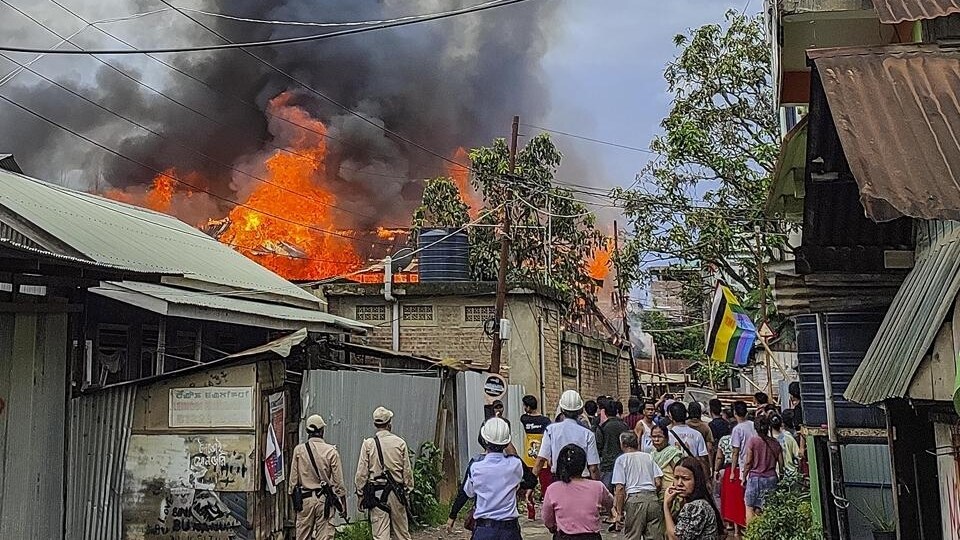
Two months of life in a town besieged by strife is a constant reminder of religious teachings about the brevity and precariousness of life. Human life is like the dew that disappears as the sun rises, the Bible tells us. It is like a blossoming flower that wilts in the evening. Yes, we know, death will come to everyone. And yet, it is tough to entertain the thought of dying, especially dying violently.
The lurking nearness of violence and death was revealed early on in the conflict. On the evening of May 3, a group of neighbours was in our house for a time of Christian fellowship that’s held in rotation every Wednesday. We are in the heart of Lamka town and notwithstanding what is happening around us, we try to act as normal as possible. As the fellowship wound up and people were leaving, we were jolted by a sharp piercing sound. I tried to make light of it by saying that some slingshots must have hit the tin roof. But when we returned after seeing off our guests, my wife saw a splinter of material from the ceiling on the floor. We checked and recovered a spent bullet. It was still hot. A stray bullet had hit our tin roof, penetrated the ceiling and struck the tile floors below. Suddenly, it was clear that the war is indeed upon us.
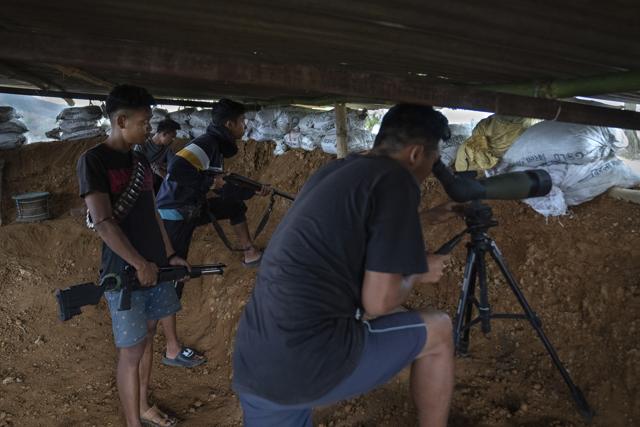
Since then, we have been living a life of uncertainty, fear and grief. We get up in the morning to the hoo-hah sounds of local volunteers doing their PT runs. While brewing tea, we sniff the air for signs of tension or strife in the neighbourhood. Almost as an unconscious reflex, we check our phones for WhatsApp messages. There’s nothing to see because the internet has been off since the beginning of the troubles. We turn to the TV and scroll through the news channels. That’s what we do most days. It’s impossible to focus on anything else.
I have piles of books and papers waiting, unread and unmarked. My PhD research work too is certainly not writing itself. WhatsApp is off, the kids are away, and the colleges are closed. We’re told to stay indoors except when called to sit in dharna or assigned some relief-related work. What a perfect time for a life of the mind! Yet, when I pick up a book, I can hardly make it past the second page before my mind starts to roam and I end up not knowing how far I have wandered. I think of Amartya Sen, of all people. I recall reading his memoir where he mentions how he could do his reading and writing undisturbed even while waiting for a train at a bustling station. I feel guilty and irritable. My itchy fingers reach for the TV remote yet again.
Apart from the sale of essential food and petrol on the black market, cable TV is the one business that has seen a revival since the clashes began. With broadband internet in most homes and smartphones in every hand, people had forgotten about cable TV. Then, the violence started and the Internet was shut down. Now, cable operators are struggling to cater to demands for reinstallation.
On a particular day, the big news on most channels was the “Pawar-play” in Maharashtra. Talking heads shouted at each other, like always. Earlier, it was the ministry formation in Karnataka. Watching from this besieged settlement in Manipur, all that is non-news. The one regional news channel called Northeast Live, which is Guwahati-based, is as deferential to power as any other and the quality of reportage leaves much to be desired. Yet, it is the only one we have. The channel continuously runs a ticker tape at the bottom of the screen highlighting the news as it comes in. This is where our eyes are focused.
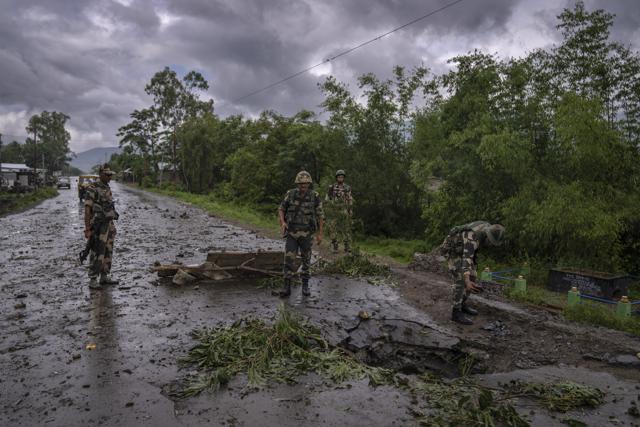
Then there are the local channels. Channel 1 is for periodic local news broadcasts with Christian gospel songs in between. Channel 2 is for romantic love songs. Channel 3 features selected TV debates on the conflict downloaded from various outlets, incident reports on the present conflict, and victim testimonies.
Some people may think victim testimonies are provocative. Some say the way forward is to forgive and forget. Try telling that to people who saw their family members killed or raped, their homes built with their life savings turned to ashes. Listening to survivors and victims helps us understand the conflict from their point of view and to connect with them as fellow humans. It turns distant anger into proximate grief. Sometimes, it transforms hatred into sadness. It also helps the survivors, I think, cope and maybe find a way to heal.
I listen to a girl recounting how her brother and mother were beaten to death as they tried to flee to an army camp. She was calm. She did not cry even once. It is me, the listener, who is struggling to contain his tears.
I watch an elderly man and his wife speak of how they ran away from their village to the jungles to escape the attacking mob. They were in the jungles for four nights before they were rescued by the army. He was speaking slowly, in a monotone, and I am not sure if his staring eyes can see. He looked exasperated, most of all. Responding to a question, he said they had to kill their animals and their dog before fleeing. He had to kill his dog because had he taken the dog along, it would bark at the attackers, thereby exposing their location. At that point, I felt the room become very still. A lump formed in my throat. I turned the TV off.
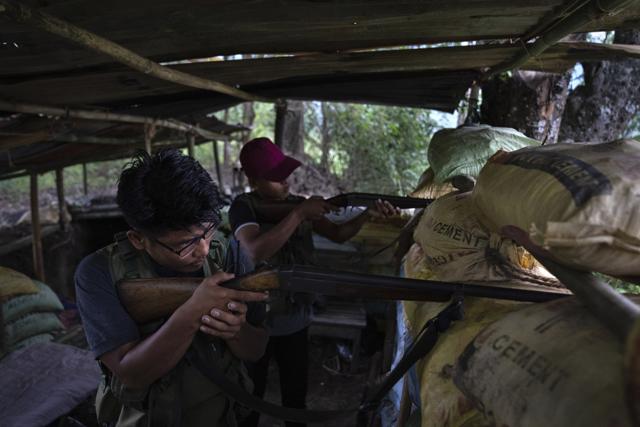
We don’t know how long we will remain like this. Two months have passed, the physical separation is complete, and the warring parties are not even ready to sit together in a room, let alone talk peace.
For now, our entire thought is focused on physical security. Even when there is no direct violence, the possibility is all too real, all too pervasive. It is this possibility of society degenerating so quickly into a free for all, much like the Hobbesian state of nature, that is most tormenting. Is our front gate strong enough, high enough? Why didn’t we foresee this situation when we built this house, with very low windows? Why didn’t we think of an escape gate at the back? Gas cylinders are reminders of those loud bursts from inside the kitchen as houses are torched. Roads are seen only as attack routes or escape routes. Oh, by the way, did any shootings happen today? Any deaths on their side? Or on our side?
Mundane matters like going to school, travelling to the Imphal airport, or going on a family picnic seem like unreal pictures in a forgotten album, snapshots from a lost time.
Thangkhanlal Ngaihte teaches political science at Churachandpur College, Lamka, Manipur.


