
 E-Paper



Lockdown Diaries: A kind of grief by Usha KR
We are feeling sadness at losing the normal tenor of life and having to grapple with the unknown


The heat is building up. It promises to be a long summer. The garden has never been so green before. I can watch the changing slant of light through the day. And listen to the birds all day long. A paddy bird visits every morning and sits patiently by the water. Yesterday there was a flock of parakeets in the mango tree. The cuckoo and the crow pheasant are commonplace now, but their call can catch you off guard.
Of course, there is a pervading sense of unreality, as if all this is a mirage and we are all suspended in time. I am reminded of a film that continues to engage me in different ways – the Russian film Solaris, particularly its opening sequence, where a scientist lingers by a pond and there is a long, beautifully filmed scene of underwater weeds undulating in the clear waters. It is his last day on earth, before he leaves for a distant space station. Weeds in a pond and the sound of running water – the familiar imbued with a melancholic beauty because of what lies ahead.
What we are feeling is a kind of grief, so says a “grief expert”, a bewilderment and anxiety, and sadness at losing the normal tenor of our life and having to grapple with the unknown. We are ready, as Winston Churchill once urged his people, to fight on the beaches, in the fields and on the streets, but the enemy is not in sight – it is literally thin air. The tools of our rational mind, the links between cause and effect, of action and retribution, of plain logical explanation do not apply here. Clichés have come to acquire new life – We are all in this together. And my new favourite – This too shall pass.
I miss the Bangalore traffic – the noise, the clog, the friendly fumes; the autorickshaws and the lumbering BTS buses. The roads, harried as they are on account of the Metro construction or white topping work, lead you to the people that you want to see, whom you have always taken for granted, to whom you said just the other day – “See you tomorrow”; the roads lead you to the park and the gym and the yoga class, and above all, the grocers and the vegetable shops. The daily wash of life has never seemed more precious; especially when you can no longer throw money at it.
There is little point in working from home when work itself has been rendered arcane and meaningless. Leisure makes no sense unless it is snatched form a busy day. (Strangely, I am spending less time now, watching shows on Netflix or its cousins.) And you are endlessly distracted by news bulletins racking up the score, WhatsApp forwards that you foreswore, and the continuous keeping track – has Italy surged past China? How is Spain doing? And Iran? The US? What new snippet of information does the greedy mind want?
The newspaper, fresh with the smell of newsprint, still comes in the morning – it is an essential good. A photograph of desperate daily-wage workers snaps its fingers at you. The lockdown means walking back to their distant homes, perhaps with nothing more than the clothes on their back, without the comforting thought of returning to their old lives and jobs. According to the said “grief expert” the pendulum swings when you accept your altered state, come to terms with it, hunker down and see what you can do. Among those WhatsApp messages were names of groups and institutions which are working with those left in the lurch. Now is the time to be part of some kind of solution. To get out of your self-indulgent fug, even as you know your fears are all not imagined.
When this is over, it will be a more circumspect world, more thoughtful and hopefully, kinder. When this is over, we will give thanks. We will learn to find beauty in starkness. We will learn to pare down our needs, to consume less, and be more self-dependent. We may discover our older, less frenetic ways of living – not in a Luddite way, but as people who have moved up the curve, enriched for instance, with technology which allows us virtual access to the world and to the people that we want to connect with, with a vaccine perhaps for the elusive virus. As a society this may give pause for us to rethink our models of development, it may be a take off point for a new blue print of growth, of the way we consume resources; we may review the ways we heal ourselves, our systems of fairness and justice. Perhaps these decisions will be taken out of our hands.
But there is no telling what fictions we will weave, what turns our stories may take. Those will take us by surprise. We are still marking time, waiting it out.
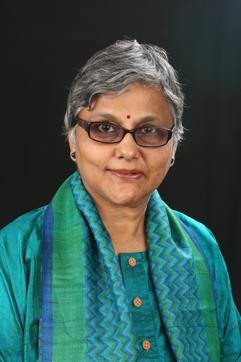
Usha KR is the author of the novels Sojourn (1998), The Chosen (2003), A Girl and a River (2007), and Monkey-man (2010). She lives in Bangalore.


