
 E-Paper



Lockdown Diaries: The Grace of Small Things by Ira Mukhoty
Perhaps we will learn to live differently, caring for the present and nurturing its tiny, endless beauty


As a writer working from home, solitude is a cherished companion. So why did I feel so much disquiet when overnight I was unceremoniously cast out from the warm glow of human interaction.
The truth is that writers are irrepressible and inveterate eavesdroppers, and voyeurs into the lives of others. We spy into the busy, chaotic tumult of other people, from behind the familiar dun of our camouflage. I regularly take the metro into Delhi, not so much because I need to be anywhere urgently but because I revel in the snatched conversations, the urgent, glorious cadences of the women in the ladies’ carriage. I thrill at the salty and staccato rebukes with which a loitering male is quickly dispatched to skulk inside his much more cramped general carriage. I exult in the lilting humour of young girls teasing each other, their language parsed and foreign with slang and perplexing diminutives. I marvel at the endless patience with which a working woman gives long instructions on the phone to a maid for dinner, as she returns home after an exhausting day, her shoulders slumped with worry.
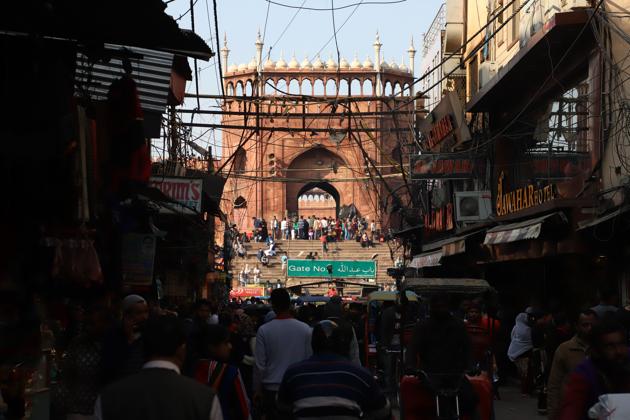
I slink along the gullies of old Delhi sometimes, supposedly for research purposes, but really just to participate in that broiling stream of humanity. To hear the urgent shouts of warning, “Savdhaan!” as labourers rush down the slight inclines at a half-run, carrying swaying loads on their creaking carts. The sudden, unexpected coolness of the side lanes, in perpetual shadow as the havelis hunker closely together, power cables slung thick and low like dark blue veins. “Mast cheez hai” mutters one shopper to herself, as she looks at a particularly outrageous piece of jewellery in Dariba Kalan.
I join the trail of a food or history group around Nizamuddin, not so much because I need to learn about the dargah, but to observe the other participants. The groups of effervescent girl-friends, often professional women whose idea of leisure, I am amazed to hear, is to acquire knowledge together. Inquisitive Delhi-ites who want to learn more about their city, the occasional tautly-listening child, shyly pushed forward by a proud parent, to display their unexpected erudition.
Now the solace of this cacophonous humanity has been taken away from me, and I find I am bereft, all self-sufficient, life long introvert that I am. And so I turn to the smaller things around me.
I had put a bird feeder in my garden a few weeks ago which no self-respecting bird, naturally, has deigned to visit. But a squirrel who lives in an enormous ficus tree with a trunk like the plaited hair of a bride, has started using it. Every day the squirrel leaps with unnecessary flamboyance onto a hibiscus shrub, swings via a gardenia tree, and then hangs upside down to eat from the feeder, delicately picking out the bajra seeds with its tiny paws. There is absolutely no need for the squirrel to be upside down, as there is a stand on the feeder. The squirrel is just a hopeless show-off.
The birds do not come to my feeder because it is spring, and there are much more luscious things to be had than my gritty bajra. There is nectar in the generous hibiscus flowers, in the delicately spiky red efflorescence of the bottle-brush trees and even, I am startled to see, in the pale-green cloud-like clusters of the curry leaf tree. I had never noticed that the curry leaf tree in the neighbour’s garden had flowers.
Easter lilies, deep red and speckled pink, are flowering, profoundly uncaring of the festival that humans have named them after, whose churches will not now be crowded with the faithful. They flower, instead, because of a swinging of the earth’s axis towards the sun and the increase in sunlight -- a precise and careful calculation far beyond us. The desert rose is flowering too, its milky petals outlined in pink, like the study of a careful draughtsman. The sandy, thin soil it prefers is a desert only to us humans, to the plant it is absolutely perfect.
In the mornings I pluck tomatoes from the few potted plants that make up my proud urban kitchen garden. They are warm from the morning’s slanting rays, firm, and variously shaped. They are an extraordinary act of faith, from a few seedlings planted in the cooling smog of a November day. We were wearing masks, I remember, even then, when we planted the seedlings. Pollution masks, from the soaring levels of poison in the acrid, smoky Delhi air. We planted them for the joy of sinking our hands into the crumbly, loamy soil, with no real expectation of fruit.

Today the skies of Delhi are blue. This is so rare that at last, I am at a loss for words. Is that a cerulean blue, with indigo at the horizon? And how would you describe that limpid, clear blue just above? Perhaps we will need to invent a new vocabulary with which to describe the skies of Delhi, the strange luminescence of the low-slung moon and the hot, strobe like candescence of Sirius in the south-western sky.
Or perhaps we will learn to live differently, as I have learnt, focusing on the immediate, the fragile and the finite. Caring for the present; nurturing its tiny, endless beauty, so that our children can still have a tomorrow, blessed with grace.
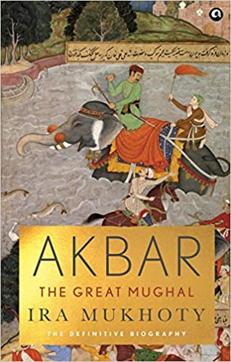
Ira Mukhoty is the author of Akbar; The Great Mughal, Daughters of the Sun: Empresses, Queens and Begums of the Mughal Empire and Heroines: Powerful Indian Women in Myth and History.


