
 E-Paper



Mahasweta Devi; beyond binaries
In her centenary year, revisiting all that Mahasweta Devi, one of the most celebrated post-independence Bengali writers, stood for

 Prefer HTon Google


On 16 August 1992, Chuni Kotal, a 27-year-old woman, committed suicide by hanging at her husband’s home in Kharagpur, an industrial city about 130 km west of Kolkata. Kotal was a postgraduate student in anthropology at Vidyasagar University in the Paschim Medinipur district of southern West Bengal; she was also the first woman from her community of Lodhas, a “de-notified tribe”, to graduate in 1985. At the university, however, she was allegedly harassed by a faculty member because of her tribal background. Repeatedly marked absent from class despite being present, Kotal was debarred from taking exams and also publicly humiliated.
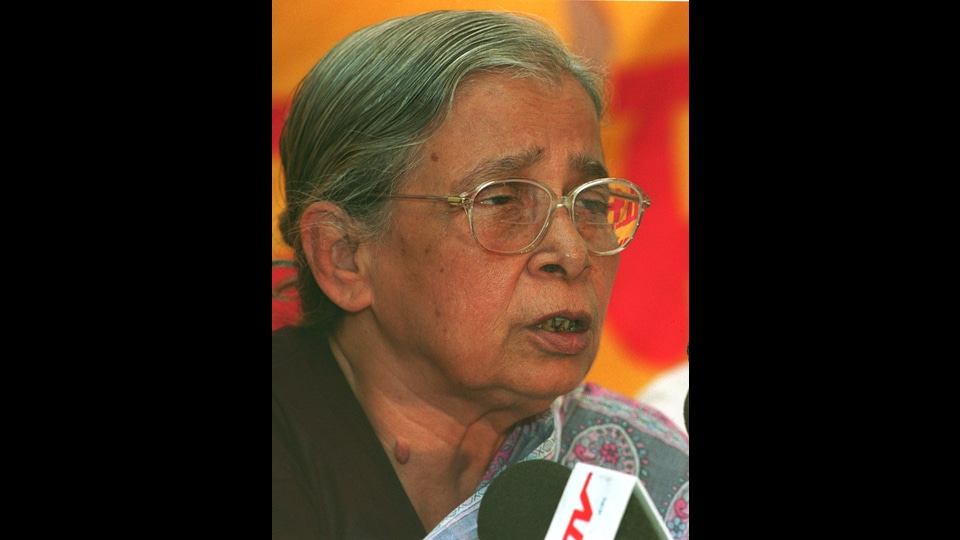
In an article for the Economic and Political Weekly (EPW), on 29 August 1992, the Bengali writer Mahasweta Devi wrote: “Chuni’s death has revealed what West Bengal truly is. Brutal caste and class hostility and persecution has been allowed to continue… Is not Chuni’s death a pointer to the tribal in India?” In the 19th century, the Lodhas had been classified as a “criminal tribe” by the British. Though the government of independent India repealed the Criminal Tribes Act, 1871, in 1949 — thus “de-notifying” the tribes — the Habitual Offenders Act, 1952, and other similar legislation, continue to stigmatise such tribal communities.
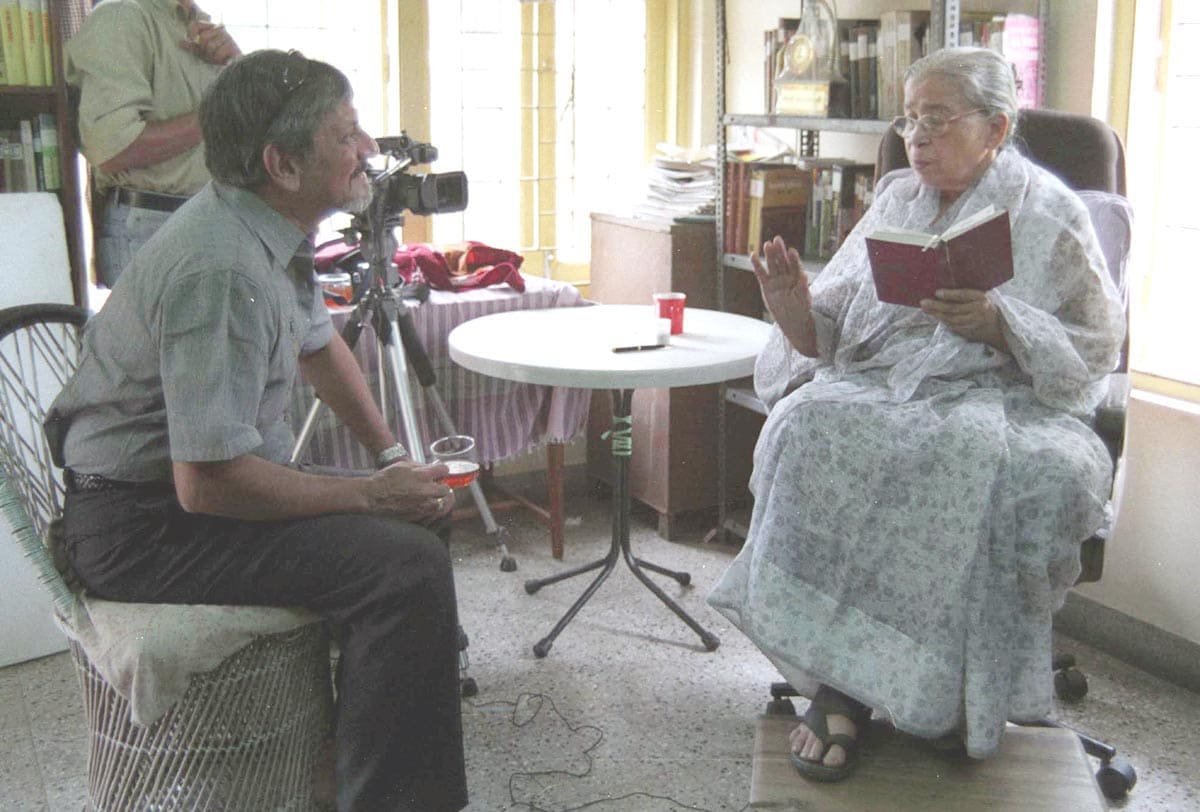
Mahasweta had already written extensively on the Lodhas and the Shavaras of West Bengal. In another article for the EPW, published on 28 May 1983, she wrote: “(T)he Lodhas… have been leading a hunted and persecuted existence for decades… Whenever there is a theft or a dacoity, it is customary for the police to harass the Lodhas… Lodhas are expendable. Lodha killing is a regular feature in West Bengal.” Mahasweta also refers to Chuni Kotal in an interview with academic Madhurima Chakraborty in 2011: “These things happen to tribal people all the time. We do not know these things are happening, so I write stories. That is the only thing I know how to do.”
Born on 14 January 1926, in Dhaka (then in East Bengal, now Bangladesh) — marking 2026 as her centenary — Mahasweta is one of the most celebrated post-independence Bengali writers. Her prolific output, primarily in Bengali but also in English, encompasses fiction, nonfiction, drama, journalism, biography, children’s textbooks, and translations. “The total extent of her output is still not fully documented,” writes literary scholar Radha Chakravarty in the editorial introduction to the academic volume Mahasweta Devi: Writer, Activist, Visionary (2023). All of it undeniably bears the stamp of her politics, though she was frequently described as a creative writer in Bengali.
Mahasweta’s impressionable teenage and early adult life in the 1940s was marked by great political turmoil, such as the Second World War (1939-1945), the Quit India Movement (1942), the Bengal Famine (1943), the Calcutta riots (1946), and eventual Independence, accompanied by Partition in 1947. “These upheavals drew her out of her cocooned middle-class existence,” writes Chakravorty. “As a college student, she took up relief work, distributing food and collecting dead bodies from the street.” In 1946, she married the playwright and actor Bijon Bhattacharya, who was associated with the leftist Indian People’s Theatre Association.
Although a committed Marxist, Mahasweta never joined any Communist party and often critiqued the Left Front, which ruled West Bengal from 1977 to 2011. Following the violence in Nandigram and Singur in the early 2000s, she allied with Mamata Banerjee, the current Chief Minister of West Bengal. But she was also critical of Banerjee and her Trinamool Congress. Mahasweta continued to support the radical Naxalites. After her marriage with Bhattacharya broke down in 1962, she left her son, Nabarun, who would also become a famous writer, with him. In a 2018 documentary on Nabarun, directed by Quashiq Mukherjee, Mahasweta says: “There was a time when I left him. He was on his own. But he never accused me of anything.” The two of them were never fully reconciled.
While her early work, Jhansir Rani (The Queen of Jhansi), published in 1956, combining historical research with myth and folklore, brought her critical acclaim, her political novels and fiction from the 1960s and 1970s, such as Aranyer Adhikar, Agnigarbha, ‘Bayen’ and Hajar Churashir Ma, established her fame. Besides her own writing, Mahasweta also helmed the literary journal Bortika, which her father, the poet Manish Ghatak, had started as a publication for poetry. She, however, transformed it into a space for subaltern writers, like people from indigenous communities.
Since the mid-1990s, the translation of her work into English, especially by Gayatri Chakravorty Spivak, brought her international recognition, including a nomination for the Man Booker International Prize in 2009. Spivak’s translation of three of Mahasweta’s stories, focussing on the troubled life of tribal characters, was published in 1996 as Imaginary Maps. In the same year, Mahasweta was honoured with the Jnanpith Award, India’s highest literary prize, and in 1997, she was given the Ramon Magsaysay Award. The citation for the latter stated: “Devi’s searing stories and novels not only give voice to India’s forgotten tribals but also stress the profound subordination of women in Indian society.”
However, this overt focus on Mahasweta’s activism has led to a formulaic and stereotypical appraisal of her work. “Readers outside Bengal tend to have a limited… view of Mahasweta Devi, on the basis of the tiny fraction of her work available in English translation,” writes Chakravorty. This is borne out by the vast outpouring of academic and journalistic work that focusses on the politics of her work. At the time of her death on 28 July 2016, an obituary in the Paris Review claimed: “(T)he admiration of educated elites was of little concern to Mahasweta. Both her fiction and her non-fiction addressed stories of struggle, resistance, and empowerment, a change in focus from the stories about the lives of the urbane middle classes that had previously dominated Bengali literature.”
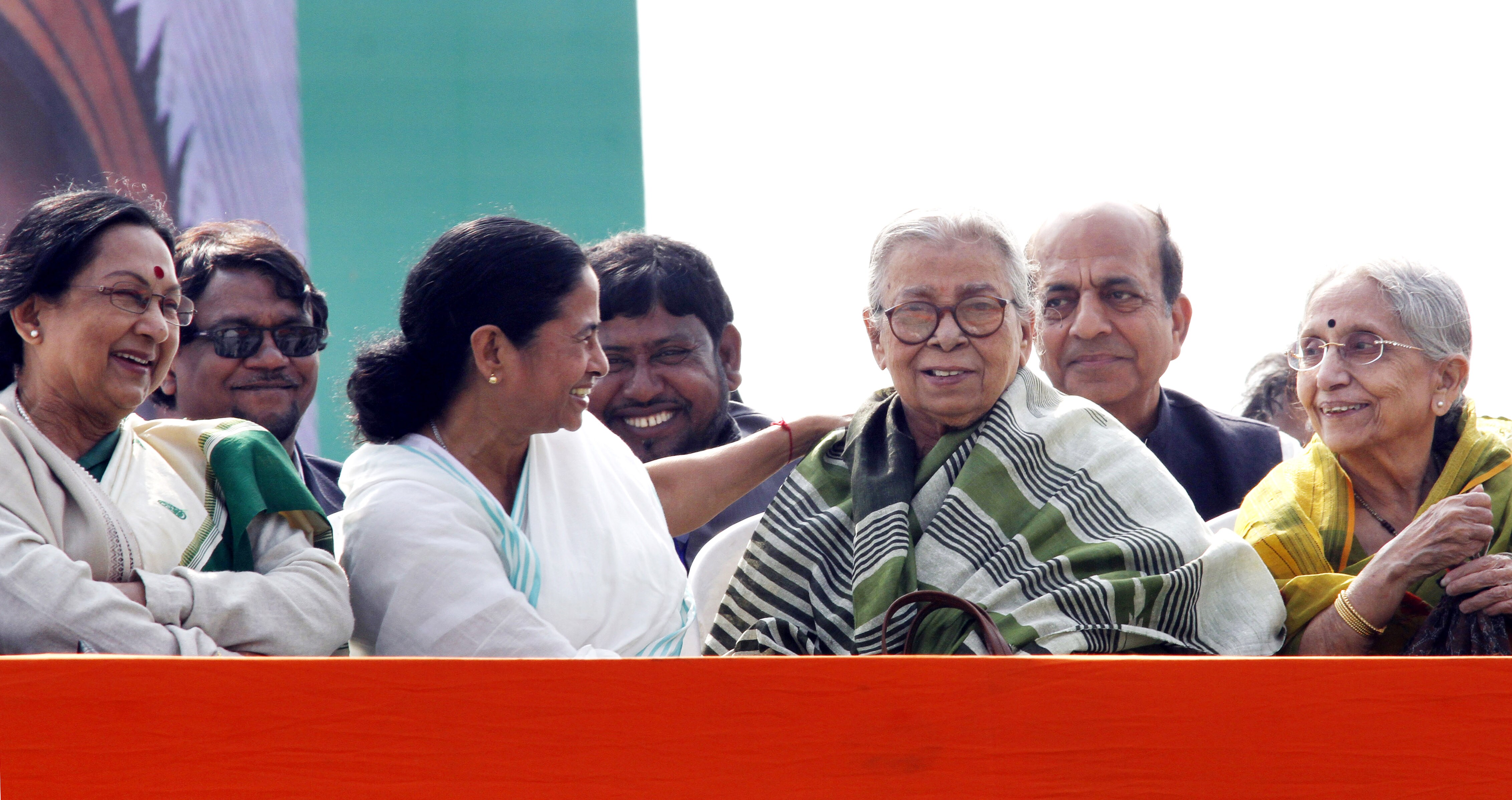
Such a binary, however, is a reductive view of Mahasweta’s oeuvre: As she states in the 2011 interview that I quoted above, “(I)t is only recently that we have started talking about writing and social conscience as separate issues. It is a recent trend among writers to avoid the question of social responsibility. It used to be… that writers would have families and a family life. But they also had a sense of social responsibility. When calamitous things happened in our country, floods and famines hit, educated people would mobilise.” Aesthetics and politics were not opposite — or even different — aspects of her work.
In Mahasweta’s work, her craft and her conscience converge, refusing easy binaries. Revisiting her oeuvre at her centenary, we must acknowledge that she was a writer who insisted that aesthetics and politics must remain inseparable. It serves as a poignant reminder for our undeniably troubled times.
Uttaran Das Gupta is an independent writer and journalist.


