
 E-Paper



Meenal Baghel picks her favourite reads of 2025
An account of Hitler’s ascent to power as witnessed by an American ambassador and his daughter, and an essay on the renewed rise of fascism

 Prefer HTon Google


The middling Russell Crowe film Nuremberg, released some months ago, is a reminder of the West’s obsession with World War II. 80 years on, filmmakers, writers continue to look for insights into twentieth century’s defining event, their storytelling made more urgent by another ongoing war in Europe and the genocide in Gaza.
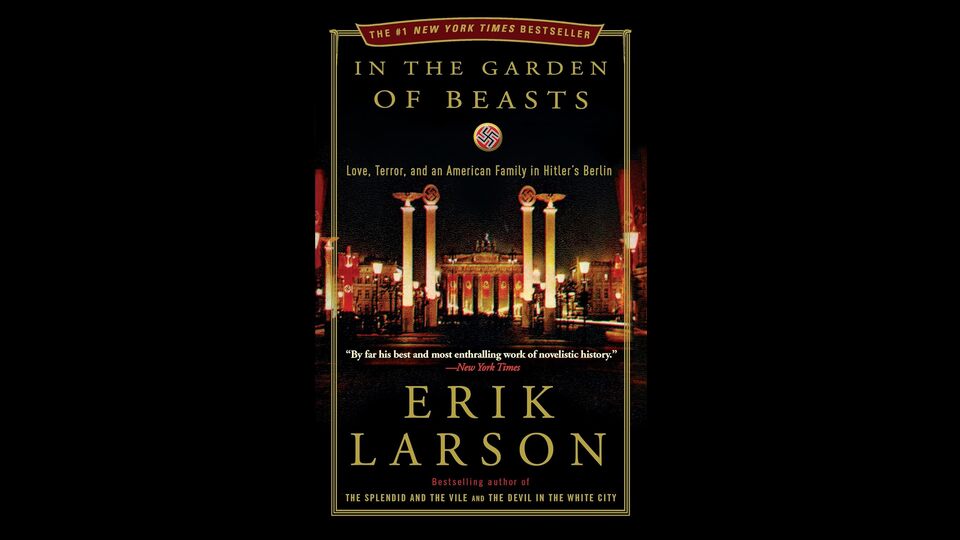
Erik Larson’s In the Garden of Beasts is an account of Hitler’s ascent to power as witnessed by a reluctant American ambassador and his vivacious daughter. It is 1933; Adolf Hitler is the new chancellor of Germany and Berlin is a swinging European capital. Amid opposition from colleagues, Roosevelt picks a mild-mannered gripey academic William Dodd to be his new ambassador. His main task is to get Hitler to cough up the $1.2 billion that Germany owes America. And so it is that in July 1933, the Dodd family sets sail. As they embark the ship, photographers prod them to pose as if waving goodbye, and snapping them seemingly in mid-heil.
From thereon Larson’s telling acquires a hypnotic urgency. Dodd, who has been told in the US to “let Hitler be” is increasingly troubled by the anti-Semitism he sees, and the street thuggery of the Brownshirts. His cables to Washington are, however, ignored as urgings of an unschooled diplomat. Dodd’s daughter Martha, meanwhile, is dazzled by the bright lights of Berlin, the promise of a ‘new Germany’, and launches into an affair with Gestapo chief Rudolf Diels. But as Hitler tightens his grip, the Dodds watch darkness descend upon Germany. Any illusions about Hitler are shattered by the Night of Long Knives when some of Martha’s close friends are murdered.

If Larson’s meticulous research uses the Dodd family to tell the larger story of a society in transition, Naomi Klein’s brilliant essay Surrealism Against Fascism in the newly-launched Equator magazine takes multiple strands of colonialism, fascism and an art movement to talk about the renewed rise of fascism. “The history lessons and fascism checklists could prepare us to spot today’s attacks on the courts, press and opposition forces, as well as the normalisation of sadism. (But) nothing prepared us for a nation perpetrating a genocide, while claiming to be protecting themselves from a genocide, all in the name of learning from a previous century’s genocide.” Rather than an ever-repeating loop, she writes quoting a Jewish writer, history is “one single catastrophe which keeps piling wreckage upon wreckage.”


