
 E-Paper



Nathan Thrall – “Stories have the power to move even the most closed minds”
The winner of this year’s Pulitzer Prize for general non fiction for A Day in the Life of Abed Salama, his book on the West Bank under Israeli occupation, talks about exclusion and death in Palestine

 Prefer HTon Google


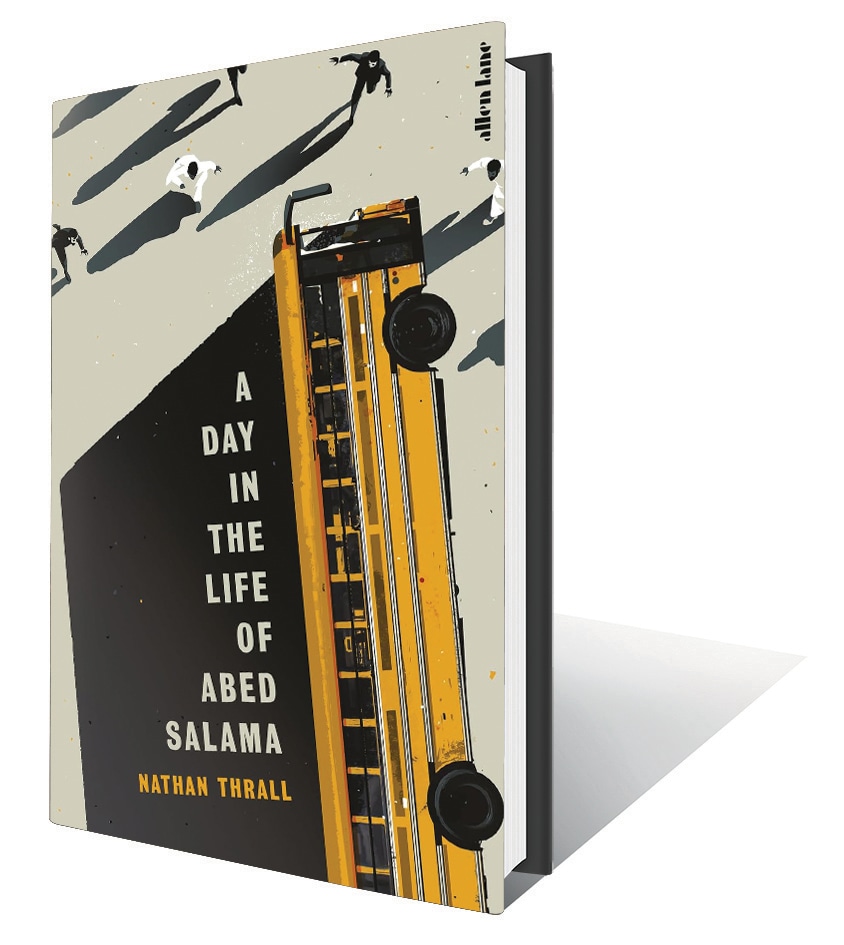
A Day in the Life of Abed Salama: Anatomy of a Jerusalem Tragedy by American author and journalist Nathan Thrall won the Pulitzer for offering an “indelibly human portrait of the struggle over Israel/Palestine and a new understanding of the tragic history and reality of one of the most contested places on earth.” Thrall, who has spent a decade at the International Crisis Group as director of the Arab-Israeli Project, has previously authored The Only Language They Understand: Forcing Compromise in Israel and Palestine. His latest book tells the larger story of millions of Palestinians through the intimate life story of Abed Salama, whose five-year-old son lost his life in a tragic school bus accident. The book paints a grim picture of the West Bank where everyday life is disrupted by a maze of concrete walls and multiple checkpoints, and where walled ghettos have no sidewalks and no municipal services. About the 2012 bus accident that killed five-year-old Milad Salama, Thrall writes that rescue teams didn’t arrive for more than half an hour. Bystanders rescued kids as flames engulfed the bus carrying some 50 kindergartners. “The negligent response to the accident was a predictable outcome of an Israeli policy of neglect of the Palestinians living in and around Jerusalem,” says Thrall, emphasizing that the accident itself was emblematic of the larger story of Israel/Palestine. As Abed set off on a frantic search for Milad on that fateful day, he finds himself on the wrong side of the separation wall. His green West Bank ID doesn’t allow him to cross Israeli military checkpoints, and he doesn’t have the right papers to enter and access Jerusalem city hospitals. Nathan Hall was driving in the West Bank with a colleague when he heard the news of the tragic accident. Years later, he went again and talked to doctors, students, teachers and bystanders to flesh out the larger story of crippling control and occupation through Abed’s personal loss of his child. The book was published on October 3 last year, just days before the October 7 Hamas attacks in which 1,139 people were killed and dozens captured, and the subsequent Israeli attacks on Gaza, which have since killed almost 36,000 people. Here, the author talks about what compelled him to tell the larger story of control and segregation in Palestine through the story of a grieving father, the deeper causes of the accident, and why he still hopes that stories can move closed minds.
How did you meet Abed Salama and what was it about the tragedy of his 5-year-old son dying in a school bus crash that compelled you to tell the larger story of control and segregation in Palestine?
I live just three kilometers from the eight-metre-tall wall that encloses the community where the parents and children in this book reside. They are surrounded on all sides by walls. They share the same city as me but live a radically different life. There are about 130,000 people living in this walled ghetto today. It has no sidewalks or playgrounds; the narrow roads are in disrepair; there is a shortage of schools and classrooms; people inside pay taxes to the Jerusalem municipality but receive almost no services; and they are forced to burn their trash in the street at night. I drove past this community nearly every day but hardly paid any attention to it. But after this tragic accident occurred, I found myself thinking of the parents who lost their children, the children who lost their siblings, the teachers who witnessed their pupils die as it took more than half an hour for the first Israeli ambulance to arrive at the scene. The negligent response to the accident was a predictable outcome of an Israeli policy of neglect of the Palestinians living in and around Jerusalem. The accident itself was emblematic of the larger story of Israel/Palestine. Through the stories of the doctors, nurses, paramedics, settlers, Palestinian parents, and Israeli soldiers I believed I could tell the story of the occupation, indeed of the modern history of Israel/Palestine.
Once I decided I would tell the story of the crash, I began to search for anyone connected to it, and that quickly brought me to Abed Salama, the father of one of the children on the bus. I was immediately moved by Abed’s story: how he searched for his son for more than a day, how he was told that his son was at Jerusalem hospitals that he could not access because he had the wrong colour identification card. And I was taken, too, with Abed’s life story, his activism in the first Intifada, his torture and arrest, the way his family lands were taken over by Israel, how the Oslo process made his life only more constricted, how the Israeli system of control reached so deeply into his life that it even, at one point, dictated who he chose to marry. Through Abed, one can learn the story of Palestine.
You write in the book that the bus accident had “crushed every family, each in its own way.” How did other families of other kids who lost their lives in the same accident cope with the tragedy and do they still look for answers and seek justice? What impact did it have on the school?
The accident was devastating for all the families I met, not just the ones who lost children. One of the most tragic and unfortunately common aspects of parental grief is to search for ways to blame oneself. Many of the parents were filled with guilt over having allowed their children to go on this trip. The people around these parents are so afraid of upsetting them that they never bring up the lost child. But what I found is that many of the parents yearned to talk about their children and about the accident. None of the parents felt that justice was done or will be done. They take for granted that they live in a deeply unjust system of Israeli domination and Israeli impunity.
You point out in the epilogue that the trial and police investigation of the accident focused narrowly on the actions of the driver ignoring the broader causes of the accident. Were these broader causes like late emergency response, multiple checkpoints and restricted access to areas overlooked during the trial and investigations and what bearing did these factors have on the accident?
Over the course of the book, one learns detail after detail about the deeper causes of the accident, and how those deeper causes made the sequence of events that day entirely foreseeable. But the aim of the book is to tell a story that feels almost novelistic, putting you in the shoes of the characters. It is not polemical or didactic. It is only in those final paragraphs of the epilogue that there is a kind of summing up of those broader causes.
You also write about different green and blue colour IDs issued to the Palestinians by Israeli authorities that determined who could reach the hospitals on time. How have these IDs created segregation and restricted people’s access to healthcare and other basic amenities?
Abed Salama is a father with a green West Bank ID. Many of the other parents had blue Jerusalem IDs. Within the same families in this enclave, you have some with green IDs, which prevent access to Jerusalem, and some with blue IDs, which allow travel through the checkpoints to the heart of Jerusalem. Because of his green ID, Abed isn’t able to search for his son at the Jerusalem hospitals where he is told his son has been taken. He calls on a relative with a blue ID to go search for him. During his life, Abed watched the permit and ID system become ever more complex and restrictive. He spent much of his childhood in the Old City of Jerusalem and today he cannot enter it. He had a job in Jerusalem and was at risk of losing it because of his green ID. At one point, he even tries to marry someone with a blue ID in order to try to get a blue ID himself and keep his job.
You’ve said in one of your interviews that you wrote this book with the “hope that liberal Zionists were going to read it and engage with it and be changed by reading it.” Do you still hope to see that given what happened on October 7 and the subsequent bombardment and killing of thousands of Palestinian civilians and the destruction of Gaza?
Yes, I still have that hope. Partisanship and close mindedness and refusal to empathise have all grown worse since October 7 and the destruction of Gaza. But I believe stories have the power to move even the most closed minds.
You grew up in a Jewish family and have lived in Jerusalem for the last 13 years. You have also extensively covered and reported from Palestine. How did your meetings and relationships with people in Palestine change your perspective over the years? How difficult is it to be a Jewish critic of Israel especially when you do book related events in America and Israel?
I came to Israel/Palestine with the normal biases of an American, which is to say that I had a very superficial knowledge of Israel/Palestine and next to zero awareness of Palestinian history. My conversations with Palestinians changed that, as did my reading and research. And what that meant, in turn, was that I was attacked by members of the Jewish community and supporters of Israel. The book was published on October 3. Abed and I were in the US and planned to tour together for nearly six weeks. After October 7, we had a number of events cancelled in the US and the UK. I’m still having events cancelled, as recently as this month in Frankfurt. Ultimately, I see the cancellations as a sign of the insecurity of Israel’s defenders. They are losing the argument, and so they are trying to shut down conversation.
The book was recently awarded the prestigious Pulitzer prize in non-fiction. Are you hoping that this recognition will help bring more readers to gain a better understanding of what cripples the lives of Palestinians?
That is the hope. I have seen the book change minds, and my wish is that many more will read it.
Majid Maqbool is an independent journalist based in Kashmir.


