
 E-Paper



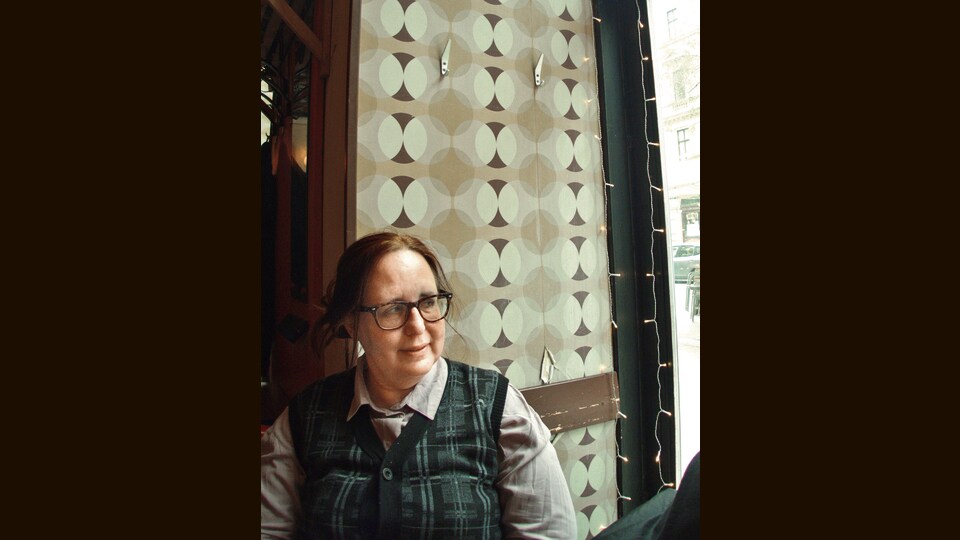
Ottilie Mulzet: “None of Krasznahorkai’s works is easy to translate”
On rendering Nobel Laureate László Krasznahorkai’s books into English and on curating Seagull’s Hungarian list

 Prefer HTon Google


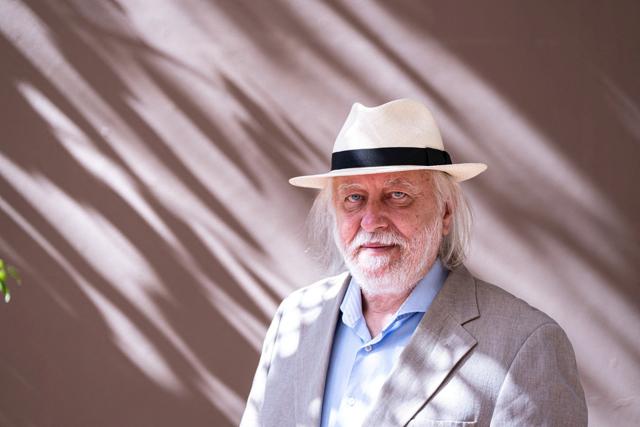
What was your first thought when László Krasznahorkai was announced as the winner of this year’s Nobel Prize in Literature?
I was surprised, and a little shocked. I knew that Krasznahorkai had already been nominated quite a few times for the Nobel Prize in Literature, so I was beginning to think that, after so many repeated nominations, he might end up on the long list of “deserved but never awarded”. When I also saw the betting figures, showing that he was heading the odds, I had begun to feel that it probably kind of jinxed it as well. But once I realised that he had really won, I just felt overwhelming joy for him as well as for his publishers — New Directions in the United States and Profile Books in the United Kingdom.
The Swedish Academy for Literature awarded him the Nobel for “his compelling and visionary oeuvre that, in the midst of apocalyptic terror, reaffirms the power of art.” What do you think about their assessment?
I don’t think that I would disagree with any of the words they used.
What would you say to readers who find Krasznahorkai’s work too intimidating?
With many authors, reputation and reality can differ – but in Krasznahorkai’s case, even more so. I would say just to try to sit with his work and his sentences: a lot of his prose is far less intimidating than it looks on the printed page. I sometimes fear that this reputation of “difficulty” will a priori intimidate a lot of readers who might otherwise enjoy his works.
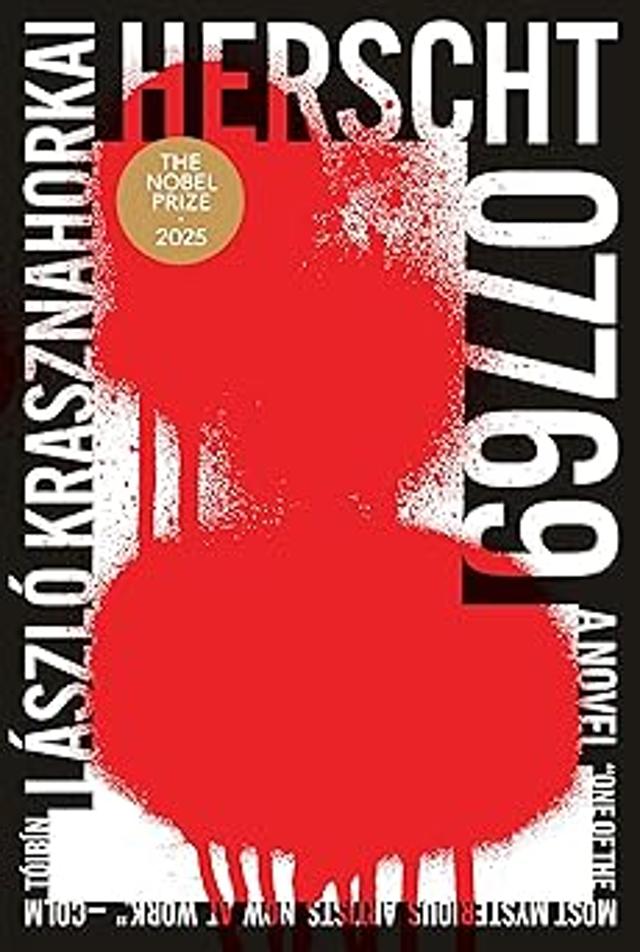
You have translated many of his books including Seiobo There Below, Baron Wenckheim’s Homecoming, Destruction and Sorrow Beneath the Heavens, Animalinside, Herscht 07769, A Mountain to the North, A Lake to the South, Paths to the West, A River to the East, and parts of The World Goes On. Which of these was the easiest to translate and which the most challenging?
None of Krasznahorkai’s works are easy to translate; each one poses its own individual challenges. Seiobo There Below required a great deal of research into the incredible range of art historical topics in the book, from the making of Noh masks in Japan to medieval icon painting in Russia, also getting all the right terminology for the techniques and methods. Baron Wenckheim’s Homecoming had different challenges: Hungary since the end of Communism, the personalities and physical environment of small-town Central Europe, much of which might well seem obscure or mysterious to English-speaking readers. As for Herscht 07769, I consider it an experimental text that is at the same time a criminal thriller, so the ‘mixing’ of two different genres was a challenge as well. Still, this combination is also what makes the book so exciting.
Having translated Krasznahorkai’s novels, short stories and travel memoirs, what did you enjoy most?
I have really enjoyed translating all of his works, so it would be hard for me to single out just one text. Having said that, I particularly loved all the art historical context of Seiobo There Below. I also strongly appreciate Herscht 07769 for how deeply relevant it is for today’s Europe, although of course I do wish that it were not so.
What do you make of his interest in Buddhism — catalysed by visits to China and Japan — which finds expression in his writing? To what extent has it transformed his approach to human suffering?
Krasznahorkai was able to spend some periods of time in the Far East in the early 1990s, and then again in the early millennium. These sojourns were truly transformational for his work. I think that the deep sensitivity to human suffering has always been one of the most profound aspects of his work as a writer, but I feel that the time that he spent in Asia had a profound effect on his views of Western metaphysics.
You began to study Hungarian because two of your grandparents emigrated from Hungary. How do you look back at the way your relationship with the language has evolved?
I began studying the Hungarian language out of a desire to understand something more about the heritage that I was cut off from because of closed adoption. Then it grew into a deep intellectual curiosity and a genuine love for the language and for Hungarian literature. While this love is abiding, my relationship to the language itself is a bit complicated because it was something that was unjustly torn away from me.
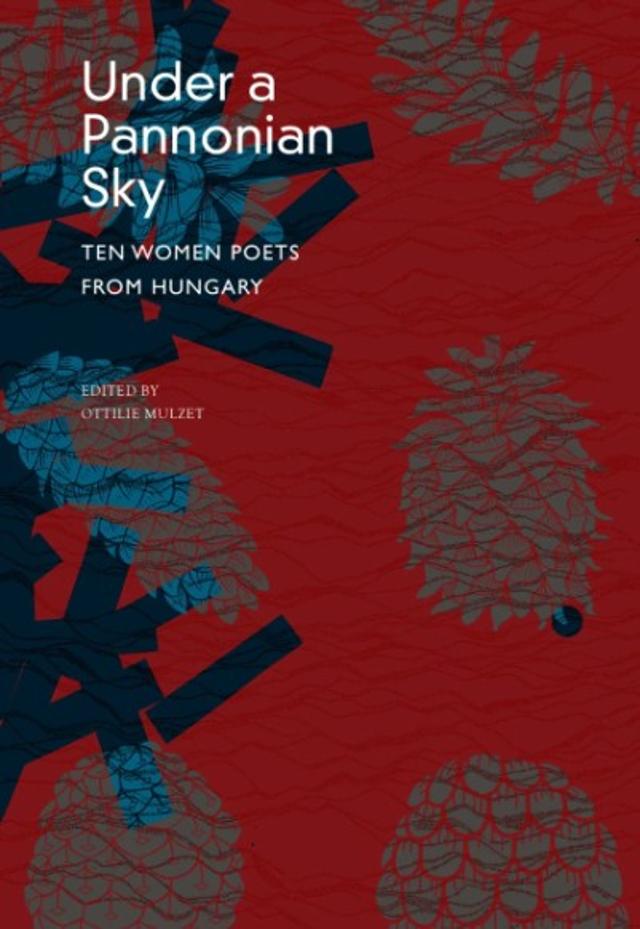
You have been curating Seagull Books’ Hungarian list, and your edited volume with translations of 10 Hungarian women poets will be out soon with the same publisher. How has this experience has been for you? What have you gained from it?
It has been a profound honour and privilege to curate the Seagull Books Hungarian list, and to work with so many brilliant authors and translators. I do not need to tell you that bringing translated literature to the US or the UK, and overall, the English-speaking market, where financial concerns necessarily predominate, is extraordinarily difficult. Therefore, I feel deeply grateful for this chance to bring more Hungarian voices into the English language.
Chintan Girish Modi writes about books, films, art and music. He can be reached @chintanwriting on Instagram and X.


