
 E-Paper



Pratyush Gupta: “Keep creating and do not lose hope”
‘Every morning, I woke up to classical songs and bhajans playing on our music system. Slowly, the music began to grow on me.’

 Prefer HTon Google


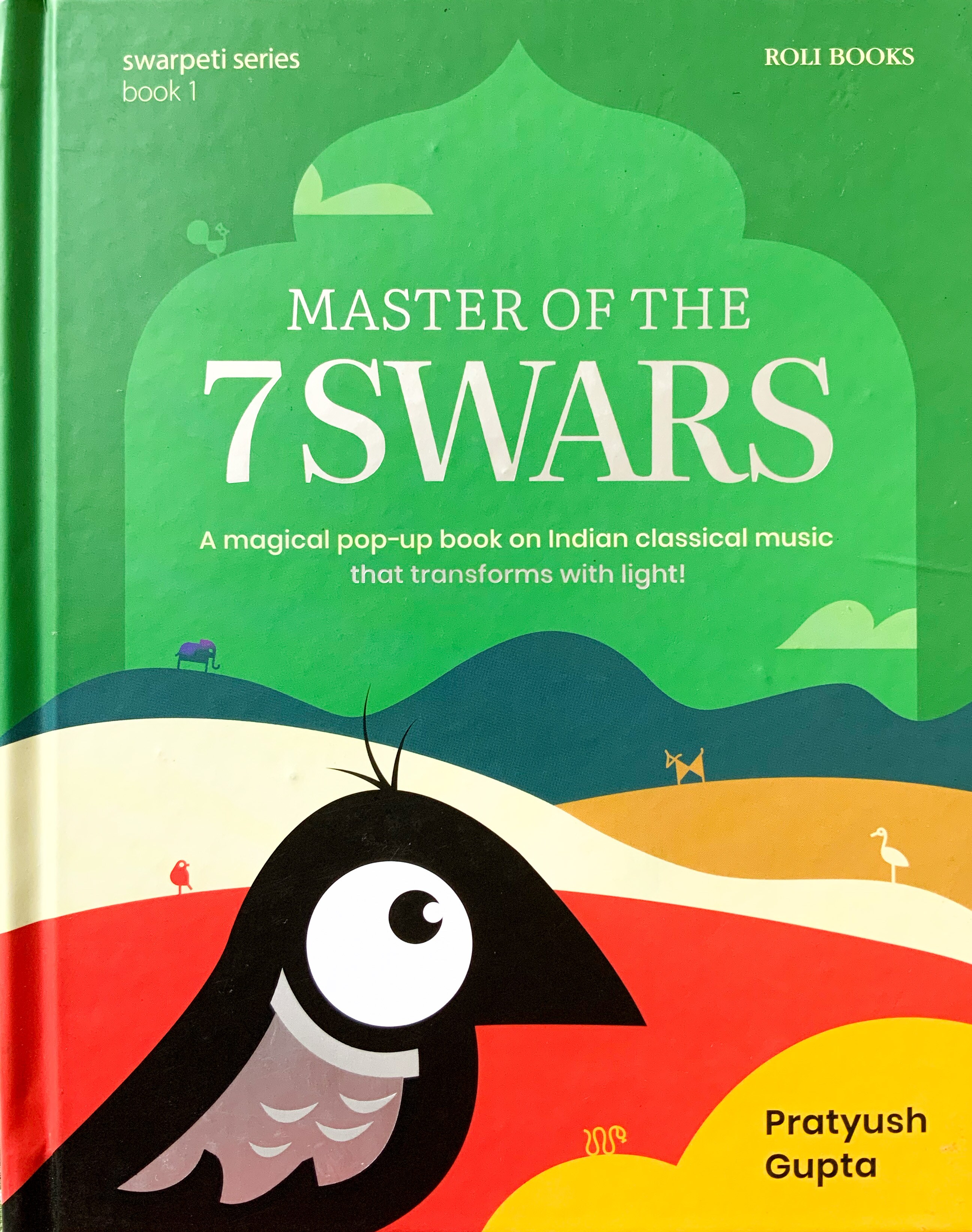
At the Neev Literature Festival held in Bengaluru in September 2025, the author of Master of the 7 Swars spoke about his love for Hindustani classical music, the magic of pop up books, and his creation, Kaga, the crow who wants to sing like Tansen
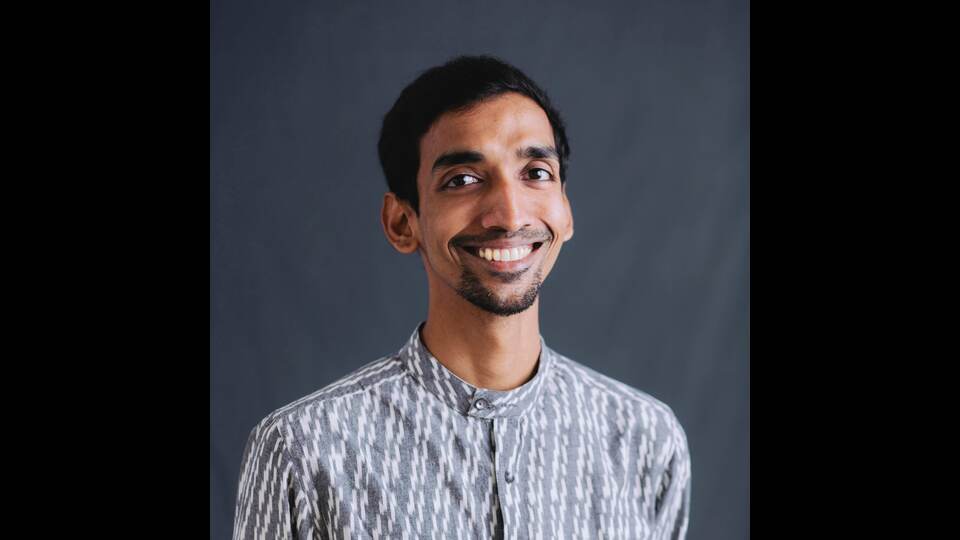
The last page of your book Master of the 7 Swars mentions that your journey with Hindustani classical music began as a child with you repeating what your teacher sang without “understanding its meaning or relevance”. What kept you going when you were unable to understand what you were asked to do as a student?
In the first grade, I was fascinated with the xylophone in our classroom. I would strike keys at random and sing “Sa re ke sa re ga ma ko lekar gaate chale…”, my favourite song at the time. Kishore Kumar and Asha Bhosle sang it for Gulzar’s film Parichay (1972). My teachers, impressed by my enthusiasm, encouraged me to pursue music seriously.
My parents invited a music teacher home to guide me. I remember the smell of the paan masala that he chewed. I hated it, the music and the paan masala. After a few weeks of torture, I refused to learn from him. When this happened, my parents enrolled me in a music school nearby. On my very first day, the teacher there yelled at me in front of everyone for tilting my neck, warning that my music would also become crooked like my posture. I burst into tears when my parents came to pick me up. We never returned to that music school. I was really afraid of that music because there were so many ways to get it wrong.
My parents did not give up. Every morning, I woke up to classical songs and bhajans playing on our music system. Slowly, the music began to grow on me. I would sing along with Jagjit Singh and Kumar Gandharva. Thankfully, the musicians in the cassettes did not scold me.
It seems that you have created a book that you wish you had when you were a child. How have music teachers responded to your book?
Teachers have embraced the book with enthusiasm, often remarking that it is unlike anything they have experienced, and how it inspired fresh ideas for making their classes more interactive and engaging. But what has moved me most are the responses from students, especially those who had stopped learning music. One moment that stays with me is from a session that I conducted at a design college in Delhi. After the workshop, a student came up to me with tears in her eyes. She told me that the book had deeply touched her and awakened a longing to reconnect with her musical past. Moments like these remind me why I created the book in the first place — to rekindle joy and wonder, even in those who thought they had left music behind.
What kind of research went into the text and design of the book?
The Swarpeti series started out as my graduation project at the Manipal Srishti Institute of Art, Design and Technology in Bengaluru. I immersed myself in every book and resource on music I could find. I haunted my college library, combed through the world wide web and turned to public libraries when that still was not enough. Gradually, I began to recognise the colours and patterns of Hindustani classical music — the threads that run through nature, planets and ourselves. The Samved speaks of animals that gave birth to the swars, while the Natyashastra reveals their deep ties to emotion and expression.
I wove these concepts with Kaga’s tale, inspired by stories that had captivated me as a child. The quest-driven journeys of Pokemon video games and the Avatar animated series influenced the narrative, while author-illustrator Suzy Lee’s work guided me in imagining how the book’s structure could enhance the story’s experience.
A course led by my college faculty, Tara Kini, revealed how music could be a creative experience. It also took me to Svaram, the Centre for the Craft, Art and Science of Sound in Auroville, where we built our own instruments, discovering how sound could be touched, shaped and brought to life.
How did you come up with the idea of a character named Kaga, a crow who wants to sing like Tansen, the legendary musician employed by Mughal emperor Akbar? Why does it resonate with readers?
One summer, 13 years ago, I was hiking near Ranikhet in Uttarakhand. Birds chirped, insects hummed and the breeze rustled through trees, weaving a symphony of sounds. In the middle of this chorus, one voice stood out — a cawing crow. It seemed eager to join but could not quite find its place. That moment planted the seed of Kaga’s story in my imagination.
Kaga, like so many of us, yearns for a dream that feels out of reach. Readers can see their own curiosity and wonder mirrored in her, encouraging them to ask questions, to seek music around them and learn through experience. Her journey is a reminder that with motivation and persistence, we can overcome any obstacle to create a life, and a song, that is uniquely our own.
Why did the format of a pop-up book seem most appealing, given the subject of your book? How did it feel to win a Baby Blue Elephant for Book Design at the 2023 Kyoorius Design Awards?
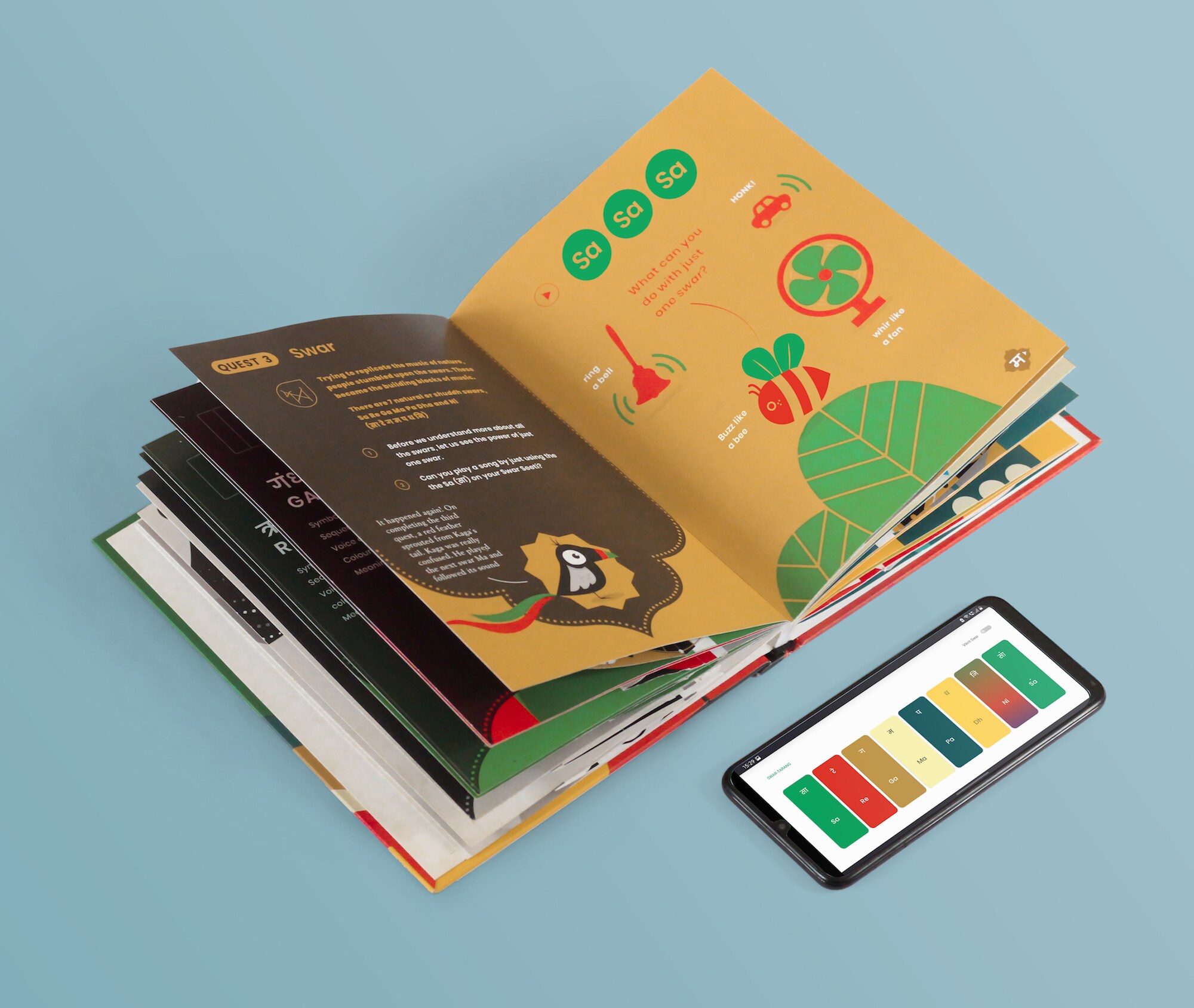
Pop-up books have fascinated me since I was a child. There is something magical in the way illustrations physically emerge from the pages and enter our world. I set out to capture that same feeling, weaving in light and sound to create an immersive learning experience, away from digital distractions. The Baby Elephant Award, my first recognition after self-publishing, reassured me that I was on the right path and nudged me to dream even bigger about where this adventure could go.
Who are your favourite pop-up book artists?
Robert Sabuda and Matthew Reinhart are the gods of paper engineering, able to fold entire worlds between the pages of their books. Earlier, I did not own any of their works, so I would pore over videos to decode the secrets of their pop-up mechanics. I even wrote to Robert Sabuda to learn how one might publish a pop-up book, and was elated when he replied with a detailed explanation of the process. Later, I even ended up collaborating with him to design the logo for his upcoming book series.
In 2023, you ran a crowdfunding campaign to self-publish the book. Why did you go down that route? What challenges did you encounter?
After creating the prototype in 2012, I approached many publishers. They all loved the concept and design but they were hesitant to take on something so elaborate. At first, I was a bit disheartened, but I kept moving forward, determined to bring the project to life.
The biggest challenge was figuring out how to simplify production without losing the magic of the original. I spent months at the printing press, learning the process inside out and befriending everyone there. It took 11 years before I finally held a version of the book that I was truly happy with.
By 2022, crowdfunding felt like the best way forward. In India, crowdfunding was still uncommon, especially for creative projects, and many people didn’t quite understand how it worked. I was also worried that, after all this time, the project might not be met with the same enthusiasm. But along the way, I had gathered a circle of friends, supporters and well-wishers who believed in the book as much as I did. They rallied around the campaign, and together we made it a success.
You had a chance to experience various parts of the publishing process unlike most other authors. What skills did you learn?
I had to wear many hats — writing, designing, producing, promoting and distributing the book on my own. Apart from publishing, I picked up skills in video editing and animation, learned to build websites from scratch and figured out the cheapest ways to send books across the world. I had to step out of my shell, talking to people, singing my heart out and carrying Kaga’s voice far and wide. The journey was as exhausting as it was enriching.
What advice would you give authors who are thinking of self-publishing?
If you are an author starting out, I would suggest exploring other routes before self-publishing. And if you do choose this path, it does not mean you have to do everything yourself. Build a team, seek support and reach out to those who inspire you. Above all, keep creating and do not lose hope.
In 2024, your book found a new home with Roli Books. What has the book’s journey been like after that? Do you people treat you differently when you don’t have the ‘self-published’ tag?
Since joining Roli Books in 2024, the book has found its way into bookstores across India, something that was difficult to achieve independently. It has also opened doors within the publishing industry, earning recognition from institutions and awards often beyond the reach of individual creators.
This book, which is the first in your Swarpeti series, came to fruition after 11 years of hard work. Now you are working on the second one. What can readers expect from it?
Kaga’s adventure continues in the second book, taking her deeper into the land of music. She will finally meet Tansen and unravel the beauty of Indian melodies. Like the first book, this too will blend interactive design, vibrant visuals and sonic elements to create a magical musical experience. The prototype is ready, and this time, I promise that the wait won’t stretch another 11 years.
Chintan Girish Modi is a Mumbai-based journalist who writes about books, art and culture. He can be reached @chintanwriting on Instagram and X.


