
 E-Paper



Pritpal Singh Betab: “AI is the death of language and literature”
Safar Jari Hai, author of Sahitya Akademi Award-winning Urdu poetry collection, on his literary journey, range of his influences, and the challenges facing Urdu

 Prefer HTon Google


How did you begin your literary journey?
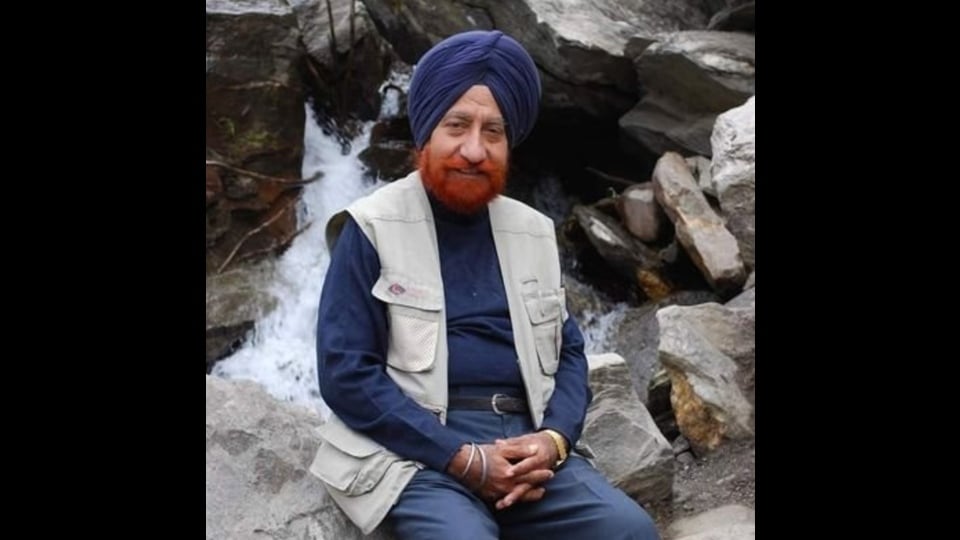
Since my childhood, I have been listening to the Guru Granth Sahib. Our scriptures in Sikhism are in poetry form. When I came of age, I listened to Urdu ghazals sung by Begum Akhtar, KL Saigal, and Mehdi Hassan on the radio. Poetry was always within me. I didn’t go and look for it. I began experimenting with reading and writing poetry in Urdu. I wrote with passion and madness. I started reading poets like Ghalib, Daag, and Meer, and that’s how the journey began. Around 1969, I published my first ghazal in the Shair magazine of Bombay, which was edited by Ejaz Siddiqi. Considering my age, it was an achievement to be published in the magazine and to be recognized by people like Siddiqui. It inspired me to continue writing poetry.
You are from the border district of Poonch in Jammu and Kashmir. How has that shaped you as a poet?
I belong to the Khari Karmara area in Poonch, which is near the border. In 1947, when tensions were on the rise, my parents migrated to Jalandhar for a brief period. But then when the tensions eased and the village of Khari remained with India, we went back because our relatives were still there. I studied my first few classes in Poonch. It was a wonderful time. Somehow, Poonch as a place has had an effect on my poetry for different reasons. It shaped me as a poet. Back then, I remember, in Poonch, there was a great literary scene of Urdu Adab. Urdu was the lingua franca of that place and everyone, Hindu, Muslim, or Sikh, enjoyed speaking and writing in Urdu. The mode of education in schools and our textbooks was in Urdu. It was also reflected in the poets and writers that the place produced, like Krishan Chander, Thakur Punchhi, and Chiragh Hasan Hasrat. Their legacies continued to draw other people in on their individual journeys. Based on my temperament and my affinity with Urdu, I decided to write in it. It could well be said that I became a poet because of that place.
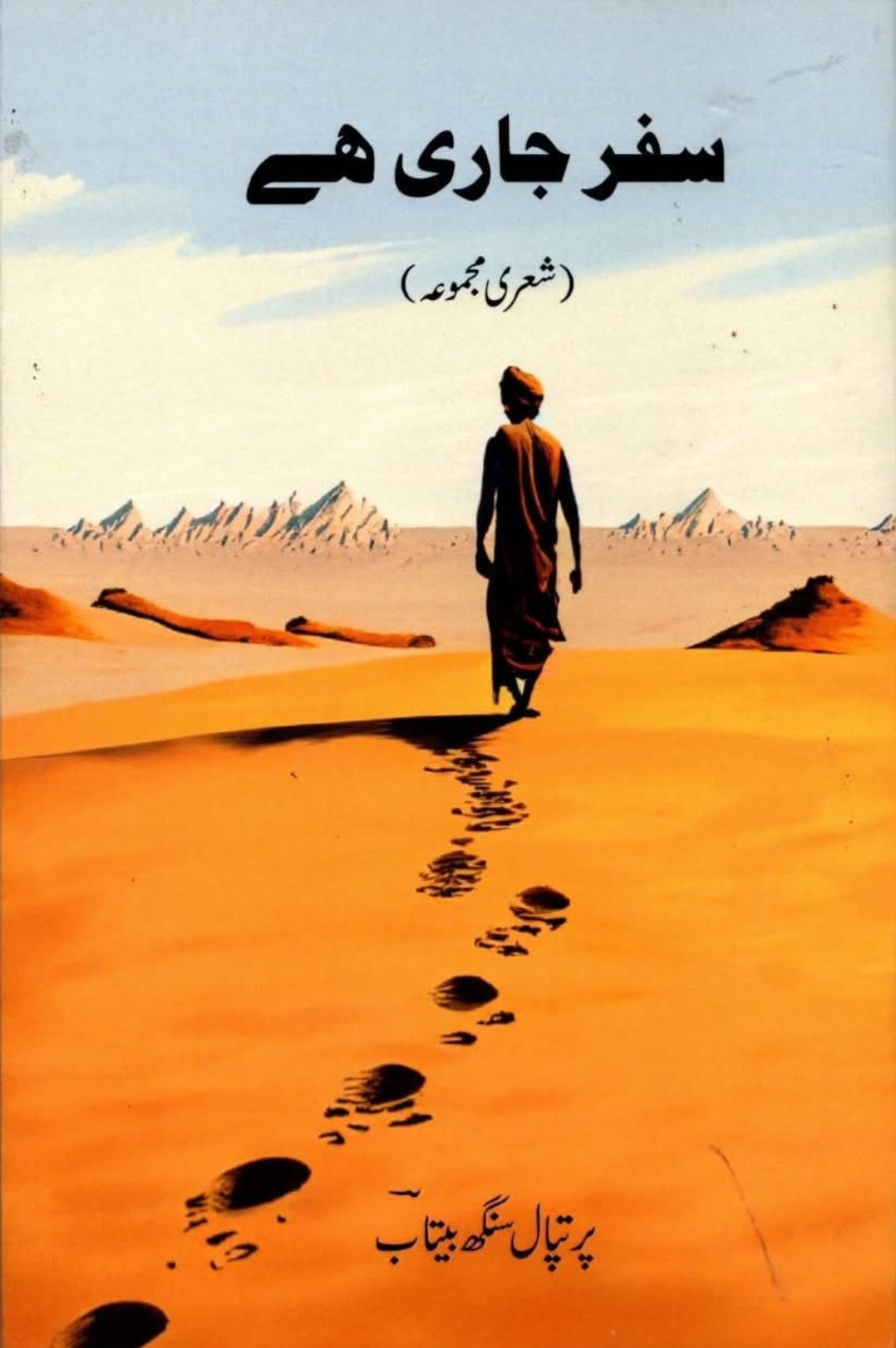
The ideas of memory, migration, and individualism pervade your poetry in Safar Jaari Hai, and other collections. How have you dealt with these themes in your poetry?
This is true of the Urdu nazms I have written, but in ghazals, every couplet has a different idea, a different structure, a different theme. Whatever life threw at me, good and bad, sweet and sour, I dealt with them in both ghazal and nazm form. I have placed life at the centre of my poetry. It’s life’s happenings that have somehow made their way into my poetry, no matter what the form. Similarly, the effect of migration from my personal life and those around me was always with me. It was a difficult thing to bear. Our family got uprooted in 1947 and was affected in the process. We lived a refugee life for the most part. Its ripples, unknowingly, found their way in my poetry too. The same can be said about memory and individualism – they are all part of one’ s life. Sometimes, there is an urgency, and unknowingly something happens on the paper like magic, without even the poet knowing. I haven’t restricted myself to the forms; I let the poetry have its own way, no matter what the form.
You are one of the major modern Urdu poets. Shamsur Rahman Faruqui wrote that not every modern poet balances the nazm and ghazal forms as you do.
Sometimes when there was a nazm in my head, I would write it; and sometimes, when there was a ghazal in my head, I would write it as well. It all depends on my life’s circumstances, its different temperaments and moods. I haven’t consciously thought of balancing both these forms. Whatever felt natural in the moment, I wrote in the form I was thinking. Both these forms continue to stay with me.
It took me eight years after I began writing to understand that my poetry falls in line with modern and not traditional Urdu poetry. My thinking and my concerns were similar to the challenges that other modern Urdu poets were experiencing and writing about. Shamsur Rahman Faruqui edited the magazine, ShabKhoon; the themes and the kind of poetry they published were to my taste. The first time I sent him my first five nazms, he published them. From then on, we kept in touch, and he also guided me in my journey. It can be said I felt a natural inclination towards modern Urdu poetry and its themes.
In your autobiography, Mere Hisse Ki Duniya, you mention that, at college, you began writing in Punjabi and then stopped entirely because of an incident. What happened?
While I was a student, I submitted an article for the Punjabi section of the college magazine. It was about the relationship between students and teachers. A professor, the head of the Punjabi section called me and threw away my article, saying, ‘Do not write such articles.’ But, in the same section, in the same magazine, I had written another article under my friend’s name. That piece got published. It was a heartbreaking moment for me. I still think it killed the Punjabi writer inside me. I was depressed for a long time and never stood in front of that professor again. Nor did I attempt to write in the Punjabi language. But the beautiful part of that time was that I submitted my Urdu poems to the Urdu section of the magazine, and the professor heading that section was so impressed that he made me the editor of the Urdu section. It, kind of, relieved me from the earlier humiliation.
Who were your early literary influences?
I started writing at the age of 16. In college, the first thing I read was Diwan-e-Ghalib, and it struck me with its poetic fury. After that, I read Diwan-e-Meer, Diwan-e-Daag, Zauk, Momin, and others. I also read Kabir, Bulleh Shah, Shah Hussain, Waris Shah, and everything. Reading these masters made my verse stronger. During that time, I also read Punjabi and Hindu literature. In the college library, I also discovered Albert Camus’ The Outsider and Sigmund Freud’s Interpretation of Dreams and enjoyed both.
Tell me about your writing process. Who gave you the title of ‘Betab’?
There is no process as such. Poetry is a gift. Whenever something comes to mind, I write it down. I don’t sit with the intention of writing poetry. It doesn’t work that way for me. I just wait for it to come. Maybe it’s my personality. There are even times when I would wake in the middle of the night to write something. As Ghalib aptly says, Aate haiñ ġhaib se ye mazāmīñ ḳhayāl meñ (These themes come into the mind from the hidden realm).,It comes naturally. I believe my nature is betab; I am impatient as a person, and I have given this title to myself.
What are the present-day challenges to Urdu language and poetry?
There is no challenge to Urdu literature as such. There are new people coming and writing in Urdu, both poetry and prose. The threat is to the Urdu language. Urdu language has been sidelined. In the last few decades, it has become a common notion in this country that Urdu is a Muslim language. There is no validity to this thought. History bears witness. Firaq Gorakhpuri, Rajinder Singh Bedi, Krishan Chander, Anand Ray Mulla – they all wrote and served Urdu, despite not being Muslims. The politicisation of Urdu marginalises the language and its speakers and creates a notion that it belongs to only Muslims. I have always condemned this thought. When this notion is repeated over and over, the majority of people start to believe that it’s a Muslim language and we don’t have anything to do with it, so, we don’t have to speak it as well. It has only affected the language. That too negatively. I, along with so many others who have been associated with this language, get upset and sad over this thought. This language belongs to us all.
In an interview, you once said that when you were in government service, you never let poetry affect your job and vice versa. How did you manage it?
I worked really hard to create a balance between the two. I would work extra hours so that my poetry wouldn’t affect my job. It was a conscious decision, well thought of. I placed them at a right distance in my life. And never let the poetry or my job complain.
What do you think about AI taking over? Is it a threat to language and literature?
I believe AI is the death of language and literature. It kills original thought. People find it hard to believe that, but I am against AI, and it is a threat to our being.
Mir Umar is an independent journalist based in New Delhi. He writes on art, culture, and politics.


