
 E-Paper



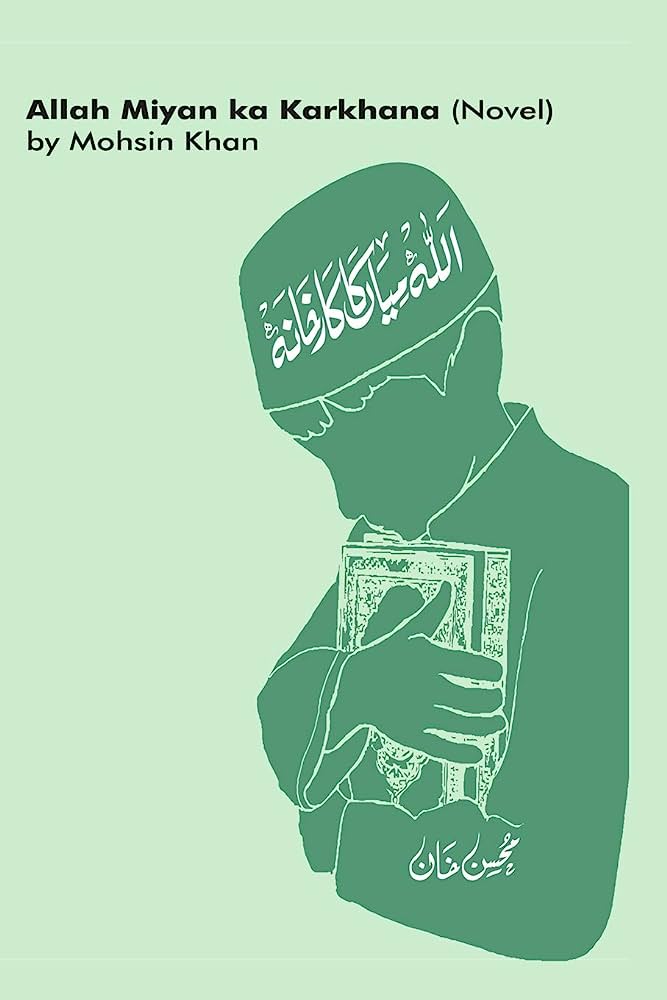
Review: Allah Mian Ka Karkhana by Mohsin Khan
A novel that explores the idea that the punishment mechanism is often part of the human desire to trample upon others

 Prefer HTon Google


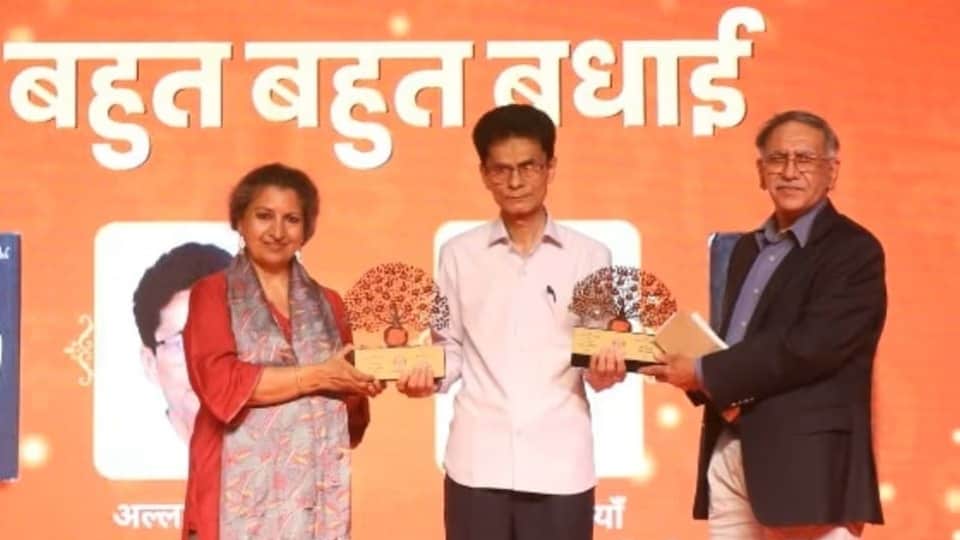
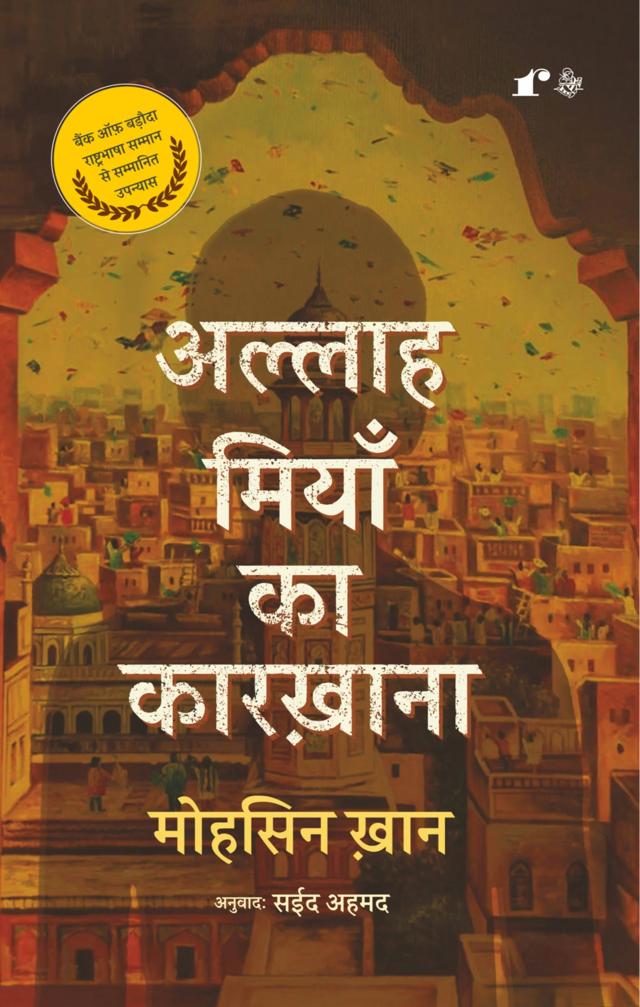
Punitive practices validated by religion and cultural and social norms do not protect human dignity or nurture community justice. On the contrary, they fill domestic life with cruelty and arbitrariness. In Allah Mian Ka Karkhana, Urdu author Mohsin Khan fashions a gripping narrative that turns on the idea of punishment. The novel won the 21-lakh Bank of Baroda Rashtrabhasha Samman, 2023 on June 12. The award, which is given for Hindi translations of novels written in Indian languages, also fetched its translator, Saeed Ahmad, a 15 lakh prize. It is worth mentioning here that this year’s JCB prize for an English translation was also given to a prominent Urdu novelist, Khalid Jawaid for Nemat Khana.
In this, his debut work, Khan does not regurgitate the recurring themes of Urdu novels – the aftermath of Partition, communal violence, the crumbling of a composite utopia, the longing for an imagined past, religious and cultural othering, and the decline of Urdu. Instead, he seeks to turn our attention to a world where an inhuman and barbaric prosecution system has taken firm root.
Allah Mian Ka Karkhana presents a young man, Jibran’s, emotional history stretching back to his childhood. From a lower-middle-class background, he finds it extremely difficult to navigate the ever-growing fog of religiosity that cuts him off from essential human concerns. His ordinary activities are the site of the action in the novel that touches on his relationship with his father, mother and sister, his passion for kite flying, his interaction with friends, and his conversation with his religious teacher, the head of the madrasa at the local mosque. The elegantly straightforward but moving narrative shows how everyone around him, including his parents, aunt, uncle, the neighbourhood shopkeeper, and his own mentor, Hafiji, all join hands to inflict upon him a savage punishment that makes a mockery of the much-espoused guiding spirit of justice – the judicious implementation of the sense of proportion.
Jibran’s story is a comedy of cruelty. Once, when he purchases sugar, the shopkeeper hands it to him in a paper bag emblazoned with a bold picture of a young girl. Having no means of entertainment, he preserves the bag and looks at it whenever he feels down. He has lost his parents and is living in a rickety room in his uncle’s house. One day, as he is looking at the picture, his aunt barges into the room. Infuriated at what she sees, she throws him out of the house refusing to listen to his pleas.
Does his so-called moral failing call for such drastic action? Khan writes many heart-wrenching scenes to show that the punishment mechanism is part of the wicked human desire to trample upon others. Disproportionate punishment is erroneously perceived as a divine commandment. Jibran’s misdemeanours and the resultant punishment meted out to him raise serious questions about justice. The author narrates several instances of dreadful and incommensurate vengeance that betray the monstrous impulses that lurk behind the façade of justice. It would seem that the norms of the prosecution are disdainful of what is “human”. Justice cannot be taken as a system but rather as a strategy that creates its own abyss. Jibran’s story vividly shows how suffocating it is to be human. It also provides a profound understanding of the complexities and binaries at the heart of the prosecution system.
Armed with the creative power of his coherence, Mohsin Khan transforms events and experiences into insights. Some lines that upend common sense sound like maxims: “You cannot see through things shrouded in darkness while sitting in the light”; “If you plant a tree adjacent to the wall, it will never grow unbent”; “It is sheer stupidity to climb a tree if you can pick up fruits by bending its branches”; “No matter how hard we to try to make the grave durable, water, one day, knocks it over”
In sum, Allah Mian Ka Karkhana shows that the urge to punish under the veil of executing justice is actually a covert way to safeguard the interests of the dominant and the powerful.
Shafey Kidwai, a bilingual critic, is a professor of mass communication at Aligarh Muslim University.


