
 E-Paper



Review: A River Runs Back by Amarjit Sidhu
A novel that touches on the dissolution of social hierarchies and a world upturned by migration through the central character’s nostalgia

 Prefer HTon Google


“We may not have read two books — but at least our underarms are fair and fragrant.” Thus goes one of the many wayward remarks of Avtar Kaur, also known as Bibiji. She lives in her ancestral estate in Raigarh, close to Ludhiana in Punjab. Most of her family members have left or died; her only companion is her servant Nachhatar, who drives her around and takes care of the dwindling estate.
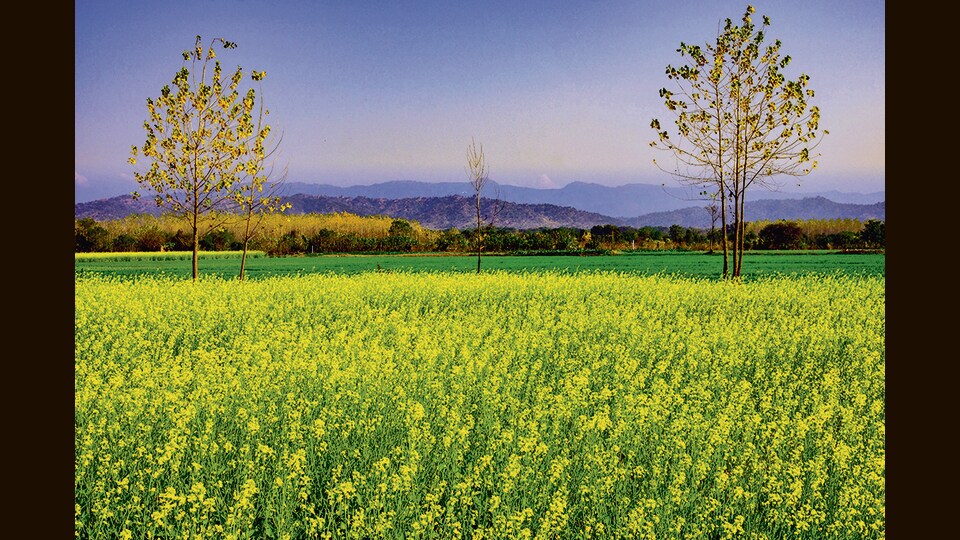
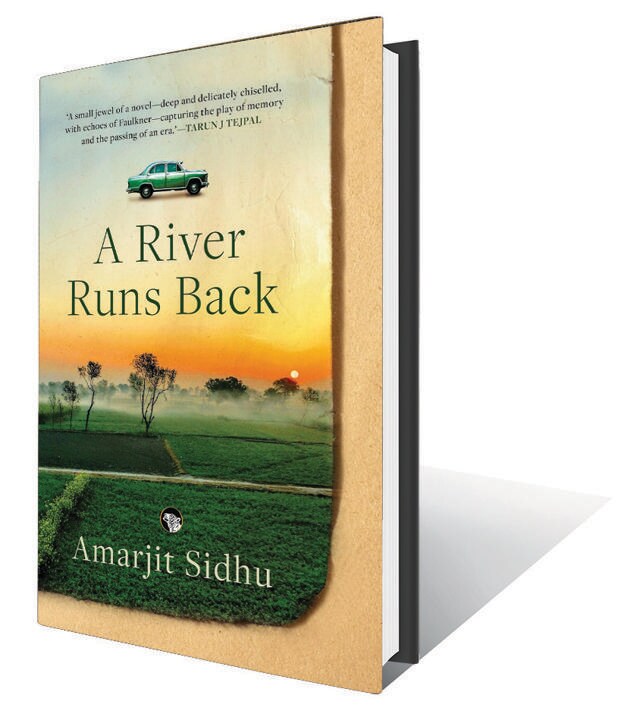
Bibiji’s reflections, dour yet amusing due to their quirkiness, are the points on which Amarjit Sidhu’s novel, A River Runs Back unspools. It begins with Nachhatar driving her to Ludhiana to attend her brother Baljit Singh’s funeral. The story’s different strands come in bits and snatches, with the flow of her thoughts and memories.
When Bibiji was a child, her family moved to Punjab from Rangoon, Burma, to avoid the threat of Japanese bombing during World War II. She was married off to the son of a landlord, who passed out drunk on the marital bed on their wedding night, never to wake up again. Baljit married for love, much to Bibiji’s disdain, and failed at the numerous businesses he started. According to her, her sister, Hardev, was the only one who had “made some sort of success with her life”. While studying at Oxford, she met a man from a “good Sardar background” with huge landholdings, and eventually became an affluent socialite, a “woman of the world”.
Like many an old person, Bibiji laments the slipping away of the world she grew up in. She is dismissive of modern notions of liberty and people stepping outside their social station and caste. The latter, she rues, has become a bad word. Dismayed by the chaotic driving in Ludhiana, she notes, “They drove the way they were taught when given their freedom and democracy.” Her village had more migrants than “original families” and “everything appeared to be sinking under the weight of the rapidly multiplying mostly migrants”.
However, rather than just a cantankerous geriatric, she is someone at odds with the world. Overwhelmed by Hardev’s hectic social life, Bibiji realised that “her moments of happiness rarely included people. They had parrots, peacocks, doves, and ducks aplenty, along with spacious areas, and many trees...” It is these multiple dimensions to her personality that make Bibiji a compelling character. Even though one might not share her views, one can imagine her predicament.
Given her obsession with bygone times, nostalgia and memory are overarching themes in the novel. The author has also embodied them in the plot structure and writing style. The narrator repeatedly dredges up the past, letting it leak into and colour the present. Events and feelings are never laid to rest; as they are retold, different gradations appear. This narrative technique is summed up in one of Bibiji’s ruminations: “When did the past end and the present begin? Was it yesterday, the year before, or many years ago? Was it all a dream?”
The novel also goes beyond memories as intangible entities to explore their more physical manifestations. In one of the few instances where the story decentres Bibiji, it focuses on Nachhatar as he walks through Raigarh, charting its landmarks redolent with associations, conversations, and quotidian lives. His peregrinations are reminiscent of James Joyce’s characters mapping Dublin with their feet.
While readers are privy to key plot points in the beginning, these are teased apart and built up as the novel progresses. They bend and bounce like play dough in the author’s hand, yet retain coherence. This pliability imbues what is otherwise a simple account with narrative tension.
Given how repetition and fluidity shape the plot, the novel could have easily been monotonous or overbearing. That it never happens is a testament to Sidhu’s firm control of his craft. It might take a while to get accustomed to his mode of storytelling but those who persist will find it rewarding. His writing is restrained and mostly steers clear of the florid and sentimental. The past comes alive through richly detailed recollections of childhood games, gramophone recordings, and household activities like knitting, among others. It also lives in the ossified beliefs that Bibiji drags into a changed world.
The novel doesn’t critique the past. Nostalgia feels good because it is often a fantasy that papers over past negatives while romanticising the positives. It rarely corresponds to reality and people actually living at that time yearn for an even earlier past while being critical of their present, as the film Midnight in Paris (2011) compellingly demonstrates.

The decline of the feudal order in India has often served as fodder for fiction. However, where literary works such as Saheb Bibi Golam (1953) and Jalsaghar (1930s), both later made into films, suffused their storytelling with biting social commentary, the tale of Bibiji’s disenchantment with the modern world is preoccupied with an individual’s world view rather than with its social underpinnings. Which isn’t to say A River Runs Back does not touch on the dissolution of social hierarchies, a world upturned by migration, and people’s changed priorities. The reader just sees these as Bibiji’s observations. Their depiction as forces moulding people’s lives is less explicit. Surprisingly, this does not make the narrative any less absorbing or evocative.
In its exploration of memory, the novel also has parallels with Ranbir Sidhu’s Dark Star (2022). Both authors have roots in Punjab and have lived abroad. However, where Bibiji revels in nostalgia, Ranbir’s protagonist has a tenuous relationship with the past. The impact of political turbulence, social mores, and misogyny on the latter’s life is also explored in depth. As migration continues to reshape Punjabi society — with people from the state seeking their fortunes abroad and those from other Indian states moving to Punjab for a better life — memories and displacement are likely to remain catalysts of stories.
Syed Saad Ahmed is a Boston Congress of Public Health Thought Leadership Fellow 2024. He speaks five languages and has taught English in France.


