
 E-Paper



Review: Don’t Let It Break You, Honey by Jenny Evans
This memoir returns to the sexual assault of the author three decades earlier to look at shame, the media, and law enforcement in the UK

 Prefer HTon Google


Jenny Evans was 19 when life briefly seemed to be opening up. She had just appeared in a Welsh cult film Twin Town. The atmosphere around the production was loose and joyful. Cast and crew had travelled down to Swansea from London simply to be part of the energy. Then, suddenly, everything collapsed. After a night out in London, she was sexually assaulted by a well-known man.
Jenny Evans’s Don’t Let It Break You, Honey, which is on the longlist of this year’s Women’s Prize for Nonfiction, begins with that violent experience as a young actor. Nearly three decades later, Evans returns to that moment in her memoir that in turn asks a set of larger questions: What happens when a private experience becomes public property? How do institutions such as the press and the police reshape a survivor’s story? And how does someone reclaim authority over a narrative that has already circulated beyond their control?

Stories of sexual violence place a strange demand on the people who tell them. Survivors are expected to produce convincing stories. Yet, trauma rarely behaves that way. Memory often breaks and language struggles to hold what happened. Scholars who write about trauma point out this paradox where survivors must tell their stories in ways that sound coherent even when the experience itself is not.
When Evans writes about that period of her life, she often situates the assault within a longer history of loss. Her childhood had been stable and affectionate. Her mother worked as a therapist and her father taught English and served as a Labour councillor. He took Evans and her brother on long walks where they watched birds and recited poetry. These memories appear in the book almost as a lost language of safety. That world collapsed when Evans was 13. Her father died after a routine medical procedure went wrong. The shock of that loss disrupted her adolescence.
School became difficult and she dropped out twice. Grief becomes one of the most potent forces shaping the memoir. Evans writes about how the death of a parent changes a young person’s sense of stability. Years later, another devastating loss would arrive and disrupt her life completely. The accumulation of these events lets Evans write about violence with the awareness that life can shift suddenly and without warning.
After leaving school she eventually found a sense of belonging in youth theatre, which led to her casting in Twin Town. For a moment, life seemed to regain direction. That short term momentum makes what follows even more disorienting. The assault itself appears in the memoir with stark clarity and uncertainty at the same time. Evans remembers the physical force of it, especially the pressure on her throat that left her struggling to breathe. At the same time, she admits she never fully understood what happened in those moments. Trauma leaves gaps. “Assault by penetration is what it was,” she writes. “The truth is, I don’t know what the penetrating thing was.”
Instead of reporting the attack, Evans withdrew into a spiral of shame and self blame. She had always imagined herself as confident and independent. The assault shattered that self-image. “I couldn’t read rooms. I couldn’t trust my instincts,” she writes. She left Wales for London and abandoned acting. Within a year she had gained weight, changed how she dressed, and retreated from the life she had imagined.
One of the most striking things in the book is the role of storytelling itself. There is a certain “literary witnessing,” which lays bare the structural injustice. The memoir runs parallel alongside the larger crisis in British journalism that culminated in the phone-hacking scandal. As Evans investigates the media culture surrounding her own case of assault, her personal experience becomes one entry point into a broader critique of how the tabloid press gathers and circulates information.
Evans does not try to present herself as heroic or resilient. She writes about her confusion, depression, and the slow erosion of self-confidence. One year after the assault she was raped again by a manager at the bar where she worked. The incident confirmed her worst fear: that something about her made her vulnerable to harm. She did not report this attack either.
What emerges from these chapters is an examination of shame as a social force. Evans argues that shame plays a central role in how sexual violence is silenced. Survivors often internalize the idea that repeated victimization makes their story less credible. In one of the memoir’s most devastating lines, she writes: “One assault is bad luck, two is careless – no matter the context – three, or more, you are now an undefendable, fantasist, lunatic slut.”
Years later, Evans began rebuilding her life. She enrolled at the Royal Central School of Speech and Drama, intending to become a teacher. For the first time since the assault, she felt she had direction again. Then she encountered a newspaper article that changed everything. The man who assaulted her had been accused of rape.
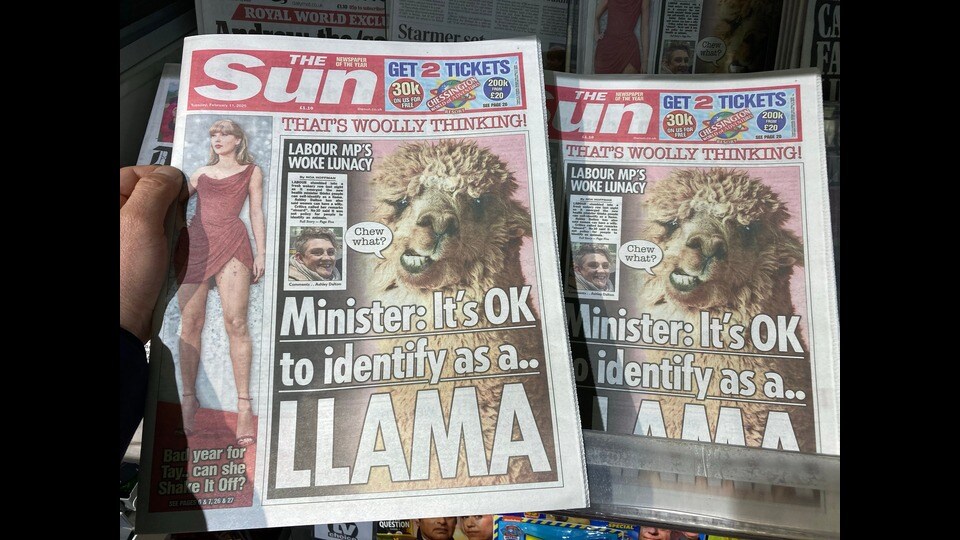
Until that moment, Evans had believed the attack on her might have been an isolated event. Suddenly another possibility appeared. Perhaps other women had been harmed. Perhaps silence had protected the perpetrator. She went to the police. The experience that followed forms the core argument of the memoir. Evans expected the criminal justice system to clarify what had happened. Instead, she watched her story slip into the machinery of media. Within four days of speaking to police, details from her confidential statement appeared in the ‘Sun’. The article did not name her, but it identified the man she had accused and reproduced intimate details of her testimony. Evans was stunned. Information she had shared in confidence had somehow travelled from a police interview room into a tabloid newsroom.
The experience changed how she understood journalism. Evans describes this moment as the beginning of an intellectual shift. She stopped thinking about her experience only as personal trauma and began to see it as part of a larger media system. Tabloids thrive on private information. Stories about sex, violence, and celebrity generate attention and profit. Within that economy, the suffering of individuals becomes valuable material. This realization pushed Evans to pursue journalism and she enrolled in a journalism school. She wanted to understand the machinery that had turned her experience into news. Journalism became a way of investigating the story that had escaped her control. During her studies at City University, she attended a masterclass with Guardian reporter Nick Davies, who was researching what would become Flat Earth News, his landmark critique of British journalism. Evans approached him directly and asked for work. Soon she was assisting his research into newsroom practices. Along the way, she helped expose the wider culture of phone hacking and media corruption that eventually led to the closure of the News of the World and the Leveson Inquiry into press ethics.
The memoir treats journalism as a form of knowledge production. This also formed an interesting intersection of professional work and private life. Her journalism career grows out of personal urgency. This gives the memoir its distinctive voice. Evans writes from multiple positions at the same time. She is at once a survivor, reporter, researcher, witness. Her perspective shifts as she moves through these roles. At times, she examines the culture of British tabloids as a journalist. At other moments, she is also dealing with memory and grief.
The stories she heard confirmed her growing suspicions about the tabloid press. Reporters described humiliating “punishment assignments” given by editors, the use of private investigators to obtain confidential information, and payments to police officers for tips. The industry ran on pressure, secrecy, and competition.

Gradually, Evans began to see her own experience within this system. The question that had haunted her since the newspaper article appeared: “How did they know?” now seemed tied to a much larger network of relationships between journalists and the police. The phone-hacking scandal eventually exposed many of these practices. As Evans worked with Davies, the scale of the problem slowly emerged. For Evans, the scandal revealed that the boundary between law enforcement and journalism had become dangerously blurred. Her own case began to make sense within that framework. Only a few people had known the confidential details that appeared in the tabloids. Evans herself, her friend Rachel, and the police.
The memoir is a long battle for answers. Evans filed complaints and eventually brought legal action against the Metropolitan Police with the help of lawyer Tamsin Allen. The process took years. Institutional responses often seemed designed to diffuse responsibility rather than reveal it. Evans also makes one structural decision that alters how the memoir reads. The man who assaulted her remains unnamed throughout the text and appears only as “The Famous Man.” It is frustrating and makes one think more about the networks of media, celebrity, and institutional power that allowed the story to circulate as it did.
The memoir’s title comes from a brief meeting with American author and civil rights activist Maya Angelou, who told Evans, “Don’t let it break you, honey.” It felt prophetic. Life then continued through a series of decisions and much persistence, which Evans derived from that one meeting with Angelou.
Pranavi Sharma writes on books and culture. She lives in New Delhi.


