
 E-Paper



Review: Nehru’s India; History In Seven Myths by Taylor C Sherman
A book about grand myths and their objectives and about the critical scrutiny of Nehru as the architect of modern India

 Prefer HTon Google


Jawaharlal Nehru and Narendra Modi are the two most ideological Prime Ministers of modern India. While Nehru made concerted efforts to turn the country towards the Left, Prime Minister Modi has been consistently pushing it towards the Right. In my view, scholarly comparisons between Nehru and Modi are more apt than those between Modi and Indira Gandhi, which have been the staple for many commentators ever since PM Modi took up the reins of power in New Delhi in 2014.
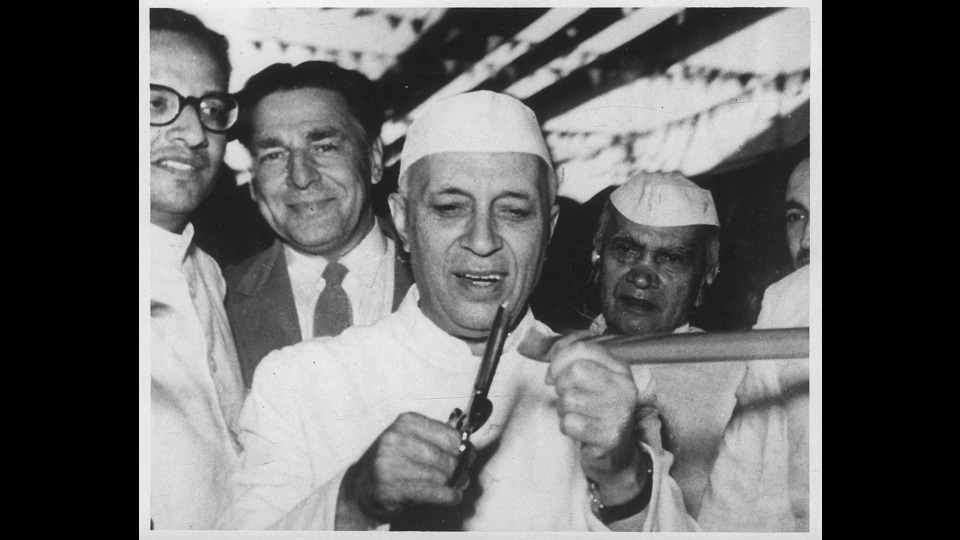
India is in the midst of ideological warfare, which is why conventional ways of looking at Nehru and his place and role in modern Indian politics are not adequate. For ideological reasons too, in the emerging grand narrative, he has been a consistent target. In this well-researched book, the author has made efforts to explain why right wing venom spewed against Nehru is not just undesirable but also unjustified, and why and how Nehru committed himself to the building of a new India in the face of myriad challenges and political uncertainties.
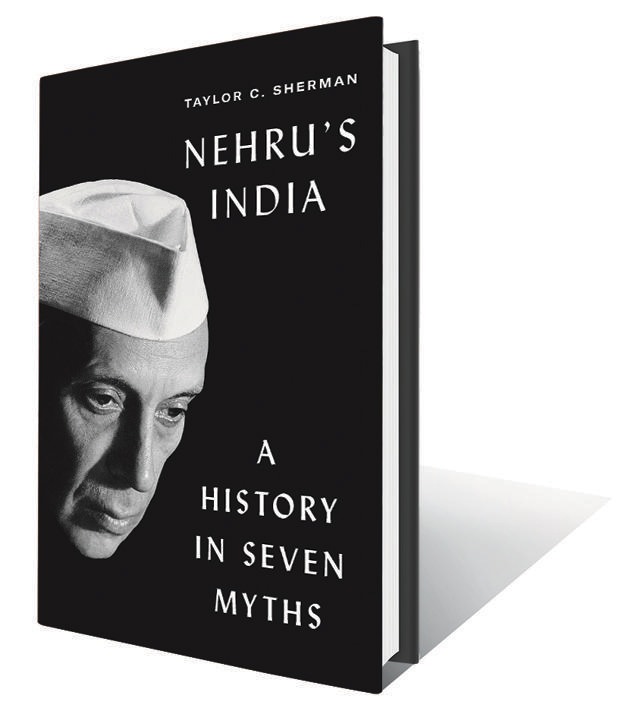
This book is about grand myths and their objectives and about the critical scrutiny of Nehru as the architect of modern India. By myth, the author implies a story of the past with a grain of truth in it brought alive by its repetition over time by the people and by those in power. While the author challenges the criticism that the Hindu Right and others have hurled at Nehru and his legacy, she is also uneasy about presenting Nehru as the architect of modern India. Who then was Nehru? According to Taylor Sherman, he was a patron, educator, mediator and symbol. All of this found expression in his multilayered role as India’s Prime Minister from 1947 to 1964. Over seven chapters, the author, who teaches history at the London School of Economics and Political Science, UK, provides her spin on various myths about Nehru’s nation building project and its key foundational ideas such as socialism, secularism, the modern state and foreign policy with robust corroborative evidence and a carefully-crafted interpretation of facts. This is primarily an interpretative study but one executed with great rigour and originality, which is why it is so refreshing to read.
In the post-Cold War period, Nehru’s legacy with regard to India’s non-alignment policy has been consistently questioned. Sherman believes it is misleading to look at non-alignment as a comprehensive foreign policy as it cannot explain “India’s various roles in the international plane”. In the context of India’s position vis-a-vis the Ukraine war, it will be interesting to look at criticisms against the non-alignment policy. Indeed, the advantage that India enjoys today is mainly owing to that legacy of non-alignment. In recent years, there has definitely been a paradigmatic shift in India’s approach to foreign policy as can be seen in the writings of key foreign policy makers, particularly Shiv Shankar Menon, Shyam Saran and S Jaishankar. There seems to be a consensus on India’s new approach between the right-wing ruling elites and the non-BJP parties, including the Congress run by Nehru’s descendents. It is increasingly apparent that India’s foreign policy is governed by its rather hard notion of national interest. This was not the case when Nehru was at its helm. As a prominent global voice of anticolonialism, he did introduce some moral elements beyond the hard calculations of national interest alone. The author presents some crucial insights about why Nehruvian foreign policy has been so acutely misconstrued.
The chapter on Nehru’s secularism is particularly insightful. Right-wing factions have almost been successful in discrediting secular ideology by presenting it as vote bank politics. The author presents a detailed explanation of the post-Partition situation and of police action in Hyderabad. What emerges from her narrative is the prevalence of communal ideology at various levels of the bureaucracy that obstructed the healthy practice of secularism. Nehru himself, however, often went out of his way to protect minority rights and stand by the Muslim community. Taking off from this, the right wing has found it convenient to present India’s secular experiment as a Muslim project.

Crucially, the author points out that Dalit rights need to be seen as part of India’s secular project. This particular aspect of the analysis – especially the connection between Dalit rights and secularism – is an innovative way of looking at the contribution of secular politics in modern India. The idea that the goal of Nehru’s secularism is beyond Muslim interest is noteworthy and deserves wider appreciation in the academic and the political domain. Highlighting this dimension of the debate would perhaps ensure that secularism continues to be relevant even during this era of majoritarianism.
The chapter on democracy details various debates over elections and the practical challenges of running a democracy. Scholars have drawn a distinction between formal and substantive democracy and have pointed out that India has a long way to go before it moves towards the latter. A new phrase, “electoral autocracy” is now used about India. It is a familiar story of institutional decline or decay, which began much before the Hindu Right became a major political force.
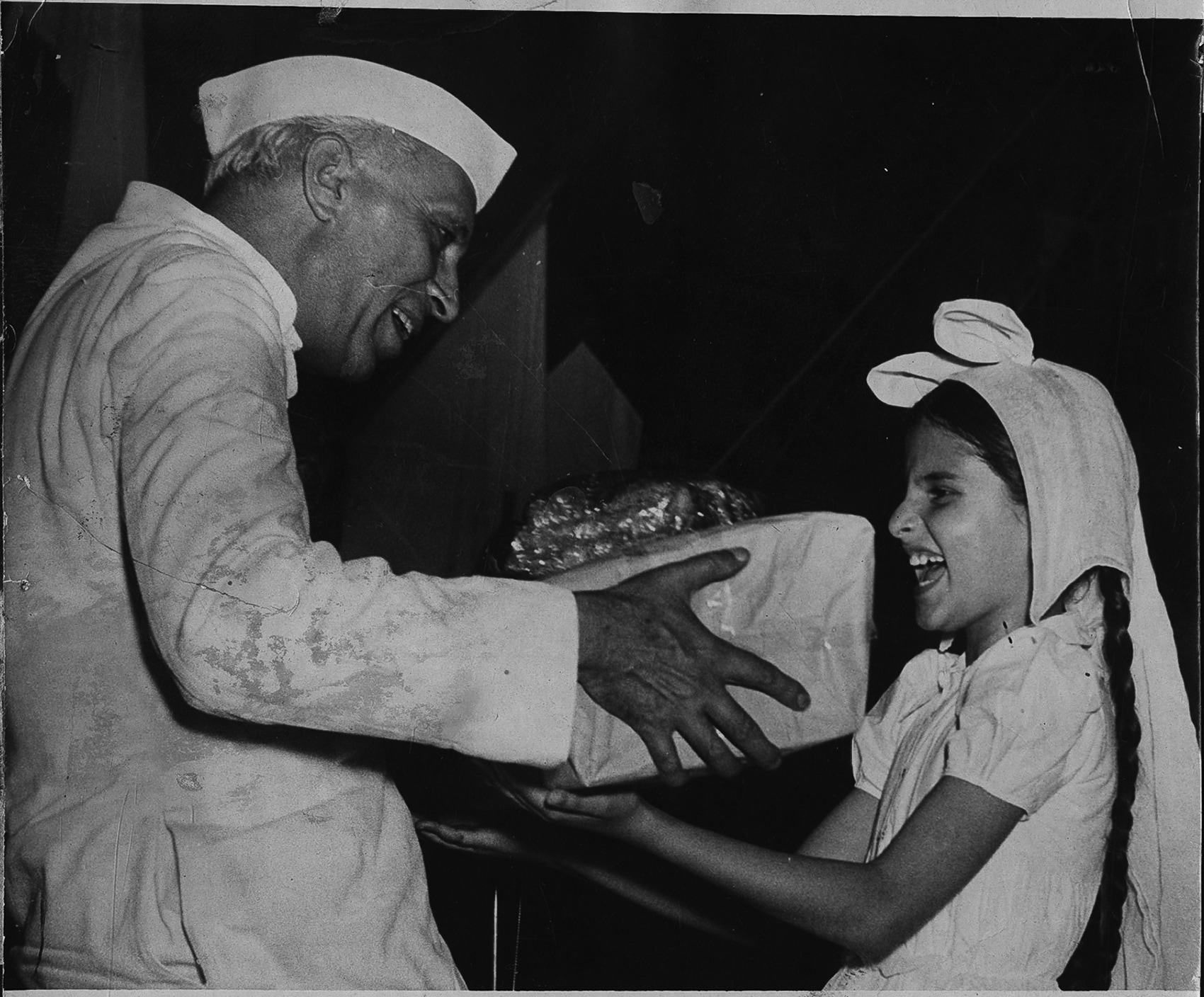
In any civilized society with as rich an intellectual history as India, every generation needs to look afresh at its historic personalities. Therefore, any effort to reflect on Nehru deserves appreciation. However, what is not required, and what seems to be the flavour of our times, is a reckless ideological assault on a historic personality or his contributions. Regardless of their eminence, historical figures are mortal beings who often make mistakes, even what, in retrospect, appear to be gigantic blunders. Those issues need to be seen in the context of their times. Sweeping generalizations especially need to be eschewed. This book makes a profound intervention by re-evaluating Nehru’s allegedly contentious legacies, and his role as Prime Minister. An erudite book that effectively counters needless Nehru-bashing, it will interest scholars of history, politics and foreign policy.
Shaikh Mujibur Rehman teaches at Jamia Millia Islamia Central University, New Delhi. He is the author of a forthcoming book, Shikwa-e-Hind.


