
 E-Paper



Review: Pious Labor by Amanda Lanzillo
At the very onset, the author posits that this is an “alternate” reading of Muslim working class history

 Prefer HTon Google


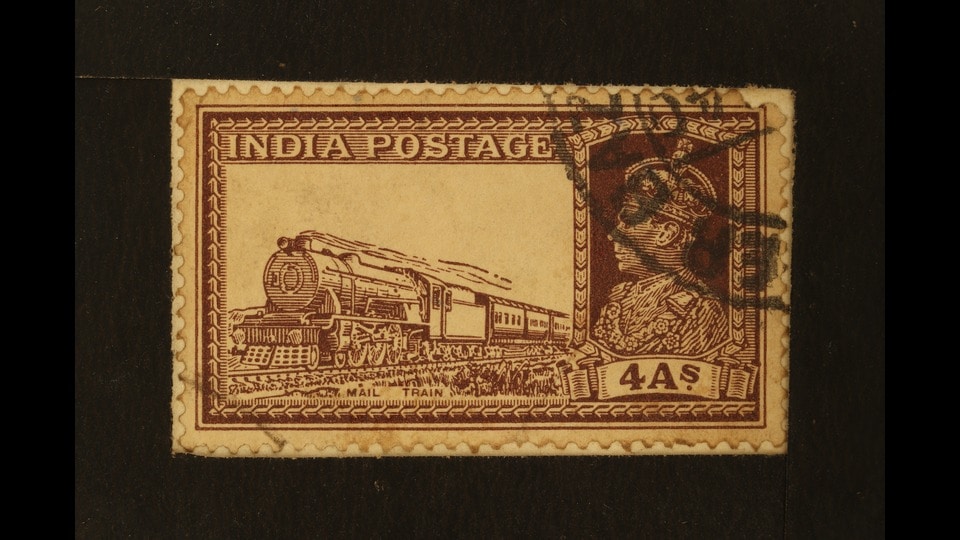
Historically, the invention of the steam engine represents a potent metaphor for the dawn of the age of industrialisation. So, when, in his manual Kalid-i-san‘at (The Key to Industry, 1890), Hakimuddin, working at the North Western State Railway Locomotive Department at Sukkur (Sindh), refers to it as a “divine creation” and a “train of endless progress”, the awe expressed is understandable.

But what is more remarkable is that Hakimuddin, born in Amritsar to a blacksmith family, rose from the position of a local town mistri to a head fitter, an engineering and supervisory role, at the locomotive workshop in Sukkur. In his manual, Hakimuddin hints that, with technical education and training, the Indian artisan could restore and reassert Indian authority over industry. His manual appears against the backdrop of the dominance of, first, European engineers and, later, the Indian graduates of colonial engineering schools over the labouring class. He was especially suspicious of the systems of employment and patronage that gave ‘gentlemen’ technical authority over artisanal skill, provoking him to state that, “I cannot trust that a nobleman (rais) or other wealthy Indian will treat me well and will respect my work in a way that will encourage me to make something even better in the future…”
This is the best part of Pious Labor: Islam, Artisanship and Technology in Colonial India written by Chicago University scholar Amanda Lanzillo. It reminds me of an IIT Delhi mechanical engineering friend who stood on the highway waiting for a car mechanic to arrive when his car broke down. It was unthinkable that he should repair his own car and get his hands dirty. That was not his ‘job’. This begs another question: could this be why India has not emerged as a manufacturing hub like China or Japan? If, like Hakimuddin wanted, the artisan had been schooled in the latest technology, could they have established our authority over industrial production? I will let this question hang.
Apart from this episode taken from the book’s fifth chapter, the research presented and analysed in Pious Labour does not, on the whole, encourage much meaningful engagement with Lanzillo’s scholarship. The technical archive, as a primary source for study of working-class history in colonial India, provides potential for many readings on the subject. However, Lanzillo’s focus on the Muslim community and the lodging of discourse in “piety” and “Islam” leaves a lot unsaid and unexplored.
The cobbled narrative sets out to explore the urban Muslim artisan world of tailors, scribes who worked in the lithographic and typographic print economy, woodworkers and carpenters, blacksmiths and metalsmiths, who were absorbed in various industrial workshops (shipbuilding, railways, surgical tool industry, steam presses etc.,) and stone masons recruited by the PWD (Public Works Department) during colonial rule. The geographical terrain is contained to north India before Partition, mainly the United Provinces (Uttar Pradesh) and the Punjab.
At the very onset, the author posits that this is an “alternate” reading of Muslim working class history. That this reading is an attempt at “recovery”, a “reorientation” and a “reconceptualization” of the cultural and religious content of the technical literature archive. In this reading, piety and Islam are either simply stated as orthodox, unorthodox or Sufi (local or transnational). In what way was it orthodox or unorthodox is not elaborated. The idea that the use of religious narrative (metaphors, myths, parables, allegories etc) in the technical manuals could be viewed as a mere step to science, as seen in the Ismaili tradition, for instance, is not even entertained.
Instead, the author uses the cultural content of the technical archive as a placeholder for Islam, one that the artisanal groups used to improve their economic, social or material well-being; an Islam that intersected with local and transnational Islam ending in disruption and rupture at Partition. It is only in the concluding chapter of the book, that Lanzillo inserts a caveat, that too in passing, that “There are certainly no intrinsic politics to artisan assertions of Islam.”
Further, the use of Urdu in the technical manuals is viewed purely as a colonial modernity. Caste or the diverse social milieu of the region is not mentioned. The Muslim working-class profiled in the book are viewed in isolation as belonging to certain family lineages or biradris. No comparative study is provided with respect to Hindu (eg, Vishwakarma beliefs) or Sikh working class communities (eg, Sikhi worldview).

No attempt is made to explore the interaction between different Muslim groups in a factory setting either. We are told that there were solidarities. In 1935 in Lahore, the printing press that published the newspaper, Zamindar, faced a strike. Here, the scribes were joined by “machine men, the broad community of press karigars” demanding better wages. These are the blacksmiths, metalsmiths and woodworkers that occupy separate chapters of the book but not the fertile meeting ground of the industry floor.
To be fair, this arrangement of the narrative is, to some extent, imposed by the limitations of the content of the technical manuals itself. There’s also a blind reliance on the colonial narrative especially in viewing the dynamics between elite Muslim vis-à-vis the Muslim artisan groups. An imperialist reading makes its presence felt; it was all a race for influence, status and power. The term used is “negotiating marginality” but it reprises all over again the Cambridge School argument that Indian nationalism emerged from power rivalries at the local level and upper caste and class collaboration with the colonial government rather than a larger ideological movement that carried everyone with it.
Charu Soni is an independent journalist.


