
 E-Paper



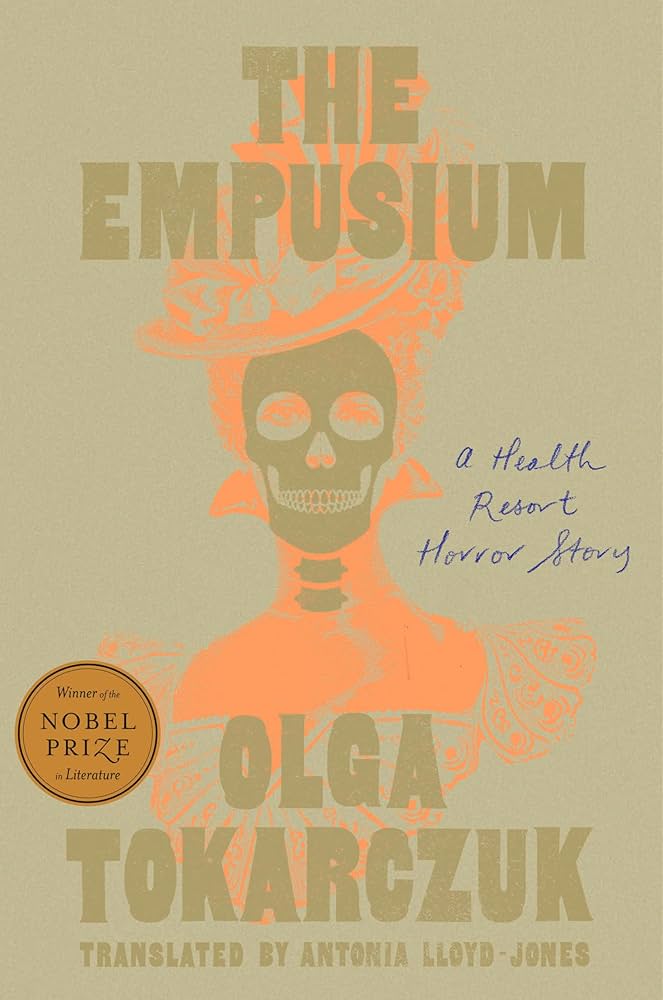
Review: The Empusium by Olga Tokarczuk
With a brilliant pace that grips the reader’s attention, the Nobel Prize winner’s latest novel does not have a moment of dullness

 Prefer HTon Google


It has been a century since the publication of Thomas Mann’s cult classic, The Magic Mountain, considered one of the most influential works of twentieth-century German literature. Nobel Prize-winning Polish writer Olga Tokarczuk, who has a love-hate relationship with Mann’s novel has decided to revisit similar territory in her latest book, The Empusium, which she says has been written out of anger and spite.
The year is 1913. A young and ailing Polish hydroengineering student named Mieczysław Wojnicz embarks on a journey from Lwów (now Lviv) to the Silesian mountain village of Görbersdorf (now western Poland). This village is home to a renowned sanatorium founded by German physician Herman Brehmer, and draws people seeking to be cured of tuberculosis. Supported by his affluent father, Wojnicz arrives to stay at Wilhelm Opitz’s Guesthouse for Gentlemen with hopes of finding relief from the condition. His prescribed regimen includes regular walks amidst the mountains, well-balanced meals, a modest intake of alcohol, and frequent consultations with Doctor Semperweiss at the sanatorium.
Right at the start, the reader notices that the narrative voice undergoes a shift, alternating between the third person point of view for Wojnicz and an omniscient “we” that seemingly observes everything. As readers, we are introduced to Wojnicz and his four fellow residents of the guesthouse (a teacher, a theosophist, an artist, and a philologist) as they go about their regular routines. Wojnicz forges a special friendship with Thilo, a young landscape painter from Berlin. But everything is not as it seems. On his second day, he stumbles upon the lifeless body of a woman on the dining table. Subsequently, it is revealed that the deceased woman is the wife of the guesthouse proprietor, who apparently hanged herself – or did she?
In addition to adhering to a regimen, the older men of the guesthouse mainly drink Schwärmerei, a liqueur made from forest magic mushrooms, and engage in heated discussions about politics, religion, and philosophy. Their common ground is a diminished perception of women as Wojnicz observes while sitting with them: “He noticed that every discussion, whether about democracy, the fifth dimension, the role of religion, socialism, Europe, or modern art, eventually led to women”. Tokarczuk lays bare their deeply misogynistic views: “The female brain is quite simply smaller, and there’s no denying it when objective research has proved it”; “Woman can only develop and retain her identity within the sphere of a man”; “Woman represents a bygone, inferior stage of evolution”, and so on. Readers might be shocked to learn, when they come to the author’s note at the end of the book, that these misogynistic views have been paraphrased from texts by famous authors such as Joseph Conrad, Sigmund Freud, John Milton, Henry Fielding, DH Lawrence, Ovid, Plato and Nietzsche, among others.
Tokarczuk creates a clear-eyed portrayal of the main character, Wojnicz. She delves into his upbringing marked by the absence of his mother, who died after giving birth to him. Raised solely by his father, he grapples with the older man’s insistence on instilling traditional masculine values in him and suppressing his sensitive nature due to a deep aversion to femininity. The only source of maternal warmth he recalls is his bond with his caretaker, Gliceria, who was ultimately dismissed by his father. Wojnicz’s life is profoundly complex, as he grapples with the burden of his father’s expectations while neglecting his own desires. With an intensely introverted personality and a persistent fear of surveillance, Wojnicz emerges as a deeply sensitive figure in this wild world.
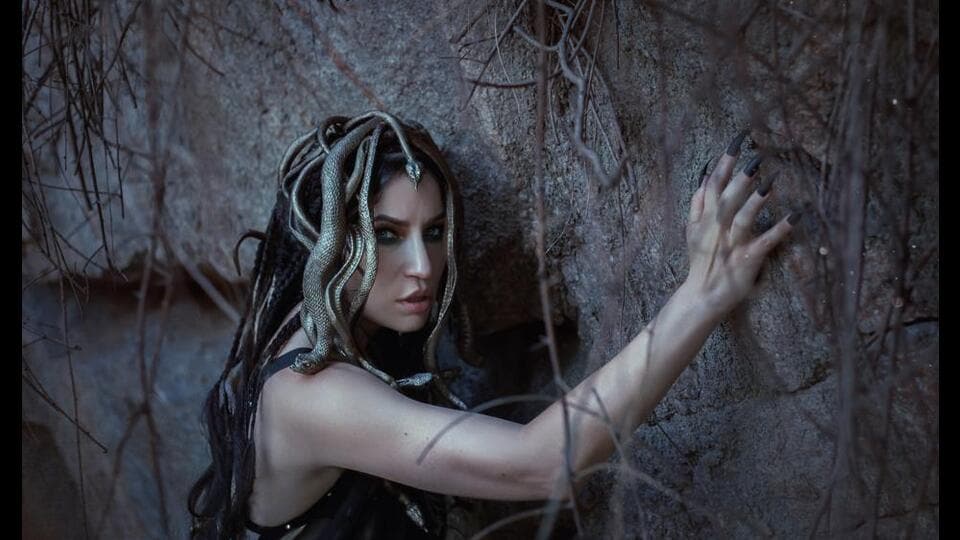
The feeling of dread builds up from the very early events of the novel suggesting that the entire landscape holds a closely guarded secret. Wojnicz keeps hearing voices coming from the guesthouse’s attic. He notices odd patterns too, such as deaths in the region only occurring in the month of November: a man always dies and is ripped to pieces around this time of year. Intricately woven with mythical and folkloric details, the novel explores the pervasive influence of gender dynamics. Throughout the narrative, the absence of women and their portrayal as culprits is striking. This thematic undercurrent is subtly referenced in the title, The Empusium, derived from Greek mythology in which Empusa, a shapeshifting demon, preys on men.
“Then things became even stranger, because Thilo claimed that a landscape is capable of killing a person. That it has immense strength, because it is a concentration of various energies, it is the culmination of geometry…..He said it was a great mistake to have ended up here, because like this they have all become potential victims of this place. And they are constantly being watched by the local landscape. Look out the window, it’s as if everything has a face.”

Tokarczuk ’s 2019 novel, Drive Your Plow Over the Bones of The Dead, used the murder mystery genre to convey a philosophical contemplation on man’s relationship with the natural world. With a brilliant pace that grips the reader’s attention, Tokarczuk’s writing and Antonia Lloyd-Jones’ luminous translation does not have a moment of dullness. The author’s ideas are boldly presented and lead to an electrifying and totally unforgettable ending. This book is a testament to Tokarczuk’s mastery as a visionary storyteller.
Hritik Verma is an independent reviewer. He blogs at allayingart.wordpress.com. He is @Hritik38233434 on Twitter and @allayingart on Instagram


