
 E-Paper



Review: The Indian Cat by BN Goswamy
The late art historian BN Goswamy’s last book, a collection of tales, paintings, poems and proverbs, pays homage to the sassy Indian cat

 Prefer HTon Google


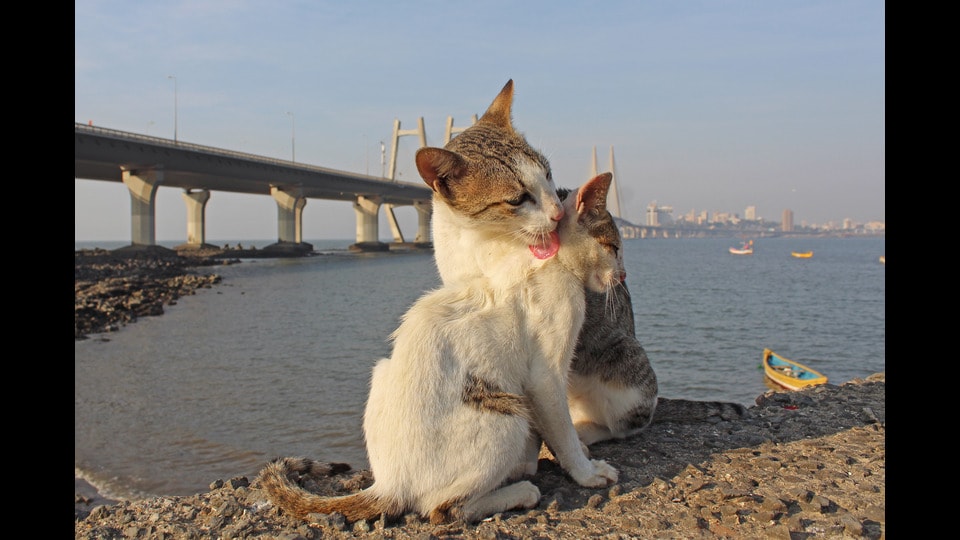
We are Gittu and Tinki, a couple of very learned Indian cats. One night, we spied on our human’s table, a book with a cat on its cover, which pleased us. We read it while he slept, and quickly pawed in this review.
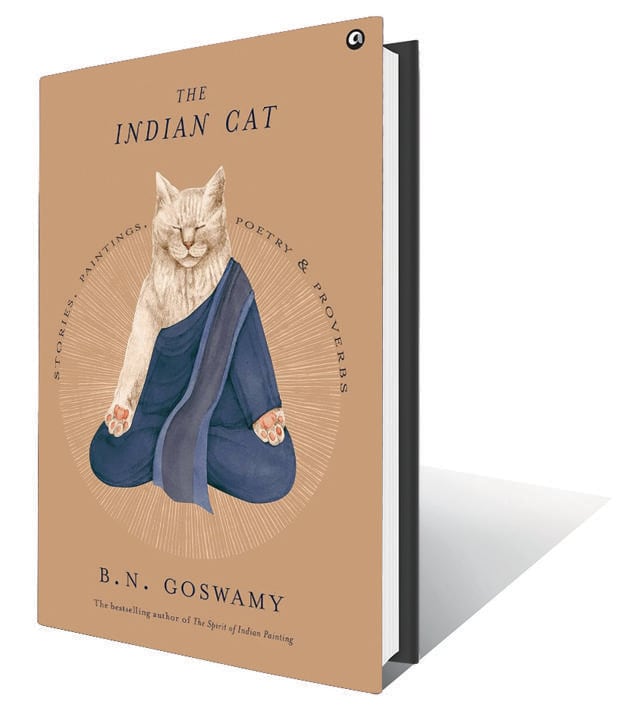
We are glad someone got around to making this informative, engrossing, entertaining, and heartwarming exploration of art on us, your feline overlords companions. The Indian Cat: Stories, Paintings, Poetry and Proverbs may be the first book of art history on the Indian cat and you might wonder at such an “unserious” subject getting so much attention from a famous art historian. But why be catty? It’s one of those volumes that purrs its way into your hearts, isn’t it? It makes up for the fact that the star treatment we cats rightfully get in many a living room hasn’t been reflected in books on art. Apparently, motivated by gentle goading from cat-fancying colleagues (prudent!) and by his son who adopted cats (wise!), the author BN Goswamy delved into various sources of history with an Indian connection. His scope is sweeping – there are stories, paintings, poems and proverbs here. Through Tenali Rama tales, Mughal-era and modern paintings, and contemporary poems and texts, we get a thorough and quirky survey of Indian art that pays due homage to our stylish, sassy species, which puts the tail wag in “swag”.
Some patterns are pinpointed: for instance, negative depictions are included (as an honest survey must) of cats as “clever, scheming, manipulative, even thieving”. Being cats, we say only that we have no monopoly on treachery, and unlike certain others, we hunt only for food.
Myths featuring cats are also lavishly excerpted, which is welcome. You will find Buddha’s discourses using metaphors of cats from the Jataka tales and stories from the Panchatantra, the Kathasaritsagara, and the Mahabharata too.
It’s more than text, though. We like books which have pictures – we like gently patting them with the pads of our paws. The section devoted to 58 colour reproductions of historical Indian art from Mughal, Alwar, Awadh and other workshops, as well as from Kalighat and from paintings by modern masters such as Jamini Roy provides a dose of thehraav (calm), letting us sit purring, our legs folded, our eyes half closed.
We have a slight complaint that most of the art features our species as sidekicks. In one, a cat is a meditative counterpart to a Sufi mystic seated in melancholy; a serious scene from the Ramayana with people lamenting at the departure of Rama and Lakshmana has, by way of contrast, a couple of frolicking cats. A painting of a courtesan cuddling her cat is dim-lit, the time is clearly not day, the mood is of repose and rumination, which the woman and the cat are sharing tenderly. Another painting shows a cat moved by the peaceful, primal sight of a woman nursing her baby. It warms our feline hearts to see how well the work is infused with the maternal rasa of care that humans lavish on their adorable, helpless and furless cubs. And the cats that insinuate themselves into a group of ladies of the court having a sit-down on a terrace immediately raise the swag level of the human gathering. Really, if you ask us, cats are the true protagonists of each scene they choose to grace.
Still, we aren’t really caterwauling. Some of these tales do have cats as protagonists – like the one from the Warli adivasi people which has a pair of cats bringing good fortune to their humans.
A cat is also the sole subject of some paintings. Each image comes with a brief note describing the situation and attempting to include the cat’s point of view. And in the concluding section of proverbs, most of them in Hindi/Urdu, the author has a great time elaborating on them in the voice of a cat.
The Indian Cat subtly explores the context of cultural confluence, of cultures contacting and borrowing from and enriching each other over millennia. Mention is made of the Persian- and Arabic-language collection of fables, Kalila wa Dimnah, adapted from Panchatantra. Some of the Indian paintings have clearly been influenced by Western styles of painting. In keeping with the context of cultural confluence, careful attention is also lavished on the story of Abu Huraira from Yemen. This companion of Prophet Muhammad loved and cared for cats and we read the famous tale about one of Abu Huraira’s cats saving the Prophet’s life. Of course, the Prophet’s own pet Muezza appears: “Preparing to attend prayer, he began to dress himself; however, he soon discovered his cat Muezza sleeping on the sleeve of his prayer robe. Rather than wake her, he used a pair of scissors to cut the sleeve off, leaving the cat undisturbed.”
The poetry section is pleasing. Two poems by Mir Taqi Mir, translated from the Urdu by the author, are on the poet’s cats, Sohini and Mohini. In the warm and moving Mohini, the Cat, Mir resorts to charms, talismans, blessings and prayers for his cat to ensure her kittens survive. And survive they did: “This time, Mohini gave birth to five kittens/ And by the Grace of God they survived, all five of them./ Why would they not in the face of such powerful support?/ Bi Bila’i, Abu Haraira, and other holies?’ Ghalib, too, had a cat, whom he describes as “Noble is she and of gentle temper” in A Fragment on his Cat, also translated by Goswamy. Here, Ghalib further says: “Even the prints of her paws on the ground/ are like heavenly buds about to open their petals.” We read Iqbal’s On Seeing My Cat In Someone Else’s Lap and A Cat by Jibananda Das, translated from the Bengali by Maitreyee Sen where the cat: “gathering the darkness into little balls,/ He scatters it over all the Earth”. Vikram Seth’s euphonious poem The Cat and the Cock has a feline hero who rescues its friend from the culinary designs of a fox. Given our own superior feline intelligence, we quickly caught on that, in this particular work, “cat”, “cock” and “fox” are coded references.
Thoroughly compiled and curated, The Indian Cat: Stories, Paintings, Poetry and Proverbs made us purr in delight. It has our pawsitive stamp of approval and we hope this play of ludic light paves the way for more such art books that combine a rejection of stuffy seriousness with rigorous research. We, Gittu and Tinki, approve.
Suhit Bombaywala’s factual and fictive writing appears in India and abroad. Twitter/X and Instagram: @suhitbombaywala


