
 E-Paper



Review: The Ministry of Time by Kaliane Bradley
HG Wells's The Time Machine inspired a surge in time travel fiction. Kaliane Bradley's The Ministry of Time blends time travel with romance and espionage in a witty tone. The novel focuses on characters and relationships rather than just mechanics, exploring the implications of history-bending antics. The story follows a civil servant of British-Cambodian descent tasked with assisting individuals extracted from past timelines. The narrative intertwines with Commander Gore from the 19th century Franklin Expedition, offering a mix of Victorian reactions to modernity and romantic entanglements. The novel also touches on themes of displacement and immigration. Despite potential narrative overload, Bradley's engaging style makes for an entertaining read.

 Prefer HTon Google


In 1895, HG Wells’s The Time Machine opened a portal for other writers. It made time travel a popular theme of science fiction, with novels featuring multiple chronologies and characters roaming across the pages of the calendar. The works that stand out often contain anarchic invention, such as Amal El-Mohtar and Max Gladstone’s This is How You Lose the Time War, a fractured 2019 tale of agents from warring empires competing across different universes.

In this crowded arena, Kaliane Bradley’s The Ministry of Time is a refreshing new voice. It takes the main elements of time travel, blends them with ingredients of romance, espionage, and colonialism, and delivers the results in a witty, acerbic tone. The BBC is already planning to adapt the novel into a TV series, and this move has attracted controversy because the makers of a popular Spanish show with the same title have claimed that the material has been plagiarised. In response, Bradley has said that her debut novel is an original work of fiction. “I have never seen the Spanish series,” she stated, “and the identical titles are an unfortunate coincidence”.
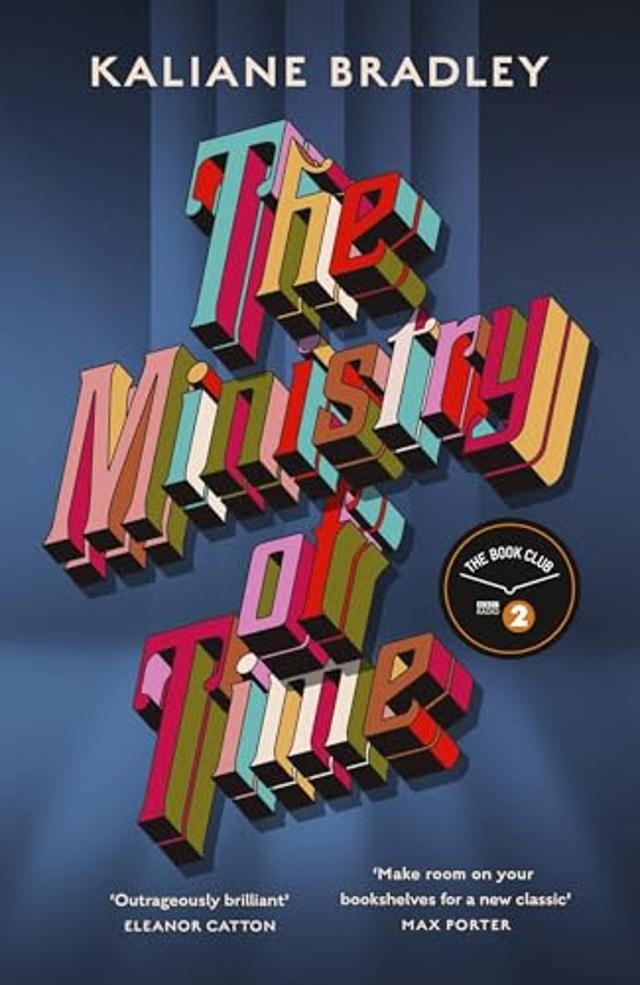
The focus of The Ministry of Time is less on the mechanics of time travel and more on the characters, their relationships, and the implications of history-bending antics. All you need to know, we’re told, is that in the near future, the British government developed the means to travel through time, and as a first step, it planned to extract individuals from earlier war zones, natural disasters, and epidemics. “They would have died in their own timelines anyway,” goes the reasoning, “and removing them from the past ought not to impact the future”.
The novel is narrated by a mercurial, mordant civil servant of white British and Cambodian ethnicity. She works in the Languages division of the Ministry of Defence and is assigned to a team that has to take care of these “expatriates to the twenty-first century”. In other words, team members have to become full-time companions to those snatched from previous timelines, and help them with the process of assimilation.
She is given charge of Commander Graham Gore, an actual naval officer who had perished on the 19th century Franklin Expedition, an ill-fated Arctic journey to discover a route to the trading kingdoms of Asia. Interspersed between the novel’s regular chapters, in fact, are short passages set during the doomed voyage itself. Now that Gore has entered through a “time door” and been given a second chance, he turns out to be a quizzical, charismatic character who is keen to explore his current circumstances. He has a lot of catching up to do: after all, “he had not experienced crinolines, A Tale of Two Cities, or the enfranchisement of the working classes”.
The narrator and the commander start to adjust to each other’s ways, and there is, predictably, a great deal of fun in detailing Victorian reactions to modern-day inventions. Confronted by domestic electrical appliances, for instance, Gore comments: “You have enslaved the power of lightning, and you’ve used it to avoid the tedium of hiring help.”
While navigating their new circumstances, they grow close to others who have also arrived from other eras, particularly Margaret, a plague-afflicted housemaid from the 17th century, and Arthur, who has been extracted from the Battle of the Somme and who recalls, among others, the poet Wilfred Owen. Shared experiences deepen into a romantic attraction, which leads to some heated passages. The pace quickens with the machinations of shadowy figures linked to an espionage plot, and the couple is thrust into dangerous predicaments, which they need to overcome if they are to sustain their future.

One of The Ministry of Time’s more interesting concerns is to contrast the plight of time-travellers to that of immigrants from other countries. The individuals who have arrived from the past are bureaucratically referred to as “internally displaced”, which makes the narrator think of her mother, who “carried her lost homeland jostling inside her like a basket of vegetables”. At an earlier time, she is told that when dealing with refugees, it’s better not to think of them as people because “it messes with the paperwork”. While the predicament of the time-travellers is unique, “the rhythms of loss and asylum, exodus and loneliness, roll like floods across human history”.
In a book fizzing with ideas and whimsicalities, one does get the sense that the author is trying to cram in too much. Topics and hypotheses are touched upon and then replaced by others as the narrative hurries toward a conclusion. Nevertheless, the whole is held together by an engaging and entertaining narrative style. This makes reading about Bradley’s intersection of the past and the future a diverting way to escape the drudgery of the present.
Sanjay Sipahimalani is a Mumbai-based writer and reviewer.


