
 E-Paper



Review: Three books that look at the Covid-19 pandemic through different lenses
Over the last year-and-a-half, the Covid 19 pandemic has had an impact on every sphere of human endeavour. Three recent books examine this impact through different perspectives. While one looks at financial inequality, another examines educational difficulties, and a third discusses the complexities of mathematical modelling of epidemic dynamics

 Prefer HTon Google


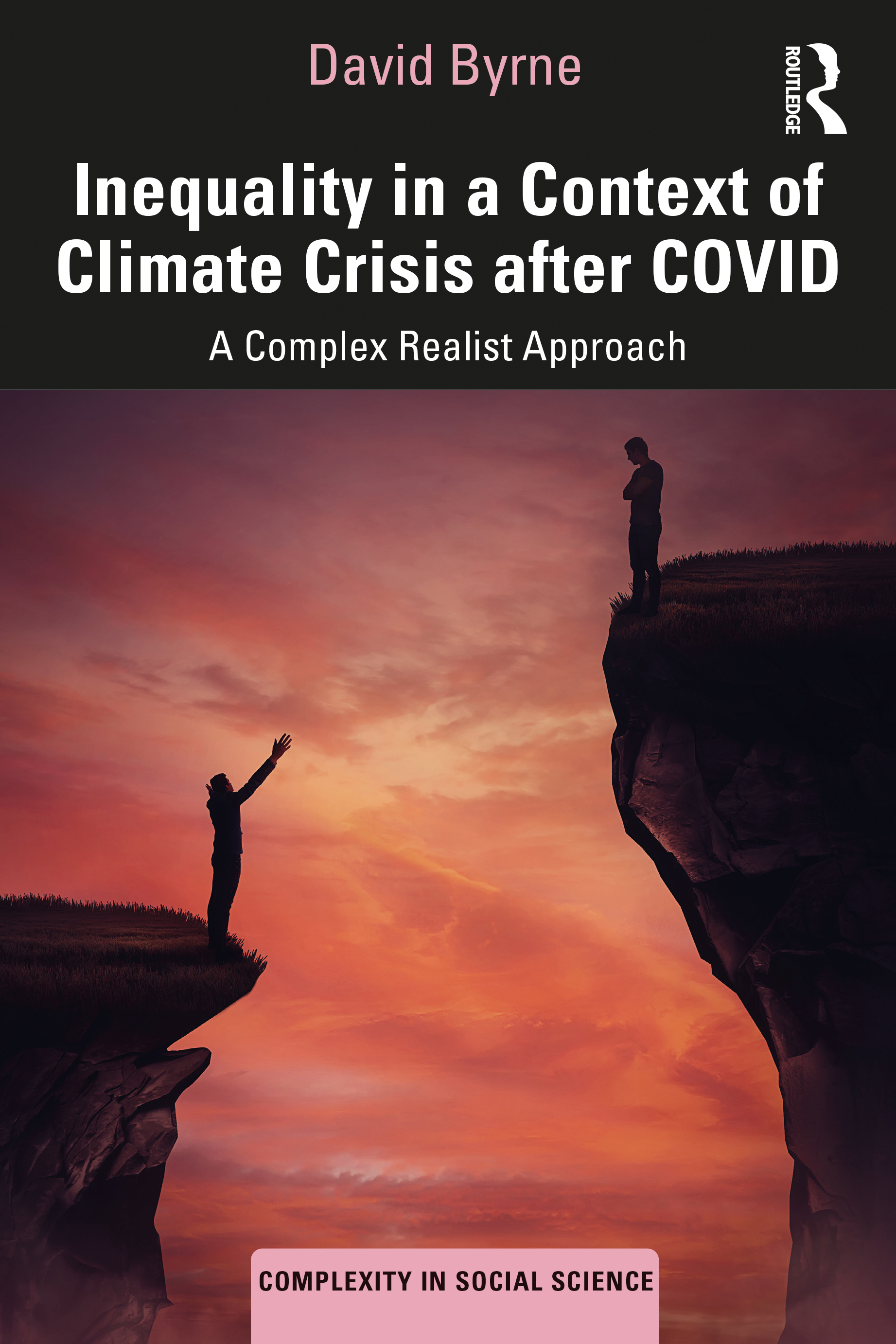
“No theory, no promises, no morality, no amount of good will, no religion will restrain power... Only power restrains power,” wrote James Burnham in his seminal book, The Machiavellians: Defenders of Freedom, published 78 years ago. David Byrne quotes this in his Inequality in a Context of Climate After Covid - a Complex Realist Approach, one of the three books under review here.
With central banks in the US, Europe, and Japan having been on a $9 trillion spending spree right from the start of the pandemic and with over 60 percent of the wealth growth in 2020 going to the top 10 percent of the richest US households, only 4 percent went to the bottom 50 percent. Thus, the Novel Coronavirus vigorously inspires the super rich. Hundreds of authors, commentators and critics have published books, research papers and articles on a wide spectrum of topics as the pandemic, one of the most threatening experiences in human history, goes obscenely with yawning inequality.
Byrne states that inequality in power is “a derivative of economic inequality in the most categorical sense” under neo-liberal capitalism. The author seeks to understand the relationship between inequality and class through the ‘middle class’. Some highly-paid managers and professionals in the top decile of both income and wealth pose as middle class. “The middle class is at the core of a cohesive, thriving society. We need to address their concerns regarding living costs, fairness and uncertainty,” the author says, adding that the middle class is “affected by profound inequality” and that the present concern is “with inequality rather than social exclusion, especially of the dispossessed working class.” Byrne shows that organized labour is much weaker than organized capital and disorganized labour has virtually no lobbying power. Byrne focuses on the social wage for ensuring “income to people outside the wage labour relation” and refers to Marx’s labour theory of value and his theory of exploitation. Covid-19 imposes “a de facto abandonment of austerity, no matter what the neo-liberal answer is to the fundamental weakness of post-industrial capitalism,” he says. Byrne agrees with Thomas Piketty in the latter’s Capital and Ideology that inequality is neither economic nor technological: it is political, linked to the market and competition, profits and wages, capital and debt, which are social and historical constructions that depend entirely on the legal, fiscal, educational and political systems. But Byrne notes that Piketty focuses on “accumulation rather than exploitation”. He accepts Max Weber on inequality being a source of policy concerns closely aligned with class position and the real relationship with Marxist conceptions of class. The bridging link between these two ways of thinking relates to power and is precisely political.
The aftermath of the financial crash of this century witnesses “the enactment of power to the benefit of finance capital”. Disturbingly enough, the fossil fuel industries and those reliant on the consumption of carbon “have enormous corporate influence over governance at every level just as real estate capital has over planning at the crucial level of local land use determination. Ultimately, policy is about power,” Byrne notes. And there is the role of state structures, in all probability “radically reconfigured to contend with inequality and climate crisis”. The author believes there will always be a path dependency. Before COVID-19, the right-wing and even centrist political parties were urging tax cuts for the rich. There were “a plethora of indulgences in relation to tax for the affluent and for corporations” in Europe. But unlike the Black deaths in feudal Europe, Covid 19 has had an impact on popular consciousness and democratic politics.
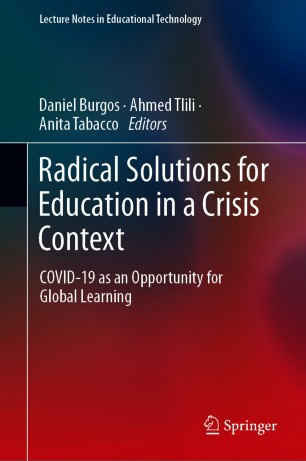
Radical Solutions for Education in a Crisis Context COVID-19 as an Opportunity for Global Learning (ed.Daniel Burgos et al) is a collection of more than 20 papers on how the pandemic has forced a change from face-to-face to non-face methodology at all levels of education including at the university level, especially in the OECD countries. The synchronous and interactive master class digitization strategy succeeded in providing a forced alternative to classroom lectures. According to recent statistics by UNESCO (2020), more than one billion students worldwide, including those with disabilities, are suffering from education disruption.
Remote Special Education During Crisis: COVID-19 as a Case Study (Ahmed Tlili, Natalia Amelina, Daniel Burgos, Achraf Othman et al), a jointly done paper by researchers from China, Russia, Spain, Serbia and Tunisia infers that the “alternate delivery mode” causes a digital divide with a negative impact on remote learning for learners with disabilities. They recommend cheap and affordable technologies, including assistive ones. Moreover, parents and students with disabilities lack ICT (Information and Communications Technology) skills, a gap that has to be closed. They need Open Educational Resources (OER) in place of commercially published materials. Saida Affouneh and Daniel Burgos in A 6-Key Action Plan for Education in Times of Crises envision a critical shift in the education system in the near future and suggest the remedial imparting of improved skills to remove the shortage in digital literacy. Digital tools need to be simple and user-friendly. Francisco José García-Peñalvo, Alfredo Corell, Víctor Abella-García, and Mario Grande-de-Prado in Recommendations for Mandatory Online Assessment in Higher Education During the COVID-19 Pandemic, based on the experience in Spain, opine that COVID-19 has shown that it is necessary to move from non-systemic digitalization to a real digital transformation of all its missions for the coexistence of digital and face-to-face potentialities.
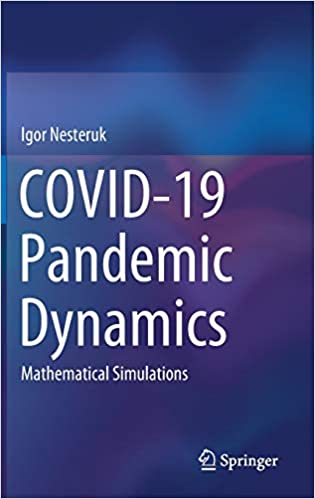
Igor Nesteruk’s COVID-19 Pandemic Dynamics:Mathematical Simulations discusses mathematical modelling of the epidemic dynamics and its complexities. The Ukrainian technology professor admits in the beginning that this is not easy. Even long-term monitoring of the epidemic may not provide reliable estimates of its parameters due to the constant change in quarantine and testing conditions, in algorithms of isolation of infected persons, and in pathogen activity, among other things. “The more complex the mathematical model, the more unknown parameters it contains, the values of which must be determined using a limited number of observations of the disease over time,” he says.
Nesteruk used the classical SIR model (S: infected, I: spreading the infection, R: removed persons) with three differential equations for the evolution of the number of susceptible persons, which is the sum of isolated, immunized, and deceased persons. According to his findings, statistics-based estimations of parameters (linear regression) and the pandemic dynamics in March and April 2020 for different regions model contain only four parameters, whose values can be estimated using a statistical approach developed and successfully applied for the investigations of a mysterious children’s disease that occurred in the Ukrainian city of Chernivtsi in 1988.
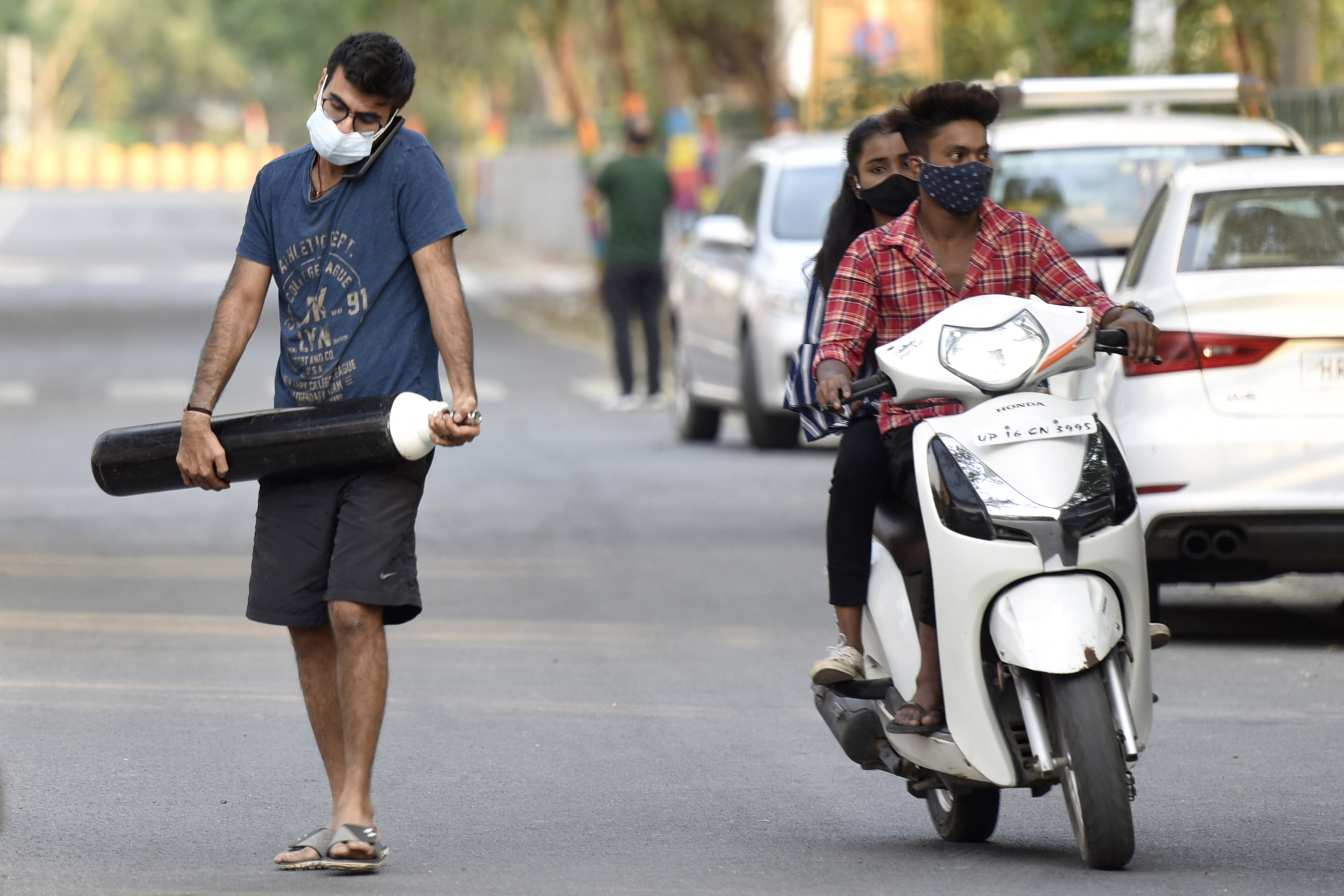
While there were signs of stabilization in Europe’s Eastern Mediterranean regions, the Americas and Africa, South-East Asia and the Western Pacific regions “still followed straight lines” or the secular trend. The situation in South-East Asia grew threatening rather rapidly. “Unfortunately, the quarantine weakening, changes in social behaviour and maybe in the coronavirus activity caused new rapid increases in the number of cases in August–September 2020,” he states.
Nonetheless, Nesteruk admits that the SIR model fails to determine the duration of the incubation period and to predict separately the number of deaths caused by coronavirus. But the model helps adequate predictions of the duration of epidemics in different countries and derived results for the first COVID-19 epidemic waves in mainland China, USA, Germany, the UK, South Korea, Austria, Italy, Spain, France, Moldova and Ukraine. In a separate paper, The COVID-19 Pandemic Storm in India submitted in May this year, Nesteruk predicted the final size of the pandemic wave and its duration. He believes the COVID-19 pandemic will be a problem for mankind for a very long time. “The estimations of the pandemic duration in India are very pessimistic…The sharp increase in the number of new COVID-19 patients in India in the second half of April 2021 has caused alarm around the world,” he says.
In sum, each of these texts provides us a knowledgeable view of the pandemic through different perspectives.
Sankar Ray is a writer and commentator on Left politics and history, and environmental issues. He lives in Kolkata.


