
 E-Paper



Review: What We Carry: A Memoir by Maya Shanbhag Lang
A memoir that captures the author’s growing awareness that her mother has Alzheimer’s, and the ways in which this changes their relationship


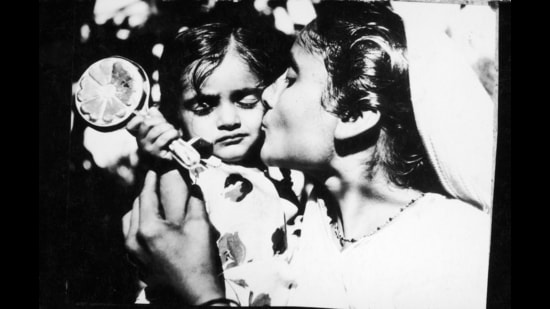
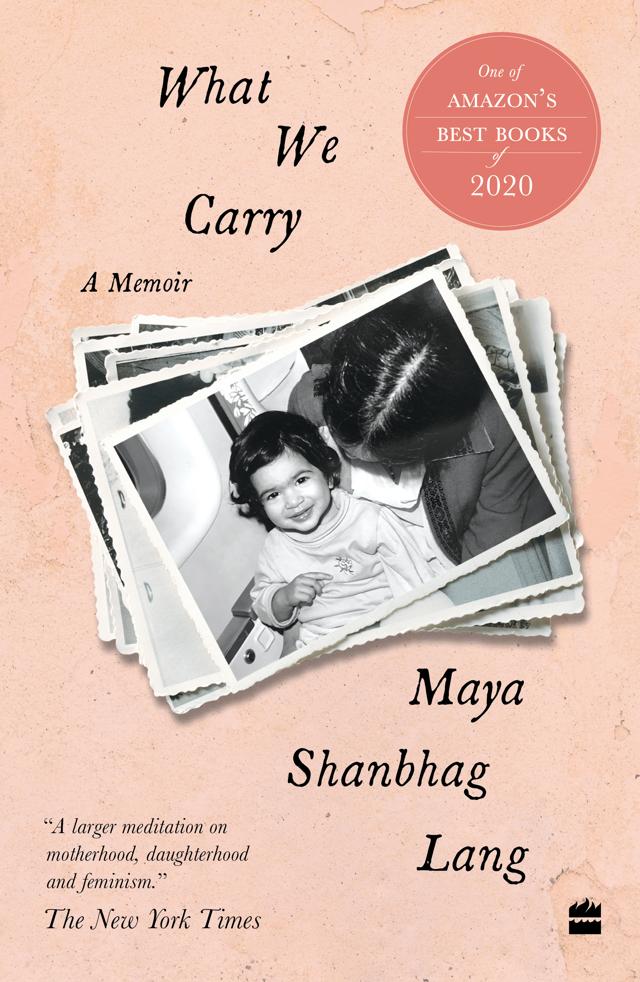
There have been many accounts and imaginative renderings of Alzheimer’s. I recall being moved by Elegy for Iris, John Bayley’s memoir about life with his spouse Iris Murdoch who became afflicted with Alzheimer’s. Its movie version Iris had Judi Dench playing the brilliant philosopher, academic and novelist. More recently, Glenda Jackson returned to the big screen after more than a decade as Maude, a woman with Alzheimer’s, in Elizabeth is Missing, and said she did so to focus attention on a rapidly-spreading medical condition.
The Prologue to Maya Shanbhag Lang’s memoir begins with a story her mother (Mom) told her when her own daughter Zoe was nine days old, of a woman standing in a deep river with her young son, trying to decide which of them she should save as the rising waters threatened to engulf them: “Until we are in the river, up to our shoulders – until we are in that position ourselves, we cannot know the answer… We must not judge… Whatever a woman decides, it is not easy.” Listening, Lang had been mystified, even impatient with Mom as she wondered what this story had to do with either of them. She was to learn much later that it captured her family’s story and was Mom’s way of “owning up to what she had long hidden”, a revelation that unstitched her carefully woven narrative about her mother and herself.
What We Carry is a moving tribute to a beloved mother, a memoir that captures a young woman’s struggle with impending motherhood, her growing awareness that her mother has an aggressive form of Alzheimer’s, and the ways in which this changed their mother-daughter equation. Lang had always viewed her mother as strong and dependable, a confident Mom who took spontaneous decisions and made them work, an immigrant who had fought to establish herself in her chosen career. In the dysfunctional home Lang grew up in (her parents eventually divorced) she accepted, albeit not always willingly, that Mom’s choices were made with her children’s interests in mind, that she had singly managed the demands of motherhood and career with tireless commitment in a foreign country, far away from home. She was the one to turn to when crisis hit, and even otherwise: “‘Hi, Mom!’ The two syllables open a magic door, sympathy and understanding on the other side. I love when she picks up. I don’t bother hiding it. When she picks up, I am home.”
Perhaps because of this image of Mom, perhaps also because she belonged to a new generation of women with a transformed world view of their role, Lang was to approach motherhood with mixed feelings. A PhD in comparative literature, undecided about her future, she wanted to be the perfect mom, “nurturing, loving, adept, someone who bakes pies and gives the best hugs, who reads stories and sings songs” as she wrote in a letter to her unborn daughter. She suspected at the time that the words didn’t sound real, that one day her daughter would turn round and say: “This person feels utterly fictitious…”. Battling severe post-partum depression, betrayed and hurt by Mom’s refusal to come visit even though she was suicidal, Lang still found ways to excuse her mother’s behaviour. “Maybe she knew from years of experience that I wasn’t a serious threat to myself… She knew there would be no benefit in coddling me.” She discovered later that, far from coping alone in a foreign country, Mom had had her own parents come out to help during her residency, sending her young son back with them to India so that she could complete her program. Remembering Mom’s fictitious claim about having coped alone, Lang’s outrage is understandable: “Her refusal to see me when I was in the depths of postpartum depression was just another in a life’s worth of choices made in favour of what was best, most convenient for her.”
Lang’s emotions continue to see-saw even after the reasons for Mom’s increasingly odd behaviour are known and she unwillingly leaves her home and comes to stay. It is hard to reconcile to the new Mom: contradictory, whimsical, dithery, intolerant, prone to tantrums and to demonising Lang in telephone chats with relatives. The good moments are straws she grasps at, but the stress of Mom’s fluctuating mood swings eventually takes a toll on her home life, forcing her to make some tough decisions and accept it was time Mom moved into an assisted living facility.
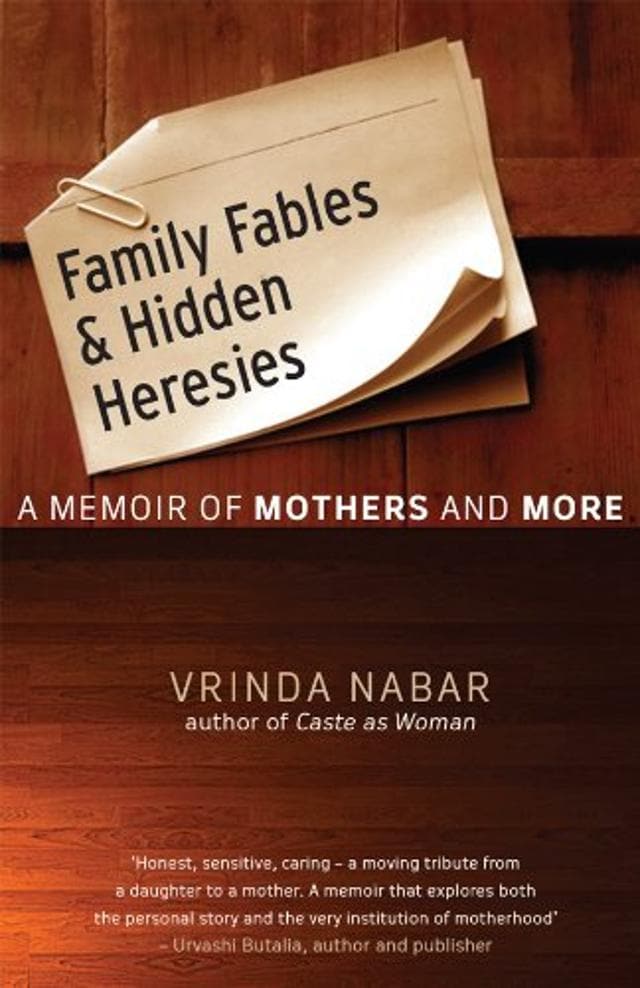
Writing about family is never easy. I began working on Family Fables & Hidden Heresies: A Memoir of Mothers and More soon after I lost my mother (Ai) in 1990. I did so because Ai wanted to write about her life and had enlisted my help when she passed away unexpectedly, but it was 2009 before I was ready to let go and look for a publisher. It was the most difficult, emotionally exhausting thing I had done, a labour of love, a way of trying to move beyond the personal to understand the larger context within which my mother and grandmothers had lived their lives and made their choices. “The beginning is never easy,” I wrote: “I’ll be honest, you say, tell it the way it was. Then you start to think about the hurt, the endless explanations, the disagreements. No, it wasn’t like that, no, I wasn’t there when it happened. I don’t remember saying that. How could you have gone and put that down? What will people say?”
Mom and Ai had this in common: they both chose careers in medicine. They were both also forthright, sometimes embarrassingly so, and Lang’s accounts of how Mom browbeat a dentist with questions about hygiene are like reliving similar moments with Ai. Unlike Mom Ai’s career had been a choice without alternatives but, the decision made, she gave it her everything. She was acknowledged to have the makings of a fine surgeon but had to surrender her dreams of the FRCS and return to India from Edinburgh when the Second War broke out in the 1930s because of her mother’s insecurities (she had been widowed in the First War), though she continued to nurture her urge to serve and excel, living on her own and working at a hospital in Lahore in 1940, a year before she married. Growing up, my siblings and I absorbed the elements of medicine, physiology and hygiene as naturally as breathing, just the way Lang writes of how discussing Mom’s practice with her enhanced her own knowledge. Mom, a psychiatrist, was the kind of practitioner that people ran up to in supermarkets so that “Being out with her…was like being with a celebrity… ‘You don’t understand,’ they would say, turning to me. ‘Your mother saved my life.’” In contrast vibrant, witty, fun-loving Ai, though clearly skilful and effective in her work, humane and generous to a fault with the patients who loved her, remained so self-effacing as she battled guilt over the conflicting demands of profession and family that it was stunning to learn when the memoir was published that even very close family members were unaware of her training and competence.
Fathers inevitably figure in most memoirs about mothers and daughters. I wrote of a father who was the gentlest of creatures. A pioneering educationist and a celebrated textile chemist, he remained as self-effacing as Ai and gave his spouse and children free rein to make their choices. I was saddened therefore by Lang’s description of a relationship so fundamental to one’s growing up, of the father she eventually stopped rating on “the spectrum of awfulness…because to my mind he wasn’t awful enough”: “My dad never hugged me. He never said he loved me…All I knew was that he had specific rules of conduct for me, rules I only became aware of after breaking them… I should never be late… never complain about physical discomfort… never primp or preen (which was conceited), wear makeup (which was slutty), or dance (which sent the wrong message).”
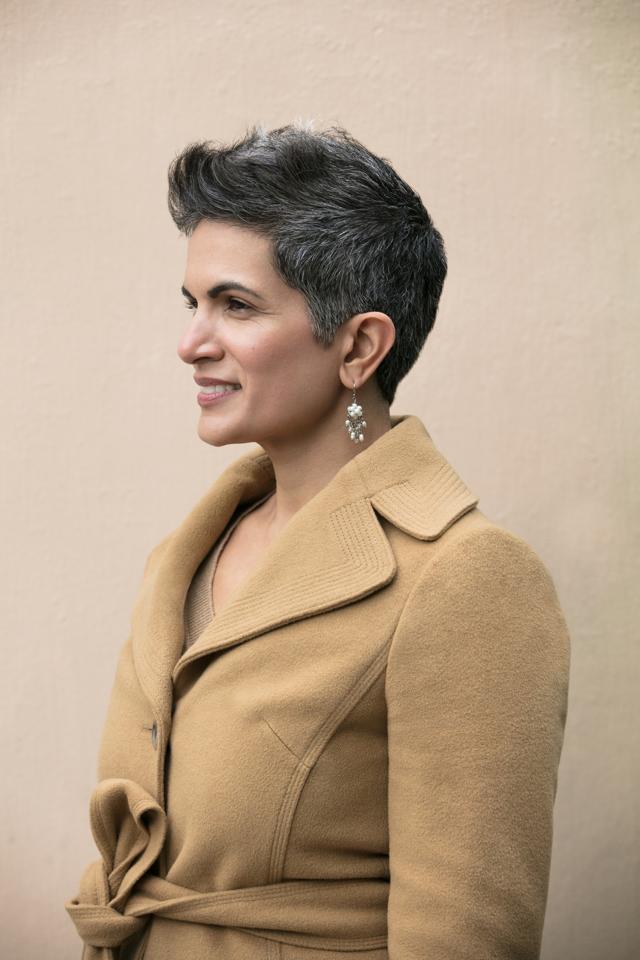
Memoirists are often asked if they have regrets. I regret that I was less than fair to Ai in soft-pedalling over incidents to spare those in her extended family who were still alive. But when perfect strangers who never met any of the individuals involved respond to the book with sensitive insights, it vindicates the decision to discard a restrictive, incestuous, cathartic narrative aimed at settling scores and focus on why Ai’s story was relevant and worth narrating to a larger audience. It is rewarding to see her story straddle regions and cultures and speak to women and men about issues that matter universally.
Lang’s book does the same thing. Though considerably more personal and specific in focus it addresses issues most of us battle, Tithonus-style, as longevity becomes an increasingly real global experience. She is outspoken, pushing forward relentlessly in short, rapid-fire chapters which traverse boundaries of past and present to pack in all the details of that troubling time. A writer of Indian descent living in the US, Lang is aware of the enormity of her task: that of writing for an audience incurably prone to stereotyping. “Whenever I tell people that my family is Indian, I get the impression that they don’t hear what comes next. It’s like they have cotton in their ears. It doesn’t matter if I speak of a lovely flat with servants or of an imperious Brahmin mother. They nod and smile, but hear poverty, Third World, came here for a better life.” She regrets that such assumptions conditioned her own responses, blinding her to obvious symptoms and making her see her mother’s financial fretting as “a function of her immigrant status… I should have thought to mention her symptoms to doctors, should have seen the behaviors right before my eyes. Instead there was cotton in my ears. All I heard was immigrant, immigrant, immigrant.”
Physical proximity to those one loves dearly can be a double-edged sword. Perhaps because of Mom’s “roller coaster” moments, the chapters swivel from incident to incident, replaying life in those difficult times, a gripping, near-stream-of-consciousness narration which is occasionally disorienting in its intensity. Unambiguous about her own fluctuating responses to her mother, unafraid to describe her most negative feelings, what comes through is Lang’s emotional bond, her admiration for Mom, and the way her ultimate decision both liberates and breaks her. If life is suddenly full of potential again, now that her time is pretty much her own, there is also the awareness that she misses “having someone in my life who cared about the details, who gave me the space to be an unhurried version of myself. I don’t think there is a replacement for this.” There isn’t. Not usually.
Vrinda Nabar is an author, critic, and a former Chair of English, Mumbai University.


