
 E-Paper



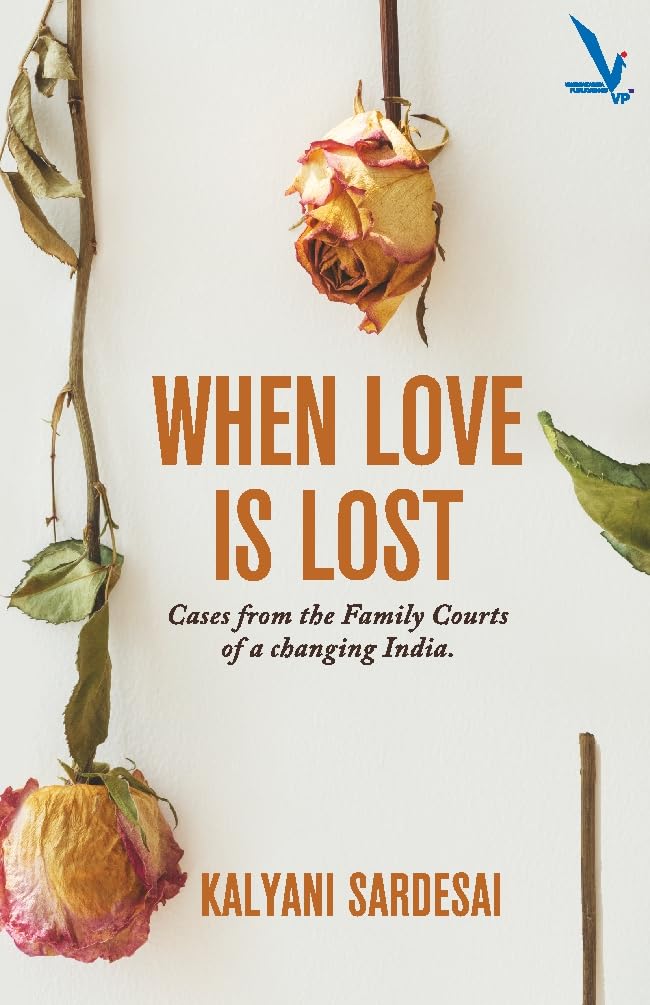
Review: When Love Is Lost by Kalyani Sardesai
Comprising 24 first person narratives, this book provides a picture of marriage in a changing India

 Prefer HTon Google


In her author’s note, Kalyani Sardesai writes “…this work could serve as a relationship guide for navigating marital relationships with the socio-legal system as a cornerstone”. The book stays true to this quote till the very end.

Divided into two parts, the first section of When Love is Lost contains 24 first-person narratives documenting the experiences of people who found themselves before the family courts. The second section, which is based on inputs from mediators, councillors and estranged couples, provides do’s and don’ts for a healthy marriage.
The earlier section that includes first-person narratives makes for particularly interesting reading. Instead of dry statistics or legal jargon, raw human experiences that capture the emotional, economic, legal and societal costs of a divorce, are presented. Each chapter ends with a blurb on the legal issues discussed in it. The chapter that recounts the experience of a couple in a lesbian relationship especially stands out. In this case, one of the partners was pressurized to undergo a sex change operation to conform to the socially-acceptable norms of a heterosexual marriage. After a while, however, the wife wanted a divorce and cited her husband not being a man as one of the reasons. The lawyer for the husband recounts the acrimonious three-year battle that ultimately ended with the court refuting the wife’s allegations and dismissing the application. The chapter provides information on the legal status of same-sex marriages in India.
The book shows that marriages break down across class backgrounds and that education levels of the couple or whether they had an arranged or a love marriage is no guarantee of the success or failure of the union.
Take the case of the well-educated food scientist who obediently agreed to an arranged marriage set up by her father only to later find out that the groom was already married. Then, there is the case of a woman in a live-in relationship with a man she assumed was liberal and progressive, only for him to abuse and defraud her.
When Love is Lost recognizes the shortcomings of the legal system when it comes to handling interpersonal issues. In the case of the father trying to secure custody of his child, the reader learns that, in the end, he was forced to quietly leave the country with his child. “His action was illegal – but the system had forced a parent to take a criminal step,” the lawyer notes.
An important achievement, the book succeeds in discussing issues like violence and dowry and provides not only instances of their modern-day form, but also an overview of the legal recourse available. For instance, a lawyer, while emphasizing that violence is not limited to the physical, notes “that being made fun of, belittled, deprived and policed is also violence”. Similarly, a lawyer narrates how making the girl’s family pay for the entire wedding, constant demands of money for a flat, a car etc. under the guise of the items being for the daughter is also dowry.
LISTEN MORE: Breaking up is hard to do: Author Kalyani Sardesai on the Books & Authors podcast
The book emphasizes the need to undertake due diligence before getting married or entering a marriage-like relationship. It warns readers not to accept things at face value, to conduct independent enquiries, and also to have clear discussions on expectations. One tragic account features a smart, educated woman who married a man who presented himself as an orphan. Her family did not probe into his background either. It was only afterwards that they discovered he was already married. The woman succeeded in getting a divorce and was awarded the marital home too but her victory was short lived. She was murdered by contract killers at the behest of her ex-husband. Though he was sentenced to life imprisonment, her parents continue to regret that they did not conduct enquiries before the marriage.
While the book does narrate certain acrimonious and vindictive legal battles, it also documents cases which highlight maturity and trust between partners. Like the case of the wife who wanted a divorce on the ground that she was unhappy in the marriage. Initially, the husband was opposed to the move but over time, gave his consent. As the lawyer notes, “It takes two happy partners to make a happy marriage. Thus, how can the marriage be happy when one of them is unhappy.” Once the decision was made, both parties arrived at a common understanding of the future for their child and while the marriage ended, their friendship remained.

The second part of the book includes words of wisdom from mediators, counsellors and estranged spouses. A common theme reiterated throughout is the need for couples to be completely honest with each other about health issues, expectations for the future and aspirations. There are useful tips on managing finances and the importance of open discussions on issues regarding money, children and living with in-laws.
While the narrative form makes the content easily accessible for a wide range of readers, the book might have benefitted from a chapter on why the author chose these particular cases. Furthermore, the altered names and concealed identities, even of the lawyers dilutes the impact somewhat.
The book begins with the author stating that she had intended to explore how contemporary relationships work or fail in the context of Indian law. In the absence of macro data, it is not really possible to draw any solid conclusions from the handful of cases mentioned here. However, this is still a good book. In fact, it is the perfect gift for those contemplating marriage or even for those questioning their marriage.
Parijata Bharadwaj, is a lawyer and researcher based out of New Delhi. She is one of the co-founders of the Jagdalpur Legal Aid Group, which provided legal services to Adivasis in Chhattisgarh.


