
 E-Paper



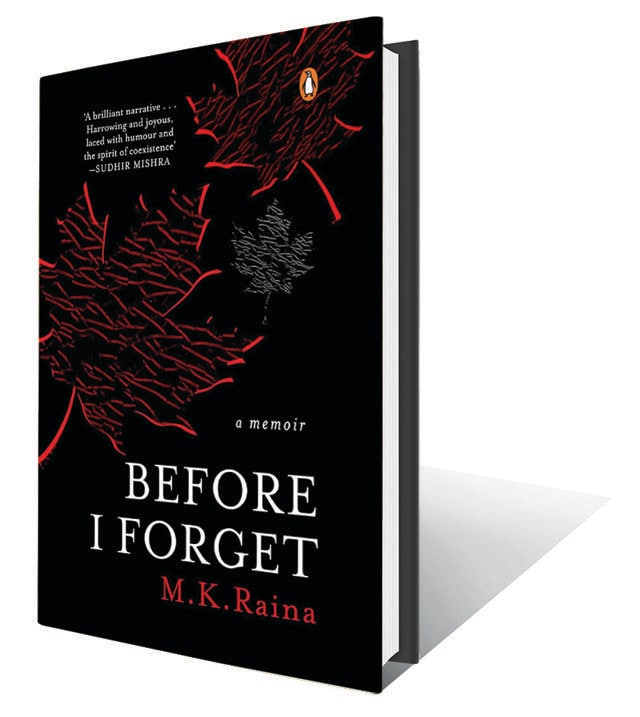
Review: Before I Forget by MK Raina
An unvarnished social document that reveals the restorative power of art to rebuild connections and communities, the theatre director’s memoir presents his deep engagement with and commitment towards grassroots cultural movements

 Prefer HTon Google


Do all humans deserve to be free? Most would respond affirmatively. However, if asked about the freedom of Kashmiris or Palestinians, a curious addendum to the response may be added. Suddenly, freedom becomes a matter of political affiliation and historical perspective. In award-winning theatre icon and social activist MK Raina’s sweeping and inspiring memoir, an obfuscated fact is brought to light: “That people do prevail in the interiors of the Valley.”
In the opening line of Before I Forget, Raina calls himself “the child of India’s socialism.” Through various episodes of his life presented in the memoir, the statement impresses its rhythms like a perennial river cutting through stone. Raina’s memoir is an unvarnished social document that reveals the restorative power of art to (re)build connections and communities. It is a privilege to learn about his deep engagement with and commitment towards grassroots cultural movements. And also to witness some tectonic political events in Indian history through his perspective.
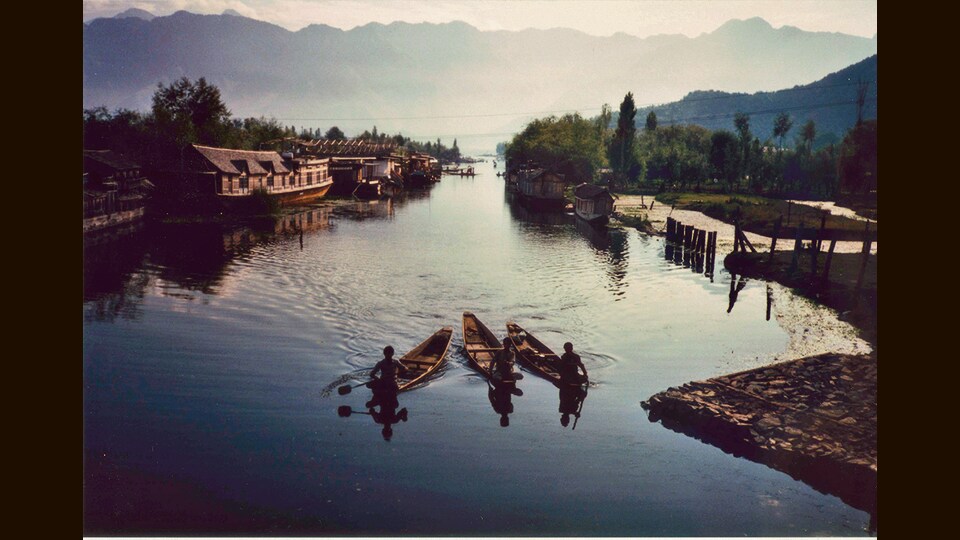
Raina was born in the Valley in 1948. As a child, he would trek the Zabarwan trails with his friends, and frequent the periphery of Dal Lake to marvel at the many mosques and temples perched on its shores. In his early years, he thrived in a Kashmir brimming with the spirit of bonhomie between the Kashmiri Pandits and Muslims. In the winter of 1990, however, his family had to evacuate their home due to the insurgency. The memoir not only confronts this personal journey of exile and loss, but also celebrates his many professional projects across state borders in India that exposed him to new and unseen cultures, fundamentally inspiring a rich connection with the promise of Indian socialism.
During the 1984 anti-Sikh riots, Raina’s ideas of cultural amity were attacked when he witnessed the brutalities that neighbours inflicted on each other. He volunteered at relief camps and helped many Sikh families rediscover a sense of security in their own city. Even 40 years later, his memories of the events are tinged with disbelief and alarm, as evidenced from the staccato sentences in the chapter. Among many such evocative events in the memoir, however, two stand out: Raina’s response to Safdar Hashmi’s death in January 1989, and his poignant acceptance of his mother’s demise, a year later in January 1990. Told in painstaking detail, both events reveal the crumbling nature of Indian society. Whereas Hashmi’s murder united a sea of artists to rally for their freedom of expression, and ultimately led to the creation of SAHMAT, the activist and artists collective in New Delhi, Raina’s mother’s death in Kashmir posed a different challenge.
During the silent curfews and cold murders that marked the turbulent onset of insurgency in Kashmir, Raina writes that people became indifferent towards each other and their relationships turned absurd: “The centuries-old links of interdependence that existed among neighbours were washed away.” When his mother died, he had to seek permission from the nearest police station to travel for and conduct the funeral, since the Valley was under lockdown. “In this atmosphere of chaos, rituals and customs, everything became meaningless when thousands of people were migrating every day to some unknown future…” he writes. For Raina, the loss of a mother was exacerbated by the loss of his motherland, since his family decided they could no longer live safely in their home in Sheetal Nath.
A couple of years later, in the aftermath of the Babri Masjid demolition, Raina toured the country with Anhad Garje, a programme to propagate social harmony. In an ambitious move, he also organised Hum Sab Ayodhya, an all-night concert in that city. Despite staunch bureaucratic and socioreligious resistance, Raina and his associates arranged a glorious show. Each of these skirmishes taught him about the contrast between institutional intolerance and communal harmony — where the systems failed, the locals rose to the artists’ aid. Raina has always attempted to circumvent the damage of divisive politics through earnest art. A return to Kashmir, then, was as essential as it was inevitable.
In the last half of his memoir, he writes about his travels in Kashmir in the 1990s, working with local artists, young people, and children — to restore their sense of self, and to allow them to rediscover their connections to their craft and culture battered by years of violence. Raina addresses the psychological effects of the insurgency on the new generation; children who have seen their families being murdered. In one particular workshop for children in the Valley, he realised the trauma had clouded their grasp of reality. When working with colours to draw trees, the participating children produced similar, dull green trees; the colours of fruits, flowers and birds visible to their eyes, but absent in their imagination. Raina realised that he had to work towards creating novel pedagogies to address these gaps.
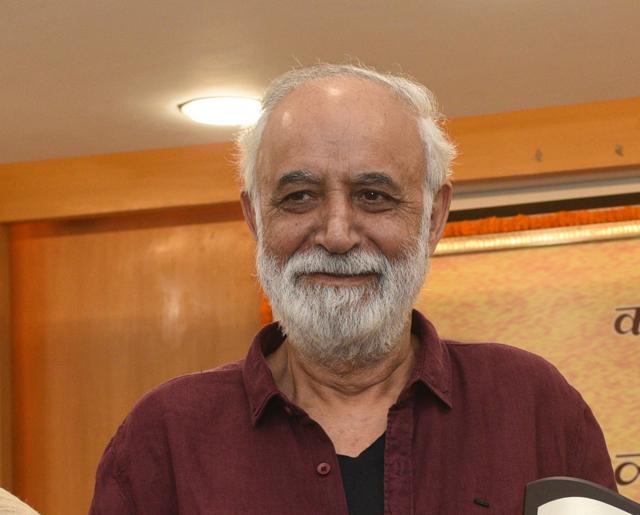
One of the author’s enduring principles is employing art and culture as agents of change. His description of his work with the Bhand Pather in the book’s final sections shows how his project of rehabilitation comes full circle. He was involved in reviving the traditional art form by integrating it with the contemporary theatre idiom, and also initiated capacity building programmes with locals. Carpenters worked tirelessly on recovering the lost art of producing Kashmiri swarnais, tailors worked with urban designers to upskill remarkably, and blacksmiths and cobblers graduated to unprecedented levels of expertise in their crafts.
Raina writes about his Kashmir: “This land had nurtured for centuries the theme of loal (love), and that land could not become a barren land devoid of compassion…” His indomitable belief in the spirit of secularism restores the reader’s faith in cultural and communal repair and leads to the realisation that our connections with each other are profoundly human and enriching. Before I Forget is a testament to and reminder of this much-invisibilised reality, and hence, a moving and essential read.
Kartik Chauhan is an independent reviewer and writer. He lives in New Delhi.


