
 E-Paper



Review: Broken Nest and Other Stories by Rabindranath Tagore
In this collection of three short stories and a novella translated from the Bengali by Sharmistha Mohanty, Tagore writes about women being abandoned by love, by their families, by society and by fate

 Prefer HTon Google


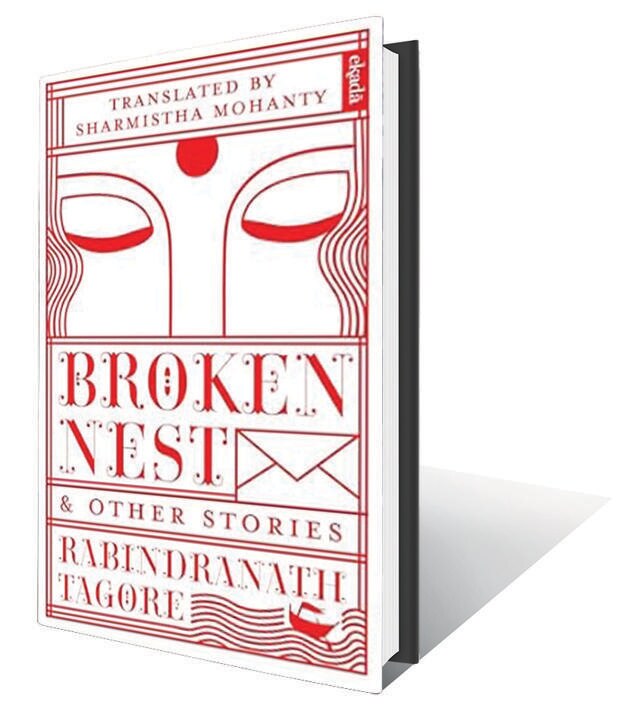
Broken Nest and Other Stories is a collection of three short stories and a novella by Rabindranath Tagore. Capturing the lyricism of the Nobel Laureate’s prose, poet and writer Sharmistha Mohanty translated the stories, The Ghat’s Tale, Notebook and Postmaster, and the novella, Broken Nest, from the Bengali, and Westland has presented the works in a volume with an exquisite red and white cover.
‘For me the light of day and the shadows of night are cast daily upon the Ganga, and are every day wiped away- they never leave an impression. So, even though I look old, my heart is forever young. The algae of years of memories has not covered me so as to keep out the rays of the sun. Sometimes, by chance an algae floats in and clings to my sides, then it is once again carried away by the waves. But I cannot say there is nothing that has stayed. Where the waves of the Ganga do not reach, there, in my crevices, have sprung up creepers and weeds and moss; they are witnesses to my past, it is they who have held the past in their loving embrace and kept it forever green and tender, forever new. The Ganga recedes from me every day, step by step, and I too, step by step, grow older’, narrates the ghat in The Ghat’s Tale.
I hold on to each sentence as I feel my heart swell at the recreation of the beauty of the Bengal ghat. The rhythm of Tagore’s prose takes me to the landscapes I know well – that of Bihar, where too life springs around the banks of water bodies, the ghats. The rituals of birth, everyday life, marriage, and death conclude there. Through it all, the ghat becomes a witness, wise in years.
The Ghat’s Tale is the story of a child bride who once played there and has now returned to the ghat of her childhood as a young widow. Speaking of the girl’s displacement when she had to leave her home for her husband’s, the ghat states, ‘Someone had taken away the lotus from the water to plant it on land.’
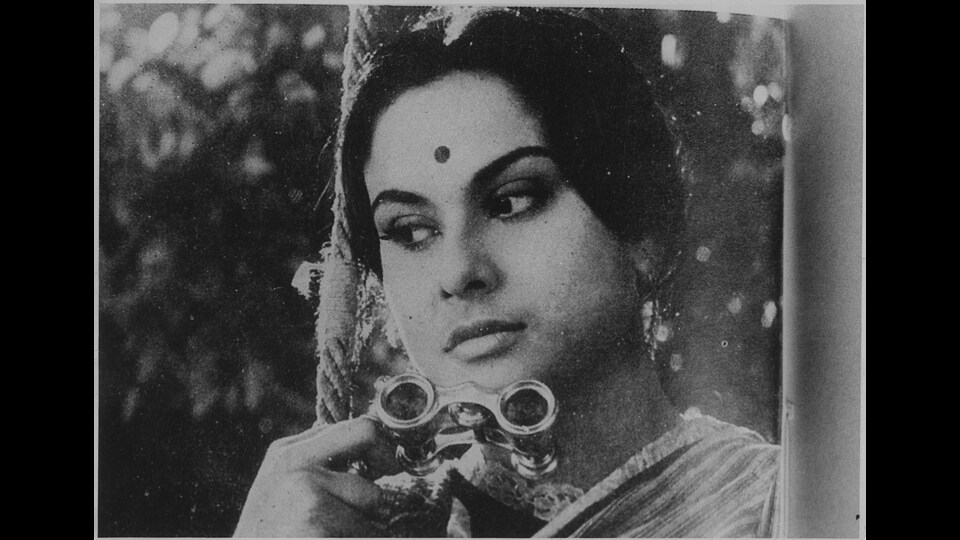
Tagore wrote about women being abandoned by love, by their families, and by society. He wrote about abhagini women, those who were abandoned by fate. One such story is that of Charulata in Broken Nest, which inspired Satyajit Ray’s famous eponymous film. Through Charulata’s experiences, Tagore wrote about the loneliness of married women. When Charu’s husband’s cousin, Amal, comes to live with them, she is initially annoyed by his demands. Yet, for the first time, she feels like someone needs her and she can’t help being attracted to him. Tagore is possibly at his best in this story; what is left unsaid leaps out at the reader. Through shared moments in which they write and talk, Charu and Amal experience a togetherness that is lacking in her marriage. Small acts of companionship fill her life, and she finds herself looking forward to encounters with Amal. For the first time, she experiences jealousy as she fights with another woman, Mandakini (who is married to another man), for Amal. Tagore’s minor characters, such as the married Manda, who too is charmed by the attention Amal pays her, further develop the theme of the isolation of married women in Broken Nest. Charulata’s husband Bhupati is not particularly interested in literature. However, he pays his respects as a patron. ‘Firstly, I don’t read, over and above that if I don’t even buy books I will be committing a sin which I will never be able to atone for,’ he says. Touched by sorrow, he turns to poetry for the first time in his life. He wants to work on his writing so he can be a writing companion to Charu and help her write more. After Amal leaves, Bhupati senses her sadness though he cannot understand why she is sad. In an attempt to comfort her, he decides to translate Tennyson’s poetry into Bengali and read it out to her.
In Postmaster, a young orphan girl, Ratan, comes to care deeply for her employer, the postmaster. He arrives in the village of Ulapur for work but decides to return to Calcutta. Ratan asks him to take her with him but he laughs it off as impossible. However, once on the boat to Calcutta, he begins to regret his decision.
‘When he got on the boat and the boat has set sail, and the rain swollen river appeared to be brimming on all sides like the earth’s gathered tears, then the postmaster felt a great ache in his heart- the picture of an insignificant little village girl’s sad face seemed to express an enormous, world encompassing, unarticulated pain. Suddenly he felt a strong desire. “Let me go back, let me take that world abandoned orphan with me”- but the sails had caught the wind, the monsoon current was flowing swiftly, the village had been left behind and the cremation ghats could be seen on the river banks- and in the wistful heart of the traveller being borne away on the river there arose this philosophy, there are so many separations in life, so many deaths, what is the point of returning? Who belongs to whom in this world?”
But no philosophy arose in Ratan’s mind. She only kept circling the building of the post office with tears in her eyes. Perhaps there was a faint hope entering her heart, maybe Dadababu will come back- caught in that hope she could not go far away from here.”
The postmaster moves away from Ratan, abandoning her. Once again, water, an element important in the landscape of Bengal, plays a great role in the story. It forever separates Ratan and the postmaster. Her helplessness becomes acute as she is physically unable to move away due to delusion and hope.
In the preface, translator Sharmistha Mohanty writes about women written by Tagore: “These are women of unbearable dignity, forced into a suffering to which they are almost always equal, and the only travelling they do is towards an acceptance of stasis within which they must live.”
Compassionate and meditative, Broken Nest and Other Stories exemplifies Tagore at his finest. As always, in prose rich with lyricism, the great polymath explores the depth of the human experience.
Sharmistha Jha is an independent writer and editor.


