
 E-Paper



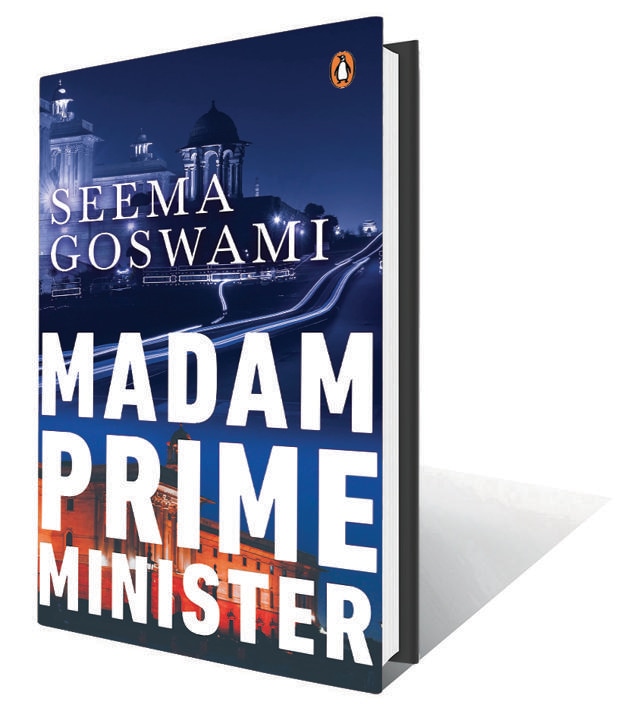
Review: Madam Prime Minister by Seema Goswami
Madam Prime Minister is a political thriller, the kind of novel one could pick up for a long flight and stay riveted

 Prefer HTon Google


Madam Prime Minister is a political thriller, the kind of novel one could pick up for a long flight and stay riveted. It is unapologetically racy and makes no bones about what it is: breezy potboiler territory, sans pretensions of any literary flourishes. In her second fictional outing, columnist Seema Goswami revisits familiar territory, and scripts a suitable sequel to her Race Course Road(2017), of the same genre involving a first family of politics. She reprises some key characters from the earlier book, swirls them together in a new mix and douses it generously with cinematic action and high-octane drama.
The opening scene is of the newest Prime Minister being sworn in at the grand Durbar Hall of Rashtrapati Bhavan. Chip off the old block, daughter of the slain ex-Prime Minister Birendra Pratap Singh, and his unlikely political heir, she puts on a stoic facade while the country’s heavily-critical eyes rest on her. After all, she is the youngest Prime Minister India has had. And although she has effectively played the dynasty card, she is battling imposter syndrome as she hopes to brave the maelstrom of coalition politics, and helm the country. Asha Devi at 29 is a “bonafide beauty” with eyes that are “pools of limpid brown”, a “generous” mouth and a “peaches-and-cream” complexion, bracketed by deep, delicious dimples.” As protagonist, she is sketched as a beauty with brains, a superwoman with feet of clay, combating both internal resistance from partners and colleagues, and threats to the country and her people. Unknown to anyone, her single-minded objective is to nail the mysterious hand behind the assassination of her father, the ex-Prime Minister.
And thus begins Madam Prime Minister’s rocky political journey. A terrorist-hostage situation in the affluent heart of the capital and involving one of Asha Devi’s family members ratchets up the thrill quotient and tests the mettle of the neophyte head of the nation. Another botched covert operation involving terrorists seems to make a dent in her popularity. But despite her frailties and foibles, which do not seem many to begin with, she mostly emerges victorious, playing her cards right. Politics play out at every step, obviously. There is dynastic politics: her half-brothers’ soreness at having seen the chair taken away from under their so-called rightful noses. Horse-trading and Machiavellian moves are par for the course, whether it is the buffoonesque opposition leader Satyajit Kumar - who “couldn’t conceive a life without his goats” - scheming and eyeing the most important chair in the country, or the media circus, jumping hoops, doing whatever it takes and fighting hard to get TRPs in a hashtag-driven world. Goswami gives a reasonably entertaining ringside view of the games people play in political circles and television turntables, with flashes of satire, often lampooning her characters. “So, while he waited, Gaurav went into the studio to do what he did best – feed the beast of the 24/7 outrage machine that passed for TV news in India.” In passing reference, we are told this is post-Modi governance.

The most entertaining aspect of Madam Prime Minister is its slew of characters that are clear caricatures of certain contemporary public figures. Sukanya Sarkar is the supremely canny and vitriolic leader of the regional Poriborton Party (PP) who looked “plain… in her crumpled sari, her unkempt hair bundled into a messy bun, stood only at a puny 5 feet 3 inches”. It takes very little to guess which real-life persona Sarkar is based on. Then there is the obnoxious TV presenter whose loud debates each night bombard drawing rooms across the country; for those that care to watch. Gaurav Agnihotri, head of media network News Tonight Network (NTN) is notorious for his thundering diatribes and machinations. “His eyes gleaming angrily through his rimless spectacles, he turned the full force of his wrath on the hapless LJP spokesperson. “How dare you,sir? How dare you?” And a little later, “Come on my show to face all the questions the nation wants to ask. And give us the answers we are looking for.” There is not a smidgen of doubt about which real-life bombastic media personality, Goswami has based Agnihotri on. The tall and good-looking ex-investment banker, and ex-IMF economist, turned RBI Governor, who becomes the Finance Minister in Asha Devi’s cabinet is another such personage. With such blatant facsimiles, the narrative provides for a fun guessing game. Meanwhile names and characters fly fast and furious especially in some of the early chapters - politicians and bureaucrats, special service officers, ex-ministers, opposition party members and the ones in the cabinet. Each chapter throws up a plethora of Singhs, Yadavs, Sharmas, Senguptas, Kumars and Jhas, amongst others. It is hard to keep up with who is who. Goswami attempts to further humanise her Prime Minister by adding a romantic angle to her starchy life, in the form of a colleague who also becomes her closest ally. It sits adequately with the tenor of the storyline.
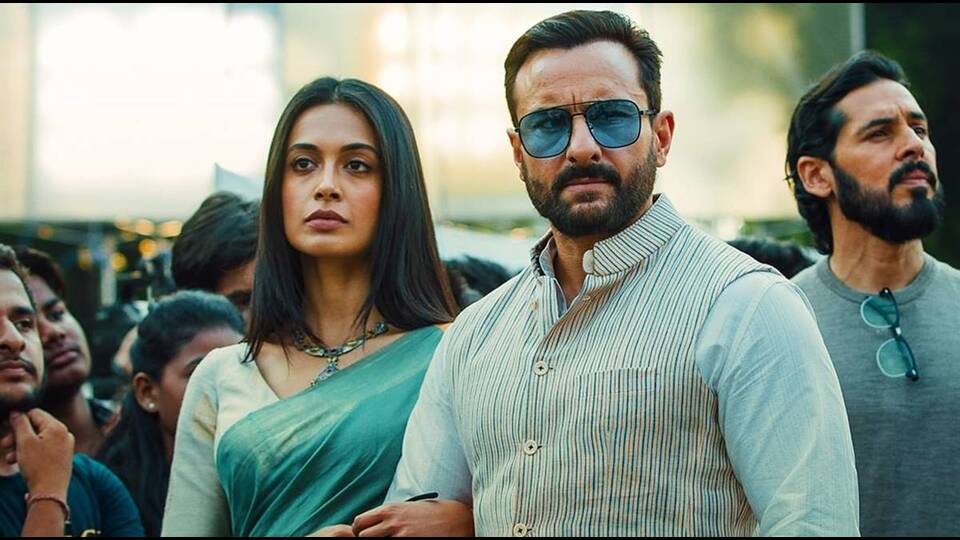
There is enough spice in the story to adapt it to big screen Bollywood or to OTT platforms. Prakash Jha’s Rajneeti in 2010 and last year’s web series Tandav by Ali Abbas Zafar belong to the same genre. Like the dialogue from Sholay goes: “Iss kahani mein emotion hai, drama hai, tragedy hai…” (This story has emotion, drama, tragedy…).
Sonali Mujumdar is an independent journalist. She lives in Mumbai.


