
 E-Paper



JLF 2018: Pico Iyer, the guru of minimalism, on a life without cell phones and cars
Pico Iyer’s keynote address encompassed migration, rising nationalism, and the search for a simpler life.


In his keynote address at the Jaipur Literature Festival 2018 titled ‘Charting a world without borders’, British-born writer Pico Iyer said that a new kind of writer is emerging. Talking about the effect of migration, he said movements across the world meant people were merging their adoptive culture into their cultures of birth, creating “communal histories”. “Many of us couldn’t have imagined English literature was going to be constituted by people the English couldn’t pronounce,” he said, citing the example of Japanese-origin writer Kazuo Ishiguro who was awarded the Nobel Literature Prize last year.
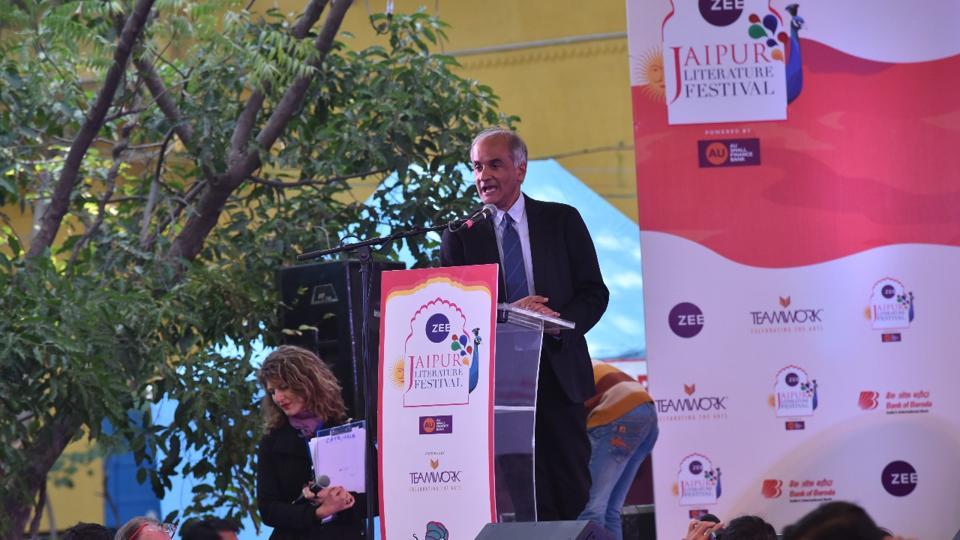
“The world couldn’t have imagined how migration across borders would have exploded,” Iyer (60) said alluding to the impact of multiculturalism and to the ‘international identities’ of the 21st century.
Literature is even more indispensable in the context of “rising nationalism”, he added, explaining the role of art in a world where “many people would want to return to the simpler world of ‘us’ vs ‘them’”. “It’s as if the countryside is rising up against the city, the desperate are rising up against the privileged and the past is rising against the future.” In this struggle and in times of travel bans, literature tells us that what unites us is more important that what divides us.” His words seemed especially pertinent in the context of the raging controversy around the release of Sanjay Leela Bhansali’s Padmavat and the rumours that Prasoon Joshi, Chairperson of the Central Board of Film Certification had pulled out of his session at JLF2018 because of threats.
In another session, Iyer and Patrick French, author of ‘India, A Portrait’, discussed how people in the age of social media and technology were compelled to find ways to deflate stress. “We’re living in a vicious cycle… everybody is living on a technological accelerator and no one knows how to get off,” Iyer remarked.
He also told an enraptured crowd he had never used a cellphone in his life, didn’t own a car or a bicycle and lived a minimalistic lifestyle. “Suddenly my day lasted a 1000 hours and I had time to do things I wanted to do,” Iyer said.
In 1990, Iyer’s house in California burnt down and he has often said losing all material possessions helped him move to Japan and change his life.
“You can’t really be moved when you are constantly moving.” Still, Iyer said he is hopeful of how the world is transforming.
When quizzed about his travels, Iyer said he found North Korea to be the place where he felt the most alien because the country is isolated from the world.
Iyer is widely known for travel writing and his talks on the ‘Art of Stillness’ and ‘Home is Every Place’ have garnered millions of views on TED Talks. Iyer’s essays and novels are deeply influenced by his origins (Gujarati and Tamil) and his upbringing in England and the US. He currently lives in Japan with his wife.
Follow @htlifeandstyle for more


